Global fortification coalition advances nutrition through partnerships
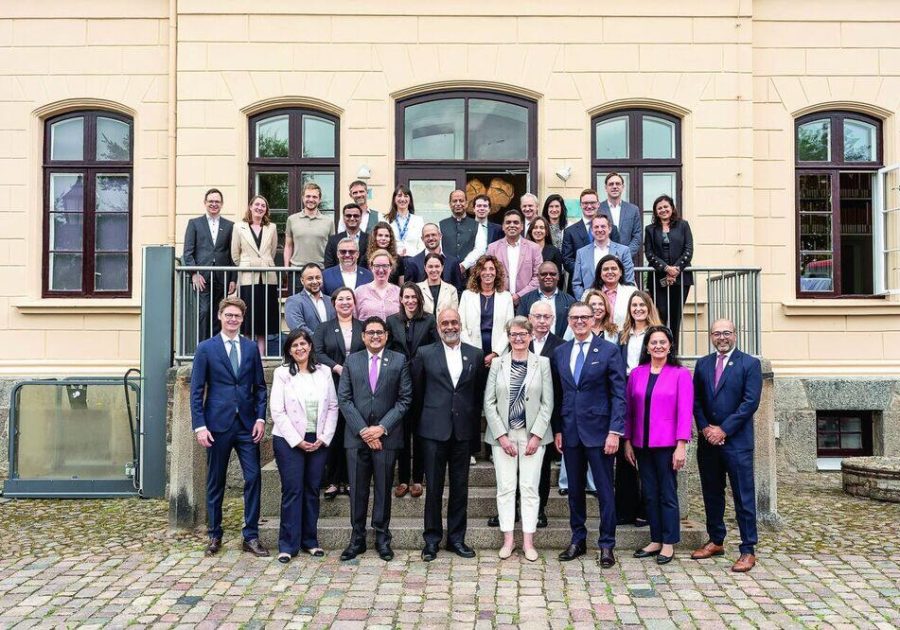
MC Mühlenchemie hosted the Millers for Nutrition coalition for its annual meeting at the company's FlourWorld Museum in Wittenburg. The museum is dedicated to the cultural history of flour, one of humanity's oldest staple foods. Image credit: MC Mühlenchemie
The global effort to combat hidden hunger took centre stage in Wittenburg, Germany, as MC Mühlenchemie welcomed members of the Millers for Nutrition coalition to its annual meeting at the company’s FlourWorld Museum.
Held shortly after the Hamburg Sustainability Conference, the gathering brought together representatives from the coalition’s strategic fortification partners, ecosystem partners and the Gates Foundation to explore how stronger collaboration and commercially sustainable approaches can expand access to fortified staple foods across Africa and Asia.
The meeting reinforced momentum generated at the Hamburg conference, where Millers for Nutrition joined governments, businesses, multilateral organisations and development partners in endorsing the Hamburg Call to Action on Catalysing Large-Scale Food Fortification to End Child Malnutrition by 2030. The commitment reflects a growing focus on scaling food fortification through market-led partnerships rather than relying solely on donor-funded initiatives.
As a founding member of the coalition, MC Mühlenchemie contributes technical expertise in flour treatment and fortification, supporting millers with process optimisation, quality assurance and implementation of sustainable fortification programmes. The coalition now works with more than 900 milling businesses across Africa and Asia.
Food fortification is widely recognised as one of the most effective interventions for addressing micronutrient deficiencies, which continue to affect more than two billion people globally. By enriching staple foods such as flour with essential vitamins and minerals, governments and industry can help improve public health through products already consumed every day.
Torsten Wywiol, CEO of the Stern-Wywiol Group, said the scale of the challenge requires broad collaboration.
“Every day, billions of people consume flour-based foods. Ensuring that these products contain essential vitamins and minerals is one of the most effective and cost-efficient ways to fight hidden hunger and prevent malnutrition.
“But achieving real impact takes far more than providing technology. It takes committed millers, reliable quality systems, supportive governments and strong partnerships.”
Wywiol added that the coalition’s achievements over the past five years demonstrate the value of combining technical expertise with close customer relationships to deliver practical fortification solutions where they are needed most.
The annual meeting also provided an opportunity to review progress made over the past year and identify priorities for future action. Discussions focused on lessons learned from implementation programmes, strengthening enabling market conditions and encouraging long-term commercial investment in high-quality food fortification.
Rizwan Yusufali, program director of Millers for Nutrition, said the coalition’s impact extends beyond participation figures.
“The progress we’ve seen isn’t simply reflected in the numbers. It’s reflected in the trusted relationships we’ve built with more than 900 millers, allowing the coalition to understand their challenges, respond with targeted, data-driven support, and create practical solutions that make quality fortification both achievable and sustainable.”
While the meeting itself is a partnership update, it highlights a broader trend gaining momentum across the food manufacturing sector: nutrition is increasingly becoming a supply chain challenge as much as a public health one.
Rather than focusing solely on regulatory compliance or corporate responsibility, initiatives such as Millers for Nutrition are demonstrating how ingredient suppliers, processors, governments and development organisations can work together to create commercially viable fortification ecosystems.
For food manufacturers, the emphasis is shifting from isolated technical solutions to collaborative models that combine innovation, quality assurance and market development to deliver measurable nutritional impact at scale.