Amcor’s lightweight UniPak Luma pot offers 35% less plastic
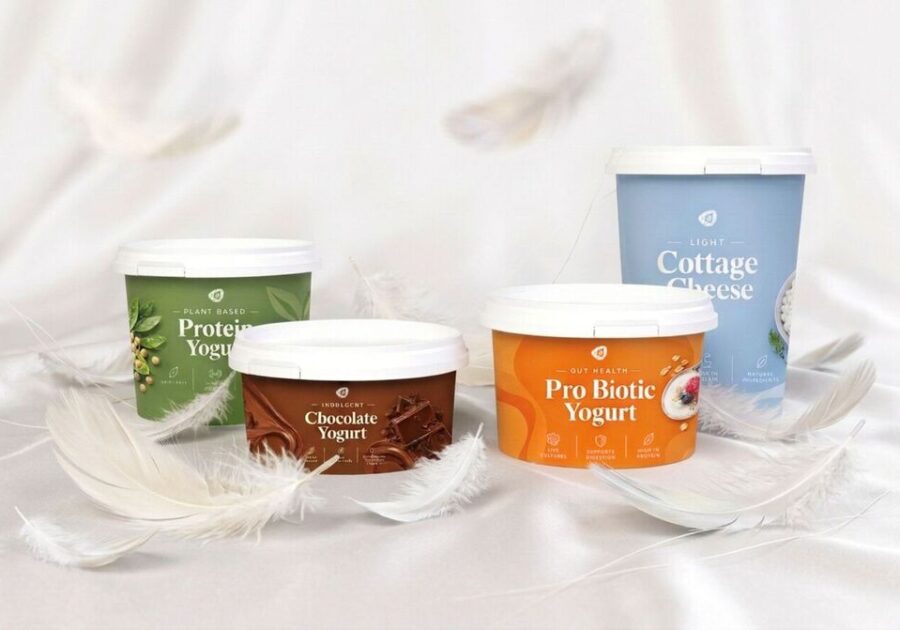
Amcor has introduced UniPak Luma, a lighter iteration of its UniPak pot designed for cold- and ambient-filled dairy, chilled food, and dry food applications.
Tailored for products such as yogurt, crème fraîche, and cottage cheese across 210 ml, 280 ml, 350 ml, and 520 ml formats, the new pot cuts polypropylene usage by up to 35% compared with equivalent containers in the existing UniPak lineup, depending on size.
How UniPak Luma cuts plastic
To strip out material while maintaining the structural demands of commercial food packaging, Amcor relies on injection compression moulding (ICM) technology. Forming the pot at lower pressure distributes polypropylene more evenly, allowing manufacturers to achieve:
- Thinner walls and a finer skirt while preserving the top-load strength and stacking performance required during storage, transit, and retail display.
- A lightweight lid paired with a slim skirt design that improves handling and grip.
- Enhanced tamper evidence and a secure snap-on closure, maintaining product integrity while supporting high-volume production lines.
“The skirt redesign has achieved two benefits – it has reduced plastic use and made the pot easier to hold,” said Katrina Burrett, product line director, containers, at Amcor. “It’s still all manufactured from polypropylene, the tamper evidence is improved and, depending on the format, UniPak Luma removes up to a third of the plastic used in comparable UniPak containers.”
What’s on offer for brands
For food and beverage producers, UniPak Luma addresses both immediate cost pressures and tightening regulatory expectations around packaging waste.
Brands can realise potential relief on EPR and PPWR costs. As the EU Packaging and Packaging Waste Regulation (PPWR) and national Extended Producer Responsibility (EPR) schemes evolve, packaging weight increasingly factors into compliance fees. Lightweighting gives brands a practical lever to cut material volume and potentially lower weight-linked charges.
Mono-material continuity is possible: Retaining a single polypropylene material supports existing recyclability without forcing brands to overhaul their resin strategy.
Operational and consumer appeal increases. Brands can transition lighter formats onto high-volume filling lines while offering consumers an easier-to-grip container, dependable tamper evidence, and a secure snap-on lid.
“Our UniPak range has been mono material for many years – weight reduction was always going to be our next target, especially as PPWR and national EPR schemes are making packaging weight more expensive to carry,” Burrett added.