The gold standard: why B Corp is the baseline for food & drink leaders

Co-founders, husband-and-wife duo Patrick and Karen O’Flaherty
In the modern landscape of food and drink manufacturing, B Corp certification is no longer a niche badge of honour — it is the industry standard.
As one of the most heavily certified sectors in the global economy, the food and drink industry has moved past the era where sustainability was an optional buzzword. Today, B Corp status is a baseline expectation for retailers, investors, and consumers alike.
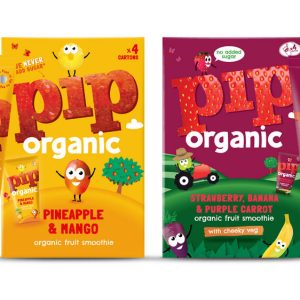
For Pip Organic, a family-owned brand that has long operated on the “Pip Promise,” achieving B Corp status was not about joining a trend, but about formalising their place within this elite tier of transparent manufacturing. The journey reflects the broader evolution of the sector: moving from instinctive ethical practices to a rigourous, data-driven framework that defines the future of food.
From why to how
In a sector where giants and boutiques alike now carry the B Corp seal, the conversation has shifted. Retailers like Waitrose and Ocado have moved beyond mere interest in sustainability; they are now actively structuring the shopping experience around these credentials.
“Retailers are embracing the B Corp movement, and it is really encouraging that we now have B Corp-themed aisles in store and online search engines within the space,” explains Karen O’Flaherty, co-founder of Pip Organic. In this environment, the B Corp symbol acts as a “shortcut for verified transparency,” providing a universal language for quality that consumers instantly recognize and trust.
The rigour of a mature certification
Because the food and drink industry is so deeply entrenched in certification culture, the B Impact Assessment (BIA) has become more sophisticated, demanding granular data that goes far beyond surface-level claims. For Pip Organic, which was already 100% organic and traceable to every harvest, the process still managed to expose gaps that traditional certifications missed.
“As an organic business… we have always instinctively put people and the planet first, but the B Corp process prompted us to turn ‘how we do things’ into clear processes and policies,” O’Flaherty notes. This shift from “instinct” to “infrastructure” is what separates the modern food manufacturer from its predecessors. Pip Organic used the certification as a “roadmap” to track ambitions and challenge themselves for “continuous improvement”.
Data-driven accountability
In a sector as scrutinised as food production, the evolution of B Corp has pushed brands toward radical transparency in their supply chains. It is no longer enough to be organic; brands must now quantify their total impact.
“It also highlighted areas where we could improve and where we needed stronger data from partners,” O’Flaherty says. Since certifying, Pip Organic has begun the intensive process of measuring their carbon footprint — data they previously didn’t have in one centralised place. They are now moving toward producing a yearly impact report, a high-level requirement that has become a staple for B Corp manufacturers aiming to prove their commitment with “greater precision”.
The balancing act
Even in a sector where B Corp is the norm, the “complex balancing act” of maintaining ethical standards while remaining accessible to families remains the ultimate test for manufacturers.
Pip Organic manages this by:
- Long-term partnerships: working with farming partners to keep the range “as approachable and cost-effective as possible”.
- Operational efficiency: implementing a “From Pip to Pack” philosophy — a series of continuous improvements across all elements of the brand to reduce waste and streamline operations
- Resilience: navigating the “mercy of nature,” such as floods or lack of sun, while maintaining the supply required by major retailers.
The new governance of food
The story of Pip Organic’s certification is a testament to how deeply B Corp has integrated into the governance of food and drink brands. It has moved the “Pip Promise” from a family philosophy to a structured, accountable standard that creates “benchmarks and accountability”.
For O’Flaherty, the advice to others in this heavily certified sector is to lean into the collective knowledge of the community. “Lean into the community and support from other B Corp brands, celebrating progress and not perfection,” she suggests. In an industry where everyone is striving for the same seal, the goal is no longer just to get certified, but to use that certification to map out “longer-term plans for the brand and the business”.