Coca-Cola builds one global brand system
One of the world’s most recognisable brands has decided it needs to look even more like itself.
The Coca-Cola Company has unveiled a new global visual identity system designed to ensure every consumer interaction is “unmistakably Coca-Cola”, whether that takes place on supermarket shelves, in restaurants, on digital platforms or through marketing campaigns. The initiative reflects a broader shift that many food and beverage manufacturers are now grappling with: how to build stronger brands through greater simplicity and consistency.
As Arnab Roy, president, Coca-Cola global category, explains: “Coca-Cola is one of the most recognised brands in the world, and with that comes a responsibility to keep evolving. This refresh is about being clearer and more consistent in how we show up, wherever people experience our brand. By building on the things people already know and love, we’re creating a stronger foundation for growth while staying unmistakably Coca-Cola.”
More than a redesign
The new identity is designed to strengthen the brand’s most recognisable visual assets.
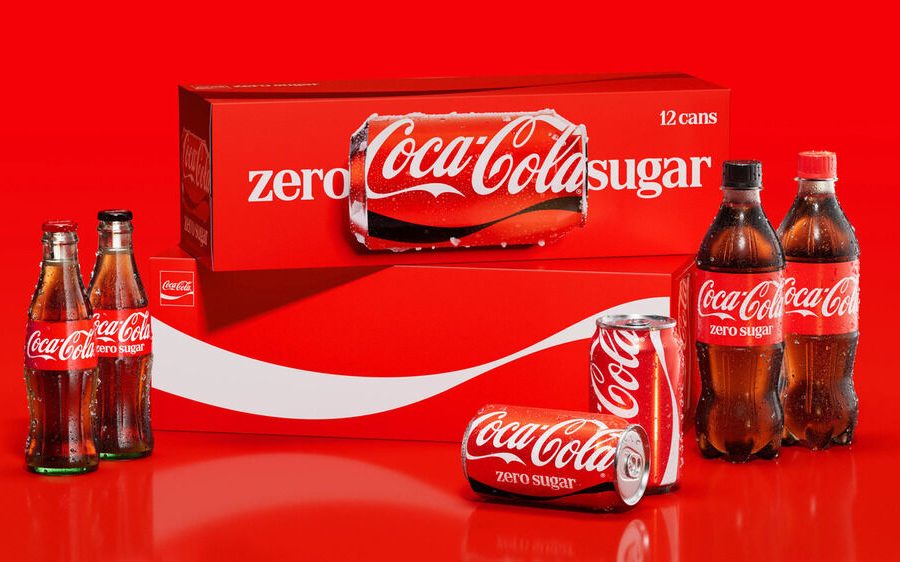
The iconic red-and-white colour palette becomes even more prominent, alongside the Spencerian script logo, the Dynamic Ribbon and the Arden Square. These elements will now appear more consistently across packaging, vending equipment, retail environments and digital channels, creating a unified global experience for consumers. The rollout will initially span Latin America, Europe, the Middle East and Asia before extending further.
Perhaps the most notable evolution is Coca-Cola Zero Sugar, which adopts stronger visual links with the flagship brand while retaining distinctive cues, including larger “Zero Sugar” typography, a black Dynamic Ribbon on cans and black bottle caps on PET bottles. The objective is to reinforce the connection between the products while maintaining clear differentiation.
Consistency – a competitive advantage
Packaging has long been one of the food industry’s most powerful marketing assets, but its role has expanded dramatically.
Products must now remain instantly recognisable across ecommerce platforms, social media, quick-commerce apps, retail media networks and digital advertising.
Coca-Cola’s latest move recognises that visual identity is a handy tool operationally.
Rather than allowing regional adaptations and creative variations to accumulate over time, the company is standardising how its brand appears everywhere consumers engage with it. The result should be faster creative execution, stronger global recognition and more efficient brand governance.
Rapha Abreu, global vice president of design at The Coca-Cola Company, said: “For over a century, Coca-Cola has been a global symbol of optimism and authenticity. Now, with one seamless visual identity, we can deliver one recognizable brand experience to consumers.”
Lessons for food and drink manufacturers
Although few manufacturers operate on Coca-Cola’s scale, the principles behind the refresh are highly relevant across the food and beverage sector.
Many companies have expanded rapidly through acquisitions, innovation and line extensions, often leaving behind increasingly complex brand portfolios. New products, functional variants, healthier formulations and limited editions can gradually dilute recognition if not managed carefully.
The challenge is becoming familiar throughout the industry.
Consumers expect innovation, but they also expect reassurance. They want healthier products, reduced sugar options and new flavours without losing the familiarity that initially attracted them to the brand.
By simplifying its visual architecture rather than reinventing it, Coca-Cola demonstrates how heritage brands can modernise without sacrificing recognition.
Brand management meets technology
Another significant aspect of the initiative is what sits behind the packaging.
To support the rollout, Coca-Cola has introduced a new digital Brand Center alongside AI-powered Design Intelligence tools for its internal teams and agency partners. These systems are intended to help maintain governance, consistency and creative quality while enabling faster content production across global markets.
This reflects a wider trend within manufacturing, where artificial intelligence is increasingly supporting creative workflows alongside product development, supply chain planning and quality management.
Rather than replacing designers, Coca-Cola is using technology to ensure that every execution adheres to its core visual principles while allowing creative teams to work more efficiently at scale.