Consumers seek food’s origins
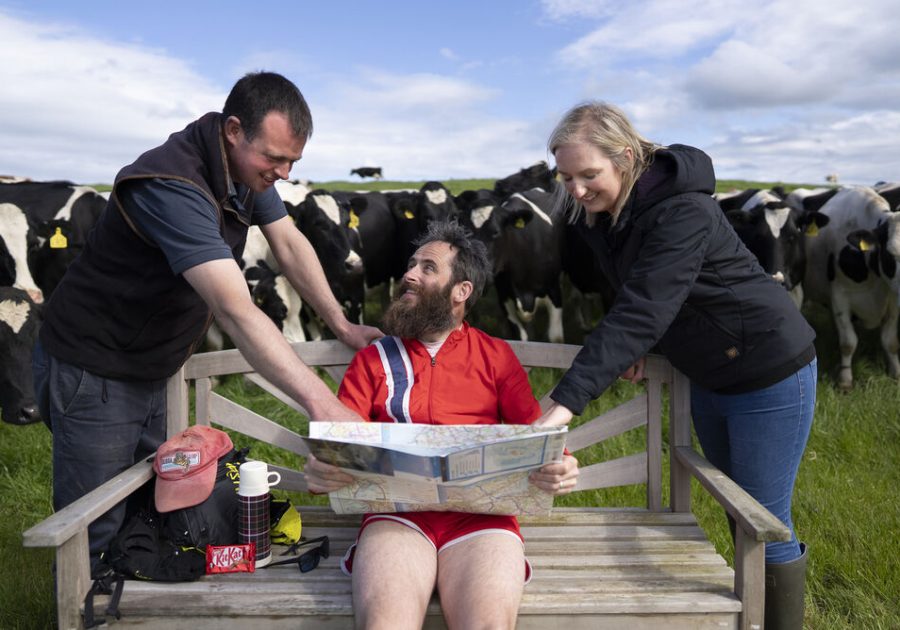
UK’s ‘Forrest Gump’, Rob Pope embarks on 500-mile challenge to help Britain reconnect with local food and communities with Nestlé on The Taste Trail. Image: Daniel Higginson/Clockwise
New research commissioned by Nestlé UK & Ireland suggests that consumers are interested in food provenance but can feel increasingly removed from the people, places and processes behind the products they buy.
A survey of 2,000 UK adults found that 57% consider where their food comes from important. However, almost a third said they feel more disconnected than ever from the origins of their food, while 48% would like more opportunities to learn about the farmers, producers and other people involved in its production.
The findings point to a potential gap between consumer interest in provenance and understanding of the food supply chain.
Among respondents, 40% said buying most of their food from supermarkets and rarely thinking about where it comes from contributed to this sense of disconnection. A further 39% cited the year-round availability of food as a factor, potentially making seasonality and origin less visible to consumers.
There was also evidence of uncertainty around the scale of domestic food production. Almost a quarter of those surveyed believed most food sold in the UK is imported. The research cites Defra figures showing that the UK produces 58% of the food it consumes.
The findings have been published alongside Nestlé’s Taste Trail initiative, which sees ultra-marathon runner Rob Pope undertake a 500-mile journey from Ayrshire to Brighton over 14 days.
The route is designed to follow elements of the food supply chain, with visits to farms, manufacturing operations and communities along the way. Locations include Nestlé sites in Girvan, York and Tutbury.
For food manufacturers, the research highlights the number of stages and people involved between agricultural production and the finished product reaching consumers. It also raises questions around how effectively that journey is communicated to the public.
The research found that 63% of respondents regularly rush their meals, with work and multitasking among the reasons given. Yet 78% agreed that food remains important in bringing people together.
As part of the Taste Trail, Nestlé says it will donate the equivalent of more than 300 meals to food redistribution charity Felix for every mile completed. More than 175,000 meal equivalents are expected to be donated if the full 500-mile route is completed.