Vetropack Strategy 2035 to expand customer solutions
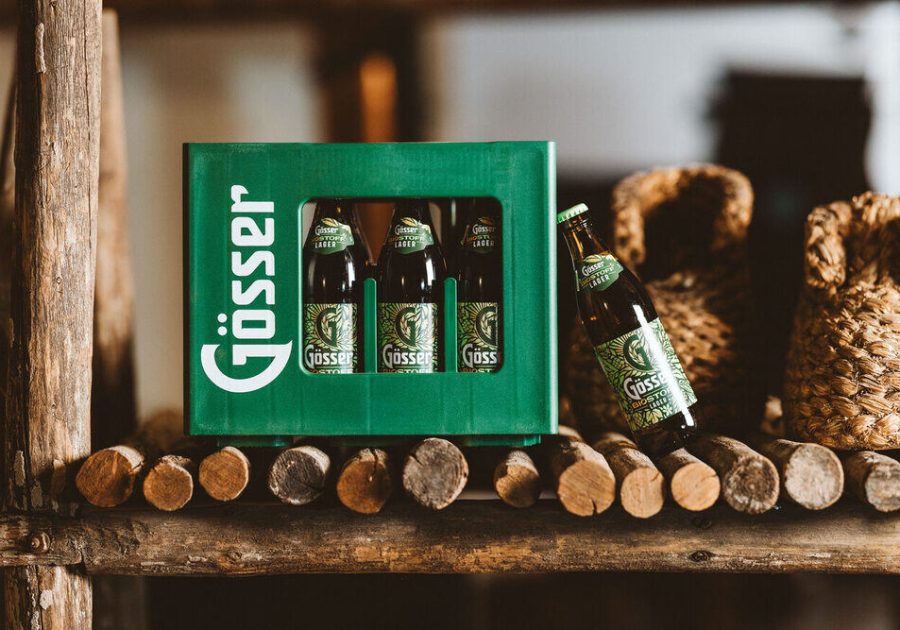
Gösser Biostoff Lager is the first Austrian beer to be launched on the market in the Rezon standard bottle. Produced using new technology, the bottle helps achieve the refill quota which has been mandatory in Austria since 2024. The bottle reduces carbon dioxide emissions by a quarter.
Vetropack has set out plans to deepen its role as a partner to the food and beverage industry, unveiling Strategy 2035 and its accompanying mid-term goals at the glass packaging manufacturer’s first Capital Markets Day.
At the company’s head office in Bülach, the management board laid out the initiatives and measures it plans to implement in the coming years to boost competitiveness, sales growth and profitability to investors, analysts and financial media representatives. The stated goal is for sales growth above the market level by 2030, and a return to a two-digit operating margin.
Strategy 2035 aims to continue expanding Vetropack’s position as a provider of innovative and sustainable packaging and service solutions for the food and beverage market, increasing customer benefit along the value chain.
“We turned our focus to the future, carefully analysing industry trends and critically examining our positioning. But above all, we asked ourselves how we can ensure that we grow in a profitable manner in this future market environment,” explains Lukas Burkhardt, CEO of the Vetropack Group. “The answer is our Strategy 2035 and, as part of it, specific initiatives that will enable us to capitalise on these trends – all laid out with clear goals, key figures and responsibilities. This enables us to continuously measure and actively manage our progress.”
The revised strategy follows a comprehensive analysis of Vetropack’s existing strategic approach, drawing on market and sustainability trends, customer surveys and external studies. It was approved by the board of directors at the end of August, with its key points published in the Semi-Annual Report 2026.
“Strategy 2035 defines public, mid-term goals that go beyond the current fiscal year for the first time,” explains David Zak, chief financial officer.
By 2030, compared with 2025 and at constant exchange rates, Vetropack expects above-market sales growth in the low single-digit percentage range, recovery of the operating result, and a two-digit margin by the end of the medium-term period.
Vetropack aims to achieve these goals above all by increasing capacity utilisation, improving the product mix and becoming more efficient, with prudent investment in market and product development and in adjusting production infrastructure for greater flexibility and productivity. In the medium term, the aim is a double-digit return on operating capital employed.
Food and beverage at the core
Strategy 2035 rests on three growth drivers, all aimed at profitable growth in the low one-digit percentage range. The first is expanding the offer of product and service solutions that support customers beyond packaging alone.
“Our customers expect more from us than high-quality glass packaging,” explains Evan Williams, chief commercial officer. “They are looking for a partner who understands their challenges, helps them unlock opportunities and creates measurable value. Our offering is increasingly built around exactly that.”
Vetropack points to Rezon, its thermally tempered lightweight glass bottle, as a practical example: up to 30 percent lighter than a conventional reusable bottle while achieving considerably more cycles. In Austria, a Rezon-based reusable bottle is already a standard solution for the brewing industry, helping the sector meet the national refill quota, and Vetropack is ramping up the technology at its Pöchlarn site for large-scale industrial production ahead of wider rollout.
The second growth driver targets structurally expanding segments – low-alcohol and alcohol-free beverages, food, and premium wines – areas that demand strong product development capability but also offer scope to create further value for customers. The third lies in systematically developing export markets where Vetropack’s production network and product portfolio give it a strong competitive position.
Cutting costs, adding flexibility
Alongside market-facing growth, Vetropack is working on its own cost base. The Group is aligning its processes across functions and locations, simplifying them and adjusting production infrastructure to increase flexibility and productivity. “A key lever for us lies in the standardisation, automation and digitalisation of our processes,” explains Guido Stebner, chief technology officer. “This not only reduces costs but also makes us more flexible and creates reliable quality for our customers.”
A sustainability anchor
Sustainability remains a fixed element of the strategy, with Vetropack aiming to keep increasing the proportion of used glass in production across the Group. Emission reduction, responsible use of resources and responsible company leadership have been combined into a single roadmap. A solution for serialising reusable bottles, developed jointly with Coca-Cola Europacific Partners Deutschland and Myneral Labs and honoured with the German Packaging Award in 2026, is cited as an example of how closely the company’s circular economy ambitions and innovation work are connected.
Signals
Strategy 2035 signals a company trying to grow with its customers’ shifting demand. Whether the operational levers – capacity utilisation, product mix, process standardisation – are enough to deliver a two-digit margin by 2030 will be one for investors and analysts to track against Vetropack’s own newly public benchmarks.
Topics
alcohol-free beverages Low alcohol beverages premiumisation sustainable packaging wines
PeopleDavid Zak Evan Williams Lukas Burkhardt
Organisations