Coconut waste could provide a new source of plant protein
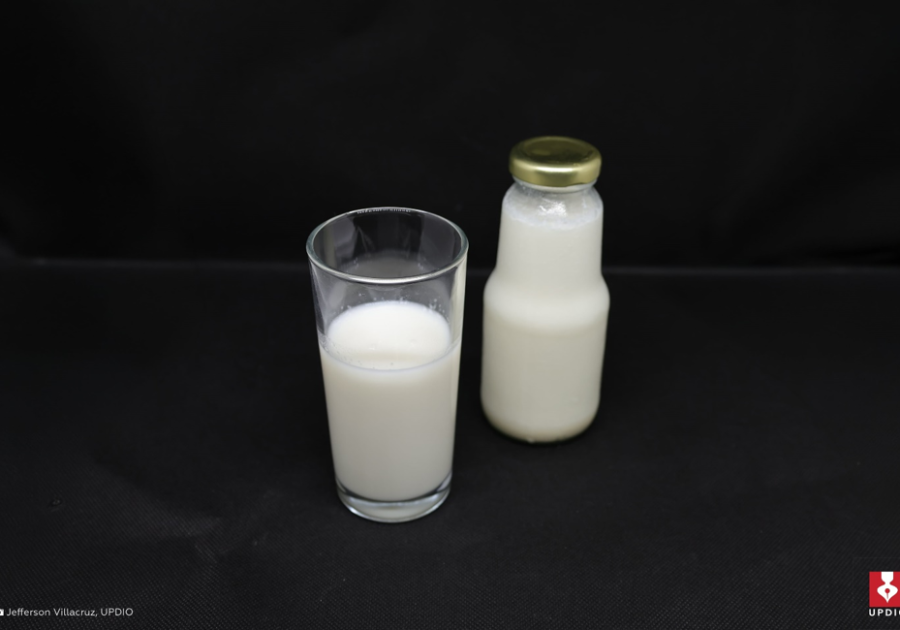
The hybrid plant-based milk alternative. Photo by Jefferson Villacruz, UP Diliman Information Office
Researchers in the Philippines have developed a coconut protein concentrate from a by-product of virgin coconut oil production, combining it with chickpea protein to create a plant-based milk alternative. The work offers a potential route to recovering value from coconut processing waste, although further development is needed before the ingredient can compete commercially.
A by-product of virgin coconut oil (VCO) production could offer food manufacturers another source of plant-based protein. Researchers at the University of the Philippines Diliman (UPD) have developed a coconut protein concentrate from coconut skim milk, a material often discarded during oil production.
The team combined the concentrate with chickpea protein to develop a hybrid plant-based milk alternative. The research, led by Casiana Blanca J. Villarino, professor at UPD’s Department of Food Science and Nutrition, was published in the International Journal of Food Science and Technology on 13 August 2026.
The study, Upcycled Coconut Protein as a Sustainable Ingredient for a Novel Hybrid Plant-Based Milk Alternative with Chickpea Protein, examined how coconut skim milk could be recovered and processed into a food ingredient.
Recovering value from coconut processing
Coconut skim milk is generated during VCO production. According to Villarino, around 800g of the by-product is produced for every kilogram of VCO.
On a dry-weight basis, the material contains more than 30% protein. It also contains minerals and compounds with antioxidant properties, making it a potential source of functional food ingredients.
“Technically tinatapon lang talaga siya, kaya sayang. May minerals and antioxidant property siya, so why not utilize it? Ang isang utilisation ay coconut protein concentrate,” said Villarino.
The research followed earlier work by Villarino on the sensory properties of VCO and efforts to upgrade the Philippine National Standards for the product.
Engagement with coconut oil producers highlighted the scale of the waste generated during processing. Other by-products include coconut husks, mature coconut water and coconut residue, commonly known as sapal.
Without appropriate management, these materials can contribute to unpleasant odours, greenhouse gas emissions and water pollution.
The researchers worked with the Quezon Federation and Union of Cooperatives in Pagbilao, Quezon, which supplied coconut skim milk for the study.
Processing the protein concentrate
Recovering protein from coconut skim milk requires careful handling. The material can spoil quickly, so the researchers pasteurised it soon after collection and froze it until processing.
The protein was then extracted through a series of steps, including centrifugation and freeze-drying, to produce a powdered concentrate.
The resulting ingredient was combined with chickpea protein to develop the hybrid plant-based milk alternative (hPBMA).
The team used a mixture-design approach to test different proportions of the two protein sources, assessing their sensory properties and colour to identify a suitable formulation.
The optimum blend contained 34% coconut protein concentrate and 66% chickpea protein.
The resulting beverage contained 2.47g of protein per 100g. Its flavour profile resembled soy milk, with detectable coconut aroma notes.
Formulation and shelf-life considerations
The researchers also assessed the beverage’s stability under refrigerated conditions.
Microbiological and physicochemical analyses indicated that the product remained stable for almost two months. Based on the storage study, Villarino estimated a shelf life of around 56 days.
Sensory evaluation provided further information on the formulation. Participants detected a coconut aroma, although the coconut flavour itself was relatively subtle. The chickpea protein contributed a more pronounced, soy-like flavour.
The findings suggest that combining the two protein sources could offer a more acceptable beverage than using either ingredient alone.
For manufacturers, the formulation presents a potential way to incorporate a recovered protein ingredient into plant-based drinks. However, the study does not yet establish whether coconut protein concentrate can deliver the cost, performance and sensory characteristics required for commercial production.
Further research is needed to improve the beverage’s sensory properties and assess its commercial feasibility against products made with soy protein concentrates and isolates.
From by-product to food ingredient
The research highlights an opportunity to recover value from a material that would otherwise be discarded.
For coconut processors, developing a use for skim milk could help reduce waste while creating an additional product stream. For food manufacturers, the concentrate could provide another locally sourced ingredient for protein-enriched foods and plant-based formulations.
The study was funded by the UK Department for Science, Innovation and Technology in partnership with the British Council, and by the Department of Science and Technology–Philippine Council for Industry, Energy, and Emerging Technology Research and Development.
Topics
chickpea protein hybrid plant-based milk alternative plant-based milk alternatives processing waste virgin coconut oil
PeopleOrganisationsQuezon Federation and Union of Cooperatives University of the Philippines Diliman