Senara secures LIOF backing to scale cell-cultivated dairy
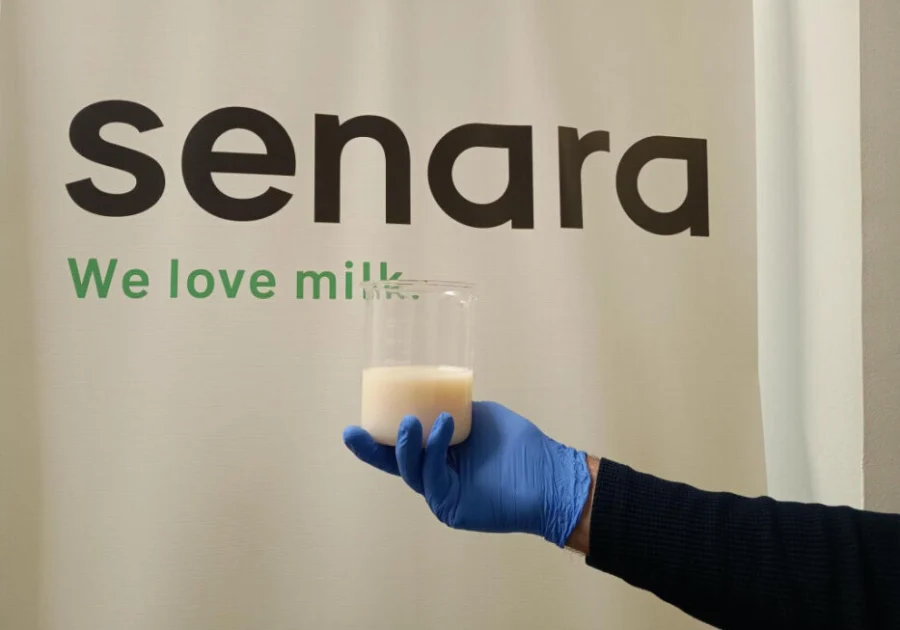
Image credit: LIOF.
German biotech start-up Senara has secured an undisclosed investment from Dutch regional development agency LIOF to establish a second base in Maastricht, accelerating its push to bring cell-cultivated milk technology from the lab toward commercial production.
The move, announced on 23 October 2026, places the Freiburg-based company inside Limburg’s fast-growing cellular agriculture ecosystem and signals a broader shift in how dairy ingredients could be manufactured in the years ahead.
Milk without the cow
Senara, founded in 2022 by Dr Svenja Dannewitz and Dr Philipp Prosseda, grows milk-producing animal cells in bioreactors, where they secrete milk much as they would inside a cow’s udder.
The company selects cells from fresh milk rather than from the animal itself, then cultivates them in a custom bioreactor system. The resulting product contains lactose, casein, whey and micronutrients, and is free from GMOs and the bacteria and yeasts that normally cause milk to spoil.
“We don’t want to change milk; we want to improve the way it is produced,” Dannewitz said. She added that the production method could require less space and energy than conventional dairy, shorten supply chains, and eventually allow farmers to operate bioreactors on their own farms — keeping them inside the food system while new production models emerge.
Maastricht hub, pilot facility in sight
The LIOF investment gives Senara access to specialised knowledge, talent, infrastructure and partners in Maastricht, and the company is already eyeing a future pilot manufacturing site in the city. A new financing round has been launched to support that ambition. The amount of the LIOF investment was not disclosed.
For LIOF, the deal fits a wider strategy of connecting international entrepreneurship to Limburg’s cellular agriculture cluster. “Senara is among the European frontrunners in cell-cultivated dairy and has the ambition to grow internationally,” said Annemoon Borst, investment manager at LIOF. “Limburg brings together specialised knowledge, entrepreneurship, investment capital and scale-up infrastructure”.
Limburg has built a decade-long pedigree in cellular agriculture. Maastricht was where the world’s first cultivated hamburger was developed, and the region now hosts Maastricht University, Brightlands Maastricht Health Campus, Mosa Meat and the open-access scale-up facility Cultivate at Scale.
Road to market
Senara is working with international food producers on applications including ice cream, cheese and panna cotta, and expects its first food products could reach supermarket shelves within a few years. It has also signalled that the platform can be adapted to specific nutritional needs, such as A2-protein-rich or lactose-free milk, and eventually extended to milk from goats, buffalo, sheep and other species.
Alongside food, Senara is pursuing cosmetics and skincare ingredients as an earlier route to market — a pragmatic move given the tighter regulatory pathway for novel foods. That dual-track approach could give the company revenue and scale-up experience while the food regulatory process runs its course.
The Maastricht expansion is a signal that cell-cultivated dairy is moving from R&D rhetoric toward infrastructure. Senara has already been operating at pilot scale with a 100-litre bioreactor and has previously indicated plans for an industrial-scale bioreactor by 2028. If that timeline holds, the question for manufacturers will shift from whether cell-cultivated dairy works to how it fits into product development, formulation and supply chains.
The immediate milestone is the Maastricht pilot facility. The financing round now underway will determine how quickly Senara can turn its second site into a production stepping stone — and how soon dairy ingredients made without a cow become a commercial reality for the food and drink industry.