Fresh Produce Consortium platform to tackle UK supply chain risks
The Fresh Produce Consortium (FPC) has launched a national action platform designed to give industry, hospitality professionals and the public a more direct role in pressing government over the resilience of the UK food system.
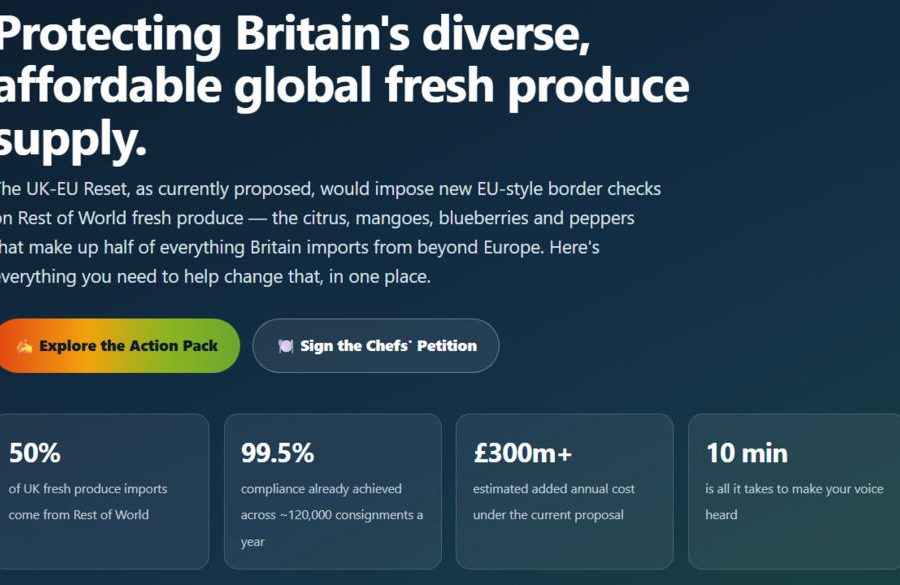
The new freshproduceaction.co.uk hub brings together the FPC’s UK-EU Reset Action Pack and its “One Squeeze Too Far” chefs’ petition, creating a single platform intended to turn concerns about the cost and complexity of moving fresh produce across borders into political pressure for change.
At the centre of the initiative is a call for the UK government to reset its trading relationship with the EU. The FPC argues that the current arrangements are creating additional compliance costs and border friction for a supply chain that remains heavily dependent on imports.
Around half of the UK’s fresh produce is imported, according to the FPC, while 99.5% of consignments cross the border in full compliance with existing rules. Despite this, the consortium estimates that ongoing trade friction is costing the sector more than £300 million.
For food and drink manufacturers, the issue extends beyond the availability of fruit and vegetables on supermarket shelves. Fresh produce is an important raw material for processors, prepared-food manufacturers, foodservice suppliers and ingredient businesses, making the reliability and cost of international supply chains an operational issue as well as a food-security concern.
The FPC’s action pack is intended to make that issue easier for businesses and consumers to raise with their MPs. It provides a route for users to contact their local representative in less than ten minutes, with the campaign focused on reducing the administrative and logistical barriers affecting UK-EU fresh produce trade.
The platform also brings hospitality into the campaign. The “One Squeeze Too Far” petition, launched with fresh produce supplier Delifresh, has already attracted more than 1,350 signatures from chefs, restaurateurs and kitchen professionals. Its message is that supply chain disruption ultimately feeds through into professional kitchens, affecting the availability, cost and choice of ingredients.
The campaign comes against a wider backdrop of concern over UK food-system resilience. Research from IGD found that 91% of UK food industry leaders and academics believe risks to the food system have increased over the past year. Crucially, every respondent surveyed said government policy had failed to strengthen the system’s resilience.
That makes the FPC initiative significant beyond its immediate focus on fresh produce. It is attempting to connect supply chain performance with government policy and consumer action, arguing that resilience cannot be achieved solely through changes made by individual businesses.
The underlying message is that food security increasingly depends on the efficiency of the entire supply network. Border processes, import costs, regulatory requirements and access to international sources can all influence the availability and price of raw materials long before products reach a factory.
The FPC is therefore positioning the new platform as a mechanism for collective action rather than simply another industry campaign. By bringing together businesses, chefs, consumers and MPs, it intends to broaden the political conversation around food security and demonstrate the practical consequences of supply chain friction.
As FPC chief executive Nigel Jenney puts it, the objective is to give people across the country “a direct way to tell their MP that a resilient supply chain isn’t optional”.
For the food and drink industry, the initiative reflects a growing recognition that supply chain resilience is becoming a policy issue as much as an operational one — and that maintaining access to diverse, affordable sources of food and ingredients will require action across trade, regulation and infrastructure as well as within individual businesses.