Arla electrifies Videbæk, cuts carbon costs
Danmark Protein plant in Videbæk. Credit: Arla Foods Ingredients
Arla Foods Ingredients (AFI) has completed an €8 million (roughly £6.8m) investment in a new heating system at its Danmark Protein plant in Videbæk, Denmark — a move that cuts CO2 emissions and reinforces the company’s push toward electrified, gas-free production.
For customers buying whey and protein ingredients from AFI, the upgrade is a signal of both operational resilience and a tightening sustainability story behind the products they source.
What’s changed
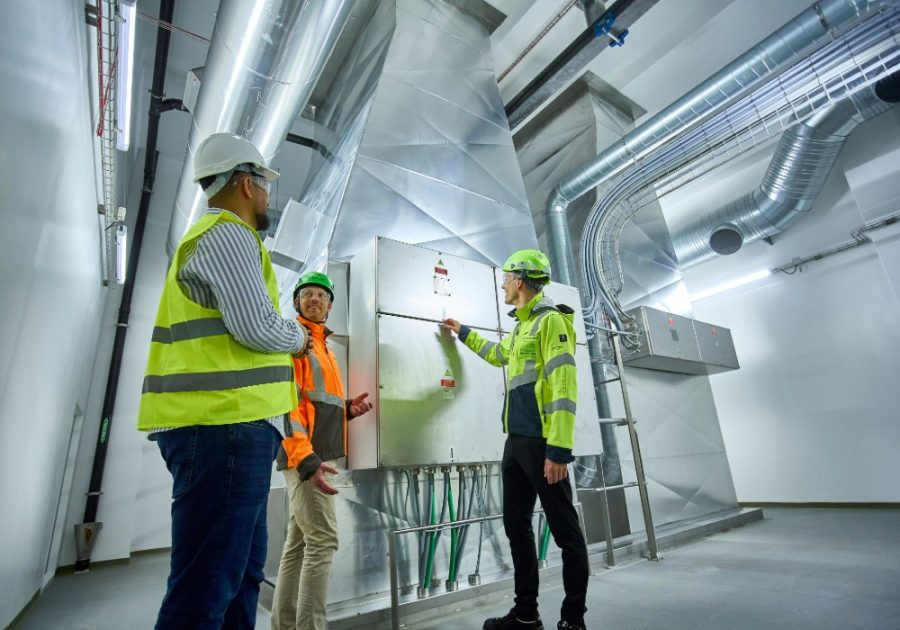
The investment centres on Production Tower 4, part of the Danmark Protein site where whey is processed into ingredient and protein products.
Previously reliant on a gas heater, the tower has been converted so it can now switch between two heat sources: the plant’s existing steam system and a newly installed electric heater. That flexibility will deliver annual savings of 2,500 tonnes of CO2, equivalent to the annual heating consumption of more than 900 households using natural gas.
According to AFI’s calculations, Tower 4 will be able to operate 100% on renewable electricity for 23% of the time. Mogens Bøgh Pedersen, director of the Danmark Protein plant, said the investment improves operational reliability, strengthens security of supply and reduces the company’s climate impact.
Importantly, this isn’t a one-off. A similar project is being planned for Tower 5, and together the investments in Towers 4 and 5 will reduce CO2 emissions by up to 5,200 tonnes annually — roughly doubling the impact once both towers are converted.
Why electrification, not just efficiency
The dual-source setup is deliberately designed around Denmark’s power market. By switching between steam and electricity, AFI can increase electricity use when wind and solar generation drives prices down, while reducing consumption when electricity supply is tighter and prices rise. That flexibility supports the Danish grid’s need for adaptable demand and, in AFI’s own framing, creates a strong financial business case alongside the emissions cut — not sustainability at a premium, but sustainability that pays for itself.
Investments
This project doesn’t stand alone. It’s the latest in a string of electrification investments at Videbæk:
- A 16-megawatt electric boiler, installed in early 2025, replaced two gas boilers and generates steam for the spray-drying towers used to create powdered whey ingredients, cutting an estimated 3,500 tonnes of CO2e annually.
- A €32 million electric heat pump facility, AFI’s largest single net-zero investment to date, converts 2.8MW of electricity into 8MW of heat and was expected to cut the site’s greenhouse gas emissions by roughly 14,500 tonnes CO2 equivalent a year.
- A separate ~$46 million rebuild of a spray-drying tower at the Arinco facility, due to begin production trials in January 2027, pairs a shift toward higher-value ingredient production with a heat recovery system that reduces natural gas consumption by around 4,441 MWh per year.
Taken together, these projects point to a systematic phase-out of gas dependency across AFI’s largest production hub, in support of the wider Arla Group target — approved by the Science Based Targets initiative — to cut Scope 1 and 2 emissions 63% by 2030 against a 2015 baseline.
What it means in practice
For AFI, the investment lowers exposure to gas price volatility, improves supply security through dual-fuel flexibility, and builds a replicable model — company leadership has already indicated intent to scale this type of solution across other sites.
For customers, it translates into a lower-carbon footprint embedded further up the supply chain for whey and protein ingredients used in infant formula, sports nutrition, medical nutrition and dairy applications — relevant for brands facing their own Scope 3 reporting pressure. It also reinforces continuity of supply.
The Videbæk upgrades are incremental individually, but cumulatively they represent one of the more concrete electrification programmes in European dairy ingredient manufacturing — a trend worth watching as more processors face the same cost and climate pressures.