Non-thermal PEF accelerates olive processing
A research team from the Andalusian Institute of Agricultural, Fisheries, Food and Organic Production Research and Training (IFAPA) in Mengíbar, Jaén, has demonstrated that treatment with pulsed electricity (PEF) improves the extraction of extra virgin olive oil (EVOO) and enhances its healthy compounds in a differential way depending on the variety and parameters applied.
This study, published in the international scientific journal Agriculture, positions electrical pulses as a key non-thermal solution for modernising industrial olive mills, improving the energy sustainability of the process and responding to the global demand for EVOO of the highest sensory and functional quality.
As demonstrated in the work developed by IFAPA researchers Abrahan Gila, María Paz Aguilera, Araceli Sánchez, Antonio Jiménez and Gabriel Beltrán, the application of this non-thermal technology before beating allows beating times to be reduced by half without altering the legal quality parameters required for the extra virgin category.
Among the study’s main findings is the improved extraction of the Picual variety, where the technique has proven particularly effective. Applied at a medium intensity before a 30-minute malaxation, it has reduced residual oil in the pomace by between 33% and 35% compared to the control.
This demonstrates that it is possible to halve the beating time while maintaining or improving industrial yield. Conversely, excessively high intensities have led to excessive cell disintegration, which favours oil emulsification in very wet pastes, increasing losses in the pomace.
The study also highlights the extraordinary increase in phenolic content in Arbequina olive oils. Although the impact of the extraction process on yield in this variety has been more moderate due to the greater natural tendency of its pastes to emulsify, the low-intensity treatment has achieved a historic nutritional impact, increasing the total phenolic compound content by between 50% and 53% with reduced malaxation times (15 to 30 minutes). Meanwhile, the application of low-intensity pulsed electric fields to Picual olives has increased phenols by up to 17% after 60 minutes of malaxation.
Regarding the modulation of the oil’s aromatic profile, the study also analysed in depth the enzymatic pathways responsible for the aroma. Thus, in Arbequina, low-intensity PEF activated the alcohol acyltransferase (AAT) enzyme, favouring the formation of C6 volatile esters (+58.4% after 30 minutes of malaxation), compounds responsible for the fruity and floral notes characteristic of premium oils.
Furthermore, the treatment has favoured the release of natural pigments (chlorophylls and carotenoids) into the oil phase, which contributes to improving both the colour of the oils and their commercial oxidative stability.
Non-thermal technological innovation
The constant pursuit of excellence in the production of early harvest extra virgin olive oils frequently encounters significant technical difficulties in the milling process. Green and unripe olives have high moisture levels and firm cell walls, resulting in what are known as “difficult pastes.” These pastes generate stable emulsions of water and oil that trap the oil phase, complicating mechanical separation in the decanter and reducing the extraction efficiency of the olive mills.
To address this problem without resorting to an increase in the beating temperature, which would compromise the sensory and nutritional characteristics of the oil, the IFAPA research team has analysed the synergy between the intensity of the electrical pulses and the duration of beating under industrial conditions.
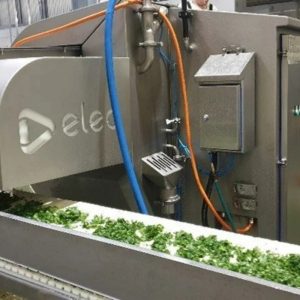
Electrical pulses represent one of the most promising emerging non-thermal technologies for process intensification in the olive oil industry. The technique consists of applying high-intensity, short-duration electrical pulses to freshly milled olive paste, causing electroporation, or the opening of microscopic pores in the membranes of the plant cells. This phenomenon facilitates the release of oil and valuable micro-components without adding heat to the product.
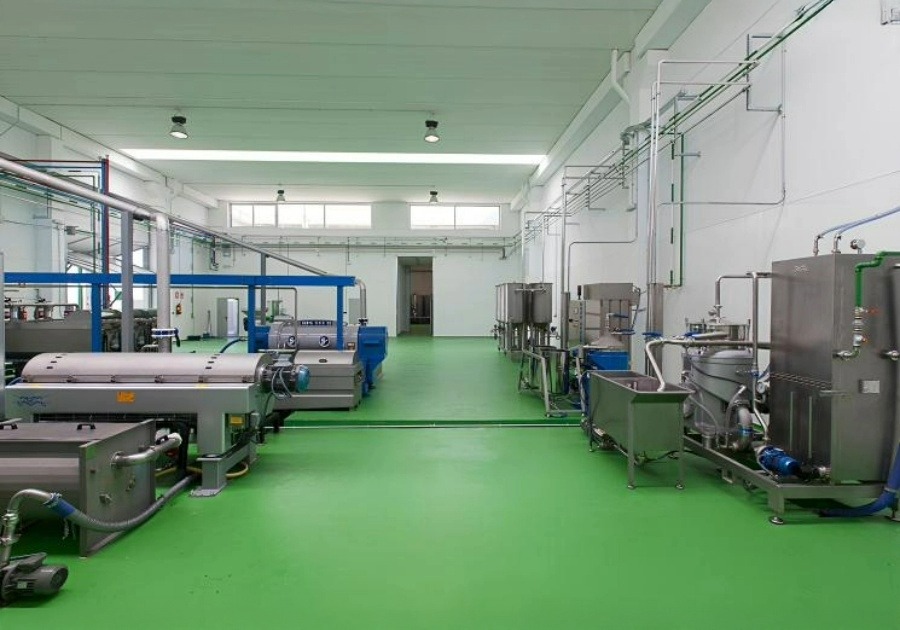
For this IFAPA research project, conducted at the Venta del Llano experimental olive mill using Picual and Arbequina olive varieties, an industrial PEF unit was installed between the hammer mill and the mixer. Scientists evaluated three levels of electrical intensity (low, medium, and high, with energy densities between 5 and 15 kJ/kg) combined with three mixing times at 25 °C (15, 30, and 60 minutes), comparing them to the traditional 60-minute continuous mixing process without PEF.
Guaranteeing quality and economic viability
A crucial aspect highlighted by the research is that in all the tests carried out, the oils obtained strictly complied with the regulatory limits established by the European Union and the International Olive Council (IOC) for the extra virgin category. Thus, key parameters such as free acidity, peroxide value, and ultraviolet absorbance remained unchanged within optimal ranges. From an organoleptic point of view, an accredited tasting panel confirmed the highest sensory rating for all samples.
Furthermore, this work provides a highly useful agronomic and economic analysis for the sector. In varieties with a firm structure, such as Picual, PEF technology recoups the investment primarily through the direct increase in oil recovery volume and the savings in mechanical energy by reducing churning.
Meanwhile, in softer varieties such as Arbequina, the economic return is geared towards the commercial revaluation of the product, allowing it to easily exceed the threshold of 250 mg/kg of polyphenols required for the EU health claim.
The results of the study confirm that pulsed electricity technology should not be applied as a universal recipe, but as a modular technological tool that requires specific working windows according to the variety, the maturity of the fruit and the agronomic objective of the olive mill.
In this regard, the work of IFAPA, a public research institute attached to the Ministry of Agriculture, Fisheries, Water and Rural Development, highlights the treatment with electrical pulses as a non-thermal solution to achieve greater energy efficiency and sustainability in olive mills and also respond to the global demand for high-quality extra virgin olive oils.
TopicsPeople
Abrahan Gila Antonio Jiménez Araceli Sánchez Gabriel Beltrán María Paz Aguilera
Organisations