Mind the iodine gap
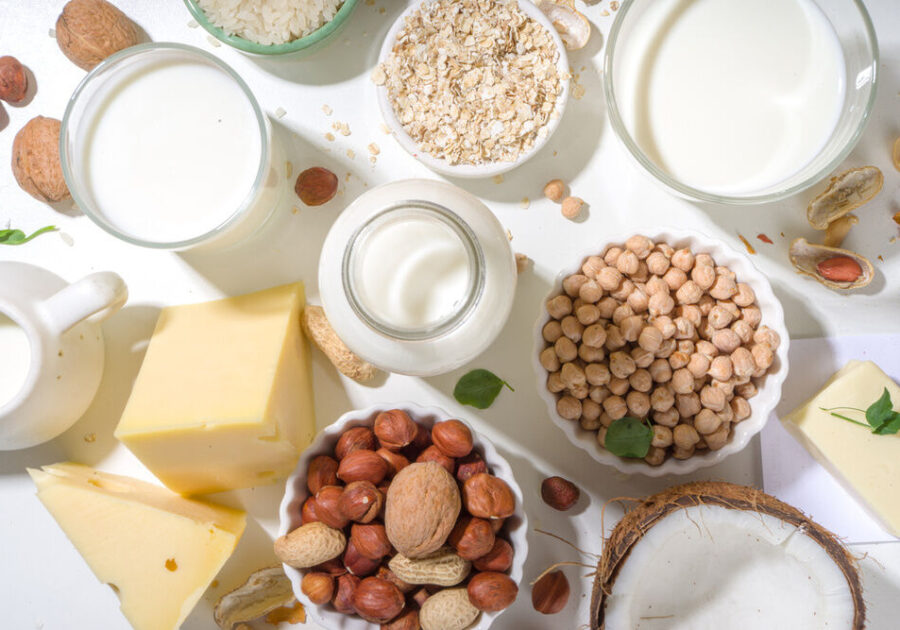
Swapping dairy for unfortified plant-based alternatives, even in modest amounts, could leave UK consumers short of key nutrients, according to new University of Surrey research, with iodine the most exposed. The study, the first of its kind in the UK, also points to mandatory fortification as a way to close the gap.
A UK first
Researchers at the University of Surrey, working with colleagues at Queen’s University Belfast, set out to test what happens to micronutrient intake when milk, yoghurt and cheese are replaced with commercially available plant-based alternatives. The team drew on National Diet and Nutrition Survey data covering more than 3,500 people aged between 18 months and 100 years.
Using a novel modelling technique, they assessed the effect on four micronutrients found in dairy: iodine, calcium, riboflavin and vitamin B12. The study has been published in Lancet Planetary Health.
Small swaps, sizeable shortfalls
Even modest substitution led to marked declines in all four nutrients, and iodine proved the most sensitive. Replacing just 20 to 35 per cent of dairy with plant-based alternatives, at current market fortification levels, lifted iodine inadequacy among adolescent females from 54 to 65 per cent. Among women aged 19 to 49, it rose from 32 to 42 per cent.
At full replacement, iodine inadequacy reached 80 per cent in adolescent females and 72 per cent in adolescent males.
Dr Katie Nicol, postgraduate research student at the University of Surrey, said the shift towards plant-based diets is driven by sustainability goals, and that it is important to know whether alternatives are like-for-like replacements for dairy’s micronutrients. She highlighted young children and adolescent females as vulnerable groups, who are more likely to be deficient in certain micronutrients.
Why iodine, why the UK
Dr Sarah Bath, associate professor in public health nutrition at the University of Surrey, pointed to the UK’s lack of an iodine fortification policy, such as the universal salt iodisation used in many other countries. She noted that people may be unaware of iodine’s role in producing thyroid hormones, which regulate metabolism and support growth and brain development, and that its importance rises during pregnancy.
She also said consumers often do not realise dairy is a major source of iodine in the UK, while unfortified plant-based alternatives contain very little.
Testing the fixes
The team modelled several scenarios: partial replacement under existing fortification practices; partial replacement with mandatory fortification of plant-based alternatives; existing fortification combined with mandatory iodine-fortified bread; and mandatory iodine fortification of both alternatives and bread.
Mandatory fortification of plant-based alternatives prevented the declines in micronutrient intake seen when dairy was replaced. Iodine remained inadequate, however, in 59 per cent of adolescent females. Adding iodine-fortified bread brought that figure down to 37 per cent. The researchers concluded that the most effective approach combines mandatory fortification of plant-based alternatives with iodine-fortified bread.
Dr Anne Nugent of the School of Biological Sciences at Queen’s University Belfast explained that the analysis substituted dairy with an equal weight of plant-based alternatives, and that every alternative identified in the team’s earlier market survey was given an equal chance of selection, to reflect variation in supermarket products.
Nutritional equivalence
The findings put nutritional equivalence firmly on the agenda alongside environmental credentials. The research indicates that fortification levels in plant-based dairy alternatives matter, and that current market levels do not fully offset the loss of dairy-derived iodine.
The study also frames the issue as one of policy as much as product. Dr Nicol stressed that nutrition policy must evolve in tandem with environmental targets, adding that “government policy is needed to make this happen.” For a sector built on sustainable dietary change, mandatory fortification may be a development worth preparing for.
Topics
fortification micronutrients Plant-based alternatives
PeopleDr Anne Nugent Dr Katie Nicol Dr Sarah Bath
Organisations