Spar Austria invests €22m in food production
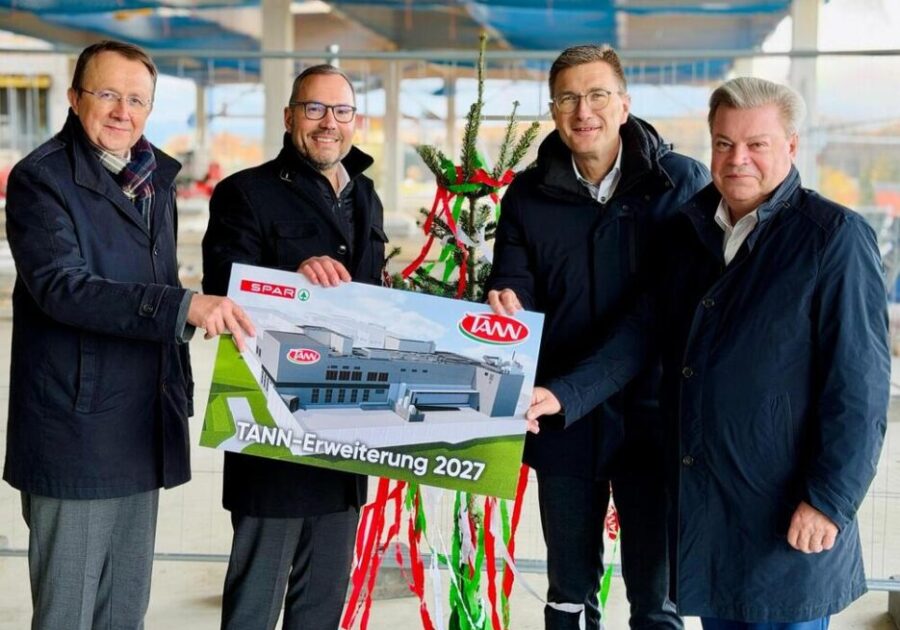
From left to right: Mayor Matthias Stadler, Tann regional manager Leopold Scharmer, Spar managing director Alois Huber, Member of Parliament Harald Servus.
Spar Austria is investing more than €22 million in the expansion of its Tann production facility in St Pölten, Lower Austria, with dedicated manufacturing areas for poultry and convenience products scheduled to begin operating in autumn 2027.
The investment reflects changing consumer preferences and the retailer’s strategy to expand its own food manufacturing capabilities.
The project reached a construction milestone with a topping-out ceremony on 20 November and will create 40 additional jobs, increasing the site’s workforce from 230 to 270.
Originally a meat and sausage manufacturer, the Tann facility has diversified its operations over recent years, expanding into convenience foods, developing new packaging solutions and manufacturing vegan products. Spar expects the St. Pölten operation to become Austria’s largest producer of meat alternatives.
The latest investment represents a further broadening of its manufacturing operations, with poultry and convenience foods identified as areas of growth.
“Convenience products are becoming increasingly popular and demand for poultry continues to rise,” said Leopold Scharmer, head of Tann at Spar.
For Spar, expanding in-house production offers greater scope to respond to changing purchasing habits, develop its product ranges and strengthen supply security across its retail operations.
Investing in domestic manufacturing
The expansion comes amid concerns about the level of government support for Austria’s food manufacturing sector.
Spar managing director Alois Huber said the company was undertaking the project without public funding, questioning why domestic food production did not receive the same level of recognition as the technology sector.
His comments come against the backdrop of the closure of a major food manufacturing operation in Austria’s Marchfeld region, highlighting the contrasting fortunes of businesses operating within the country’s food industry.
Strengthening the regional supply chain
The benefits of the investment are expected to extend beyond the factory itself. Austrian engineering, construction and specialist food manufacturing infrastructure businesses are involved in the development, while regional agricultural businesses, suppliers and service providers stand to benefit from additional orders once production begins.
Spar has had a presence in St Pölten since 1979, with successive investments helping to establish the location as an important food manufacturing and distribution centre.
The expansion underlines the strategic importance of retailers maintaining their own production capabilities. As demand shifts across established and emerging food categories, investment in manufacturing gives retailers greater control over product development, availability and their ability to respond to market changes.