
Manufacturers risk wasting digitalisation budgets without lean foundations
Manufacturers investing in connectivity, automation and real-time data visibility to lift overall equipment effectiveness (OEE), shorten cycle times and improve quality control are, in many cases, seeing a significant share of those digitalisation projects fall short of their targets.
Pilots succeed on a single line and never scale. Dashboards get built, but the decisions they were meant to inform still get made on gut feel and spreadsheets. Budgets are spent, and a year later production KPIs look much the same. The technology worked. The transformation did not.
The reasons tend to cluster around a handful of recurring issues, and most have little to do with the technology selected. A lack of process standardisation leaves sensor data too noisy and inconsistent to act on. Digitising an inefficient process simply locks in and accelerates the same problems. Data collected at machine level often never reaches the operations managers and plant directors responsible for production targets and capacity planning.
On the shop floor itself, machines from multiple manufacturers typically run different PLCs, protocols and connectivity levels – some with none at all – meaning integration needs IT and OT expertise that often sits in separate teams with separate budgets. Larger manufacturers frequently carry a patchwork of tailor-made systems and proprietary integrations built up through acquisitions and plant expansions, so a new data platform added on top tends to increase complexity rather than clarity.
Lean manufacturing and digitalisation are complementary rather than competing disciplines. Lean identifies waste – spanning overproduction, defects, waiting, transportation, overprocessing, inventory, motion and unused talent – and builds the process discipline that makes improvement measurable and repeatable. Digitalisation then accelerates those improvements and scales them across lines and sites. Starting with lean gives the digital layer cleaner, more consistent data to work with, which lowers implementation risk and makes scaling to further lines more predictable.
Manufacturers that get this right tend to follow four steps: a structured shop floor assessment combining direct observation, operator and manager interviews, and a review of current KPIs against targets; prioritising the highest-impact problems with specific, measurable targets rather than broad goals (“reduce unplanned downtime on line 3 from 18% to under 10% in the next quarter” rather than “improve OEE”); a pilot designed from the outset to be repeatable across other lines; and scaling once that pilot is validated.
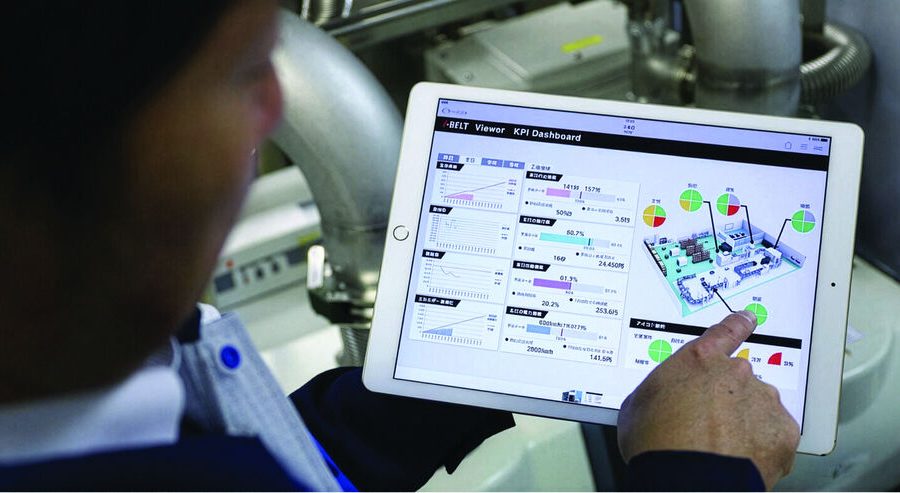
Vendors are beginning to build services around exactly this sequence. Omron’s i-BELT, for example, pairs manufacturing consultants with IT/OT architects and data specialists to run the shop floor assessment, pilot and scale-up as a single programme, working with the machines, PLCs and IT systems already in place – reporting OEE improvements of between 5% and more than 30% for manufacturers that have been through it.