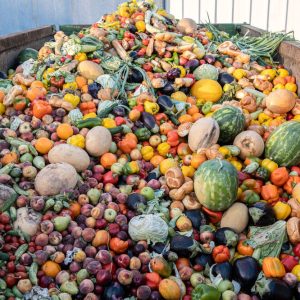
From waste to wonder
Discarded crops can be valorised into nutritious ingredients. Image credit: Stock
It’s undeniable: food waste is one of the biggest problems facing the food and beverage industry today. Every year, one-third of all food produced in the world – which accounts for approximately 1.3 billion tonnes – is lost or wasted:[1] an increasingly concerning situation, especially in light of a global food crisis fuelled by factors including the Covid-19 pandemic and climate shocks. In addition to the impact on food security, it is estimated that food loss and waste also account for eight to ten percent of global greenhouse gas (GHG) emissions.[2]
Tackling food waste is key to achieving a more sustainable and resilient agrifood system – one that promotes an efficient use of natural resources, lessens its impact on the planet and is able to ensure food security and nutrition for all. Manufacturers should start thinking about food waste reduction as an impactful method of enacting positive change for their business, the industry and planet, and particularly recognise fruit and vegetables as a strategic starting point.
Re-thinking the food waste culture
To date, most large-scale efforts to address the problem have focused on food being wasted in retail and by consumers, particularly in households. However, the truth is that up to half of the food that doesn’t make it to the plate is lost at (or near) the farm, during or just after harvest – so, well before it reaches the supermarket.[3] Plus, even though the production of meat and dairy has a high environmental impact, these categories only represent three per cent and five per cent of food loss, respectively. This means that other food categories – fruits and vegetables, cereals, roots and tubers – are responsible for the majority of waste and the associated CO2 emissions.[4]
Take the humble tomato, for example. Between 50 million to 75 million tons of tomatoes are lost upstream every year – more than any other fruit or vegetable. In developed countries, 28 to 41 of every 100 tomatoes don’t reach a store shelf, highlighting the pitfalls of the ‘linear food economy’ model. [5]
Creating sustainable loops
Transitioning towards a more circular approach is widely seen as an appropriate response to this level of waste: redefining it as a valuable asset for other production and consumption processes, while decreasing the strain on agricultural resources.[6],[7] With fruit and vegetables being such commonly discarded ingredients, food and beverage manufacturers can start by stemming the waste of overly ripe or imperfect produce in both their own operations, and those of their suppliers. At SVZ, we fundamentally reject the concept of an ‘ugly’ fruit or vegetable as we’re more interested in the nutritional value and functional properties. By taking crops that would have otherwise been discarded and valorising them into delicious and nutritious ingredients, we try to reduce this level of needless waste.
SVZ’s newly launched tomato puree is the latest example of our commitment to implementing incremental, positive changes to the way we do agriculture. By saving ‘imperfect’ produce originally headed for landfill in Belgium, and sending them our local Rijkevorsel processing facility, we can transform them into a delicious ingredient, ideal for many different applications – from soups to sauces. Manufacturers that use this new waste-combatting ingredient for their NPD not only contribute to upstream waste reduction, but can also count on the benefits that come with all SVZ’s ingredients: stringent quality assurance, minimal transportation and processing, and a guaranteed tasty flavour.
Leading the way
The transition to a circular economy model is a win-win situation: for businesses: benefits include greater efficiency, less waste and cost, as well as more possibilities for innovation. And this, in turn, will have positive implications for the food system as a whole and, ultimately, our planet.
The food waste challenge won’t be solved overnight but every step is relevant to enable true and lasting change. This project represents a small-scale example of SVZ’s wider commitment to building a greener food and beverage industry for all, as part of our c2030 initiative.
[1] United Nations Environment Programme, Promoting Sustainable Lifestyles, available at: https://www.unep.org/regions/north-america/regional-initiatives/promoting-sustainable-lifestyles [accessed on 28 July]
[2] FAO, Tackling food loss and waste: A triple win opportunity, available at https://www.fao.org/newsroom/detail/FAO-UNEP-agriculture-environment-food-loss-waste-day-2022/en [accessed on 28 July]
[3] McKinsey, Reducing food loss: What grocery retailers and manufacturers can do, September 7, 2022, available at Reducing food loss amid the global food crisis | McKinsey [accessed on 28 July]
[4] Ibid, McKinsey, Reducing food loss
[5] Ibid, McKinsey, Reducing food loss
[6] Diekmann L., Germelmann C.C., “Circular food economy: A new perspective on food waste”, Projectics / Proyéctica / Projectique, vol. 34, no. 1, 2023, pp. 69-85.
[7] Eit Food, Transitioning to a circular food economy: the solution for food waste and food loss?, 15 Sep 2021, available at Transitioning to a circular food economy: the solution for food waste and food loss? – EIT Food [accessed on 28 July]