Leibinger 2DJET eliminates the speed-vs-resolution trade-off in 2D coding
Leibinger has announced 2DJET, a new industrial coding technology engineered to tackle the packaging industry’s transition to GS1 2D codes.
The transition to 2D codes is gaining global momentum, driven by retail requirements and emerging regulatory frameworks. For food and drink brands, the promise of 2D codes is compelling: “more data in less space, improved traceability, greater flexibility in information management, stronger consumer engagement, and better control across the value chain”.
However, implementing these data-rich codes has historically forced manufacturers into a difficult trade-off. Existing coding technologies present clear limitations at scale; “some deliver the resolution required,” while “others offer the speed, but not the high-resolution print quality, substrate flexibility or reliability needed across real production environments”. Because the precision of a 2D code is highly critical for readability, manufacturers have struggled to print them inline without sacrificing high line speeds.
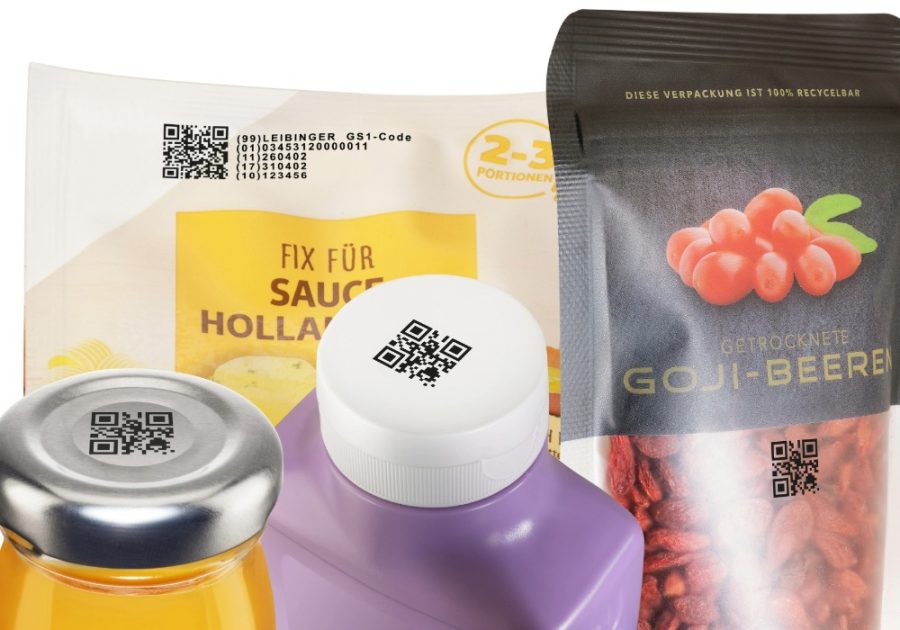
Leibinger’s 2DJET directly resolves this operational conflict. The system “delivers razor-sharp, GS1-compliant 2D codes at up to 300 dpi and printing speeds of up to 120 m/min across a wide range of packaging materials and formats, without compromising productivity or flexibility”.
For major food and beverage brands, printing these codes directly on the packaging line has become a necessity. Retailers have made clear that their “primary interest lies in better control of best-before dates,” meaning that codes “can no longer simply be pre-printed” and “must be printed inline, directly on each individual product during production”.
Doing this reliably is highly challenging due to the diverse substrates used in modern food and beverage packaging, such as flexible films, curved bottles, glass, and rigid plastics.
As a touchless printing technology, the 2DJET can be used on “different product shapes and surface conditions – from flat to curved, and from smooth to more challenging surfaces”. The system uses “specially developed, fast-drying inks” that “ensure excellent drying performance across a wide range of substrates, enabling immediate downstream processing even at high production speeds”.
Beyond print performance, beverage and food production lines operate on tight margins where downtime is highly costly. To prevent disruption, the 2DJET is designed for seamless integration into existing production lines and is exceptionally easy to install and operate.
To keep high-volume production moving, the printer’s ink supply system has been engineered for maximum uptime. It features a cartridge-based supply concept that allows high-yield XL cartridges to be replaced quickly and easily on the fly during operation, without stopping the line.
Additionally, the system is designed to minimise long-term operational costs. Thanks to a reduced number of components, minimal system wear, no need for filters, and the long service life of key parts, the system maintains low spare-part requirements. The resulting optimisation in total cost of ownership enables a rapid return on investment, often within the first year of operation.
For food and drink brands preparing for future packaging standards, the technology is designed to align with commercial and compliance demands simultaneously. As Leibinger notes, the 2DJET “combines high throughput with exceptional flexibility across a broad range of packaging materials and formats, supporting continuous operation at full line speed”.