Arla calls for action on nutrition gap
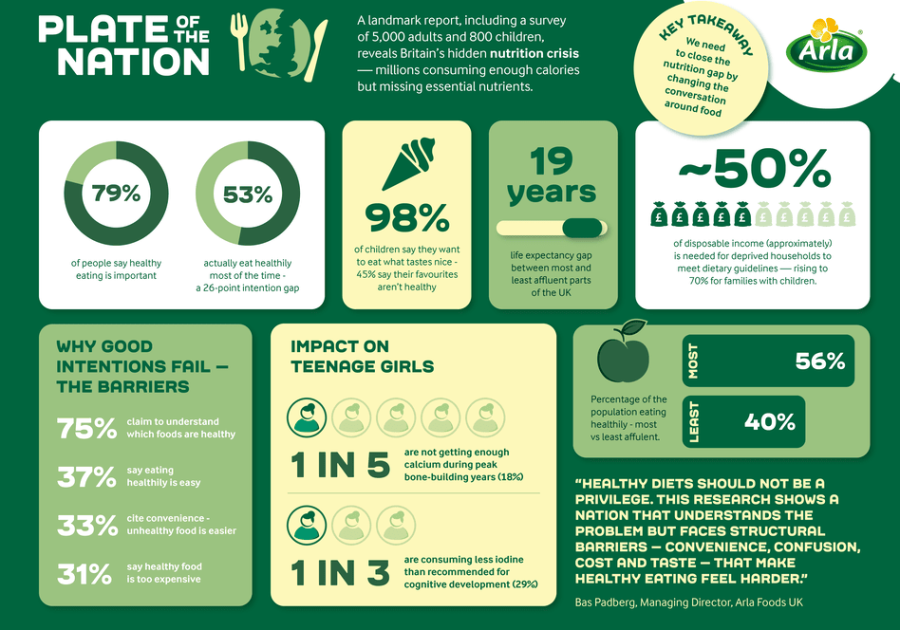
Britain is facing a hidden nutrition crisis. While 79% of consumers state that healthy eating is important to them, only 53% actually manage to eat healthily most of the time.
This stark disconnect forms the core of dairy cooperative Arla’s inaugural ‘Plate of the Nation’ report, which combines YouGov consumer insights with national data compiled by the British Nutrition Foundation.
The findings reveal a profound “nutrition gap” — a systemic challenge where the UK population consumes sufficient calories but misses out on essential, health-sustaining nutrients.
The structural barriers to healthy eating
The research highlights that high awareness does not translate into action due to deep-seated structural barriers within the current food system. While 75% of adults claim to understand what makes food healthy, a mere 37% find it easy to maintain a healthy diet.
The report measures the specific obstacles preventing consumers from making better choices:
- Convenience (33%): unhealthy food options are simply easier to access and prepare.
- Cost pressures (31%): healthy food is perceived as too expensive, a barrier that peaks among Gen Z and lower-income households.
- Taste preferences (24%): a significant portion of adults admit unhealthy food tastes better. For children, taste is the ultimate driver; 98% want to eat what tastes nice, and 45% say their favorite foods are not healthy.
A worrying cultural shift is also emerging, with 22% of adults — rising to 30% for Gen Z and 25% for C2DE households — admitting they do not care about nutritional content as long as their food tastes good.
“This research shows a nation that understands the problem but faces structural barriers – convenience, confusion, cost and taste – that make healthy eating feel harder,” says Bas Padberg, managing director at Arla Foods UK.
A demographic and regional divide
The nutrition gap hits vulnerable populations hardest. During critical developmental years, nearly 1 in 5 teenage girls (18%) fail to get enough calcium, while 29% of girls aged 11–18 consume less iodine than recommended, threatening long-term cognitive and bone health.
Furthermore, a distinct “postcode lottery” affects food access. The most deprived UK households would need to allocate roughly 50% of their disposable income to meet government dietary guidelines. For families with children in these communities, that figure skyrockets to 85%. Consequently, healthy life expectancy varies by up to 19 years between the most and least affluent areas of the UK.
Elaine Hindal, chief executive of the British Nutrition Foundation, notes: “This report highlights a growing ‘nutrition gap’ in the UK, where many people are consuming enough calories, but insufficient amounts of the nutrients needed to support good health. Poor diet is now a leading contributor to preventable ill health, particularly affecting young people and those in more disadvantaged communities.”
Overcoming the crisis
To close the gap, Arla argues the food industry must pivot away from its decades-long focus on dietary restrictions.
“For decades, the conversation around food has focused on what to avoid – things like sugar, salt and fat,” Padberg explains. “And whilst we know that’s a public health crisis we have to address, it’s also time to look at how we can help people see what they should be eating and change the conversation around our food.”
To spark this system-wide change, Arla is calling for cross-sector collaboration across three critical pillars: food literacy, food culture, and food access. The cooperative has committed to several immediate actions, including:
- Reviewing its own on-pack labelling to emphaside positive nutrition.
- Launching a school outreach programme to educate and inspire 250,000 children and teenagers by the end of 2027.
- Donating 4 million meals over the next year through partnerships with Magic Breakfast and Felix, focusing on breakfast as a vital, accessible moment to kickstart healthy choices.
Both Arla and the British Nutrition Foundation stress that lasting change cannot be achieved alone. Rectifying the UK’s nutritional baseline requires an environment where businesses, government, educators, and health professionals actively work together to make nutrition affordable, understandable, and accessible to all.