Broccoli harvesting partnership to transform economics for UK growers
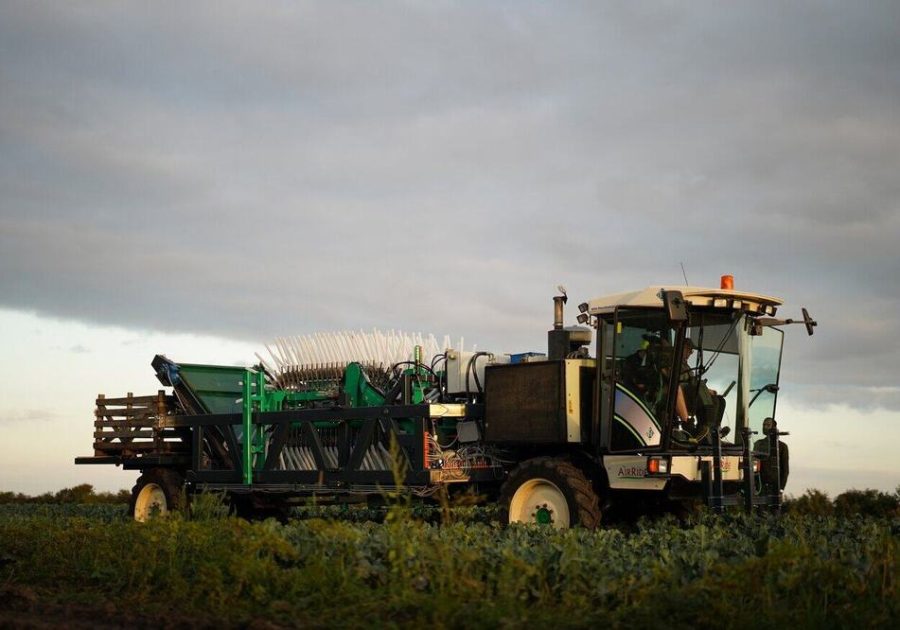
Caption: Cutting edge automation, which the company intends to expand to cabbage and lettuce.
A partnership between UK food-tech pioneer Upcycled Plant Power (UPP) and East of Scotland Growers (ESG) is set to reshape harvest economics by transforming broccoli crop waste into sustainable protein and fibre ingredients.
By deploying UPP’s proprietary automated selective harvesting technology across ESG farms, the collaboration addresses critical agricultural pain points while unlocking substantial new revenue streams for producers.
Mitigating labour constraints and costs
For vegetable producers, managing the availability and rising costs of seasonal workers represents an ongoing operational challenge. The deployment of UPP’s automated harvester offers immediate relief by altering traditional field dynamics. For growers, the automated solution delivers operational advantages such as reducing dependence on unpredictable casual harvest labour, while lowering overall harvest costs by a target saving of 30% or more, significantly boosting on-farm efficiencies.
Generating risk-free secondary revenue
Beyond driving operational efficiencies, the partnership introduces a highly lucrative financial model for producers. Traditionally, a significant volume of broccoli biomass is left in the field, carrying little to no commercial value. This agreement turns that under-utilised side-stream into a consistent feedstock for UPP’s allergen-free, plant-based ingredients.
Crucially, the commercial framework protects farmers from financial exposure. ESG is structured to share directly in the gross margin generated from UPP’s sale of the upcycled proteins and fibres. This allows growers to successfully monetise their agricultural side-streams without incurring additional operational risks or requiring upfront capital investment.
Multi-Million Pound Long-Term Value
The commercial scale of the five-year agreement is substantial for both parties. While UPP secures the reliable, high-volume feedstock supply critical to scaling its operations, the financial returns flowing back to the agricultural side are projected to grow rapidly. Following multi-unit harvester deployments from year two, the value generated from unlocking these side-streams is expected to exceed £10 million for each party by the end of the five-year period.
Andy Laing, business development director at East of Scotland Growers, highlighted the dual economic and environmental impact for the farming community: “We’re proud to partner with UPP to deliver tangible economic and environmental value back to Scottish growers and to the broader UK food system. This collaboration improves farm profitability while contributing to a food system that is more sustainable and resilient. We have been working with our supermarket partners to address Scope 3 emissions reduction, and working with UPP is helping us meet those goals.”
Backed by a recent £3.5 million funding round — including a £1.5 million follow-on investment from climate-focused firm Elbow Beach — UPP’s dual-revenue model proves that food-system decarbonisation can actively strengthen supply chain economics for primary producers.
Organisations
East of Scotland Growers Elbow Beach ESG Upcycled Plant Power UPP