Decanter partnership reshapes sugar mill economics
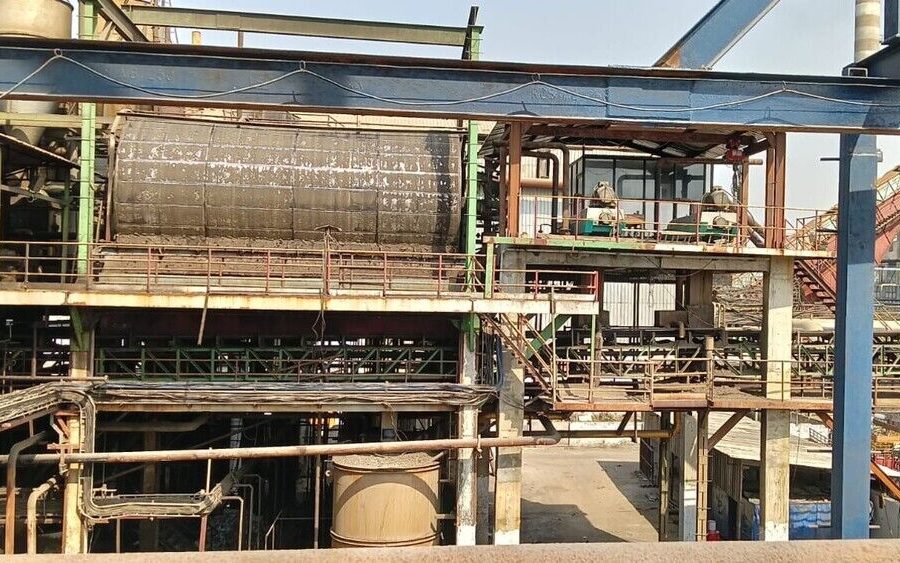
GEA decanters and RVDF.
GEA’s collaboration with India‑based Chemical Systems Technologies (CST) can establish in how sugar producers can modernise legacy dewatering operations, reduce losses and strengthen total cost of ownership.
By pairing GEA’s decanter centrifuges with CST’s deep process expertise, the partnership aims to accelerate global adoption of continuous, closed‑system dewatering — a technology shift that is rapidly proving its value across India’s sugar belt and now moving into wider markets.
A market under pressure
Sugar producers worldwide face tightening margins, rising resource costs and growing scrutiny over energy and water use. Traditional dewatering systems — rotary vacuum drum filters (RVDF) and belt presses — have served the industry for decades, but their limitations are increasingly difficult to ignore: high water and steam consumption, dependency on filter aids, significant sugar losses and labour‑intensive operation.
GEA senior director business line renewables Martin Neugebauer captures the shift succinctly: improving yield alone is no longer enough. Mills need technologies that simultaneously reduce operating costs and improve resource efficiency. Decanter centrifuges, long established in industrial separation, are emerging as a critical lever.
From conventional systems to continuous processing
Mud produced during juice clarification typically represents 10–20% of the process flow. In conventional systems, this mud is dewatered through open, variable processes that introduce temperature drops, microbial activity and product losses.
GEA’s decanter approach replaces this with a continuous, closed system: concentrated mud is fed directly into the centrifuge, solids and centrate are separated, and the centrate is returned to the process. The result is a stable, automated stage with lower variability and significantly reduced resource consumption.
Yield improvement as the economic driver
CST director Anup Keserwani reports consistent performance across nearly 50 decanter installations in India, covering mills from 3,500 to 18,000 TCD. Producers switching from RVDF or belt presses have seen sugar loss reductions of up to 60% and 25% respectively.
Reference data shows average sugar loss in cake of 0.03% on cane with decanters, compared with 0.07% for RVDF. For a 10,000 TCD mill operating a 150‑day campaign, this equates to around 600 additional tons of recoverable sugar — a direct yield gain without additional cane or processing cost. At current market prices, the return on investment is rapid and measurable.
Resource efficiency under scrutiny
Decanter installations deliver quantifiable improvements in water, steam and thermal efficiency:
- Temperature stability — decanter stages drop only 2–5°C, compared with 20–30°C in open systems.
- Water savings — RVDF systems require ~6% water on cane; belt presses up to 8%. Decanters require no additional wash water.
- Steam reduction — RVDF systems typically require ~1% steam on cane; belt presses ~1.2%. Decanters add no steam demand.
- Improved purity — closed operation, high temperatures and short retention time reduce microbial activity and prevent contamination.
These improvements directly support mills facing rising energy costs and tightening sustainability expectations.
Operational simplification and retrofit readiness
Decanter centrifuges offer practical advantages for mills upgrading existing infrastructure:
- Compact footprint — around 50% less floor space than conventional systems.
- Continuous operation — stable performance even with fluctuating mud characteristics.
- Automation and CIP — reduced manual intervention and improved hygiene.
With a strong focus on retrofit projects, the GEA‑CST partnership provides mills with an end‑to‑end pathway: assessment, implementation and optimisation, backed by proven technology and process expertise.
For sugar producers navigating cost pressure, resource constraints and modernisation needs, decanter‑based dewatering is emerging as a high‑impact upgrade. The GEA‑CST partnership strengthens the case by combining global technology leadership with local process knowledge — a combination designed to accelerate adoption and deliver measurable improvements in yield, efficiency and total cost of ownership.
Topics
belt press decanter centrifuges dewatering juice clarification rotary vacuum drum filters sugar TCO
PeopleAnup Keserwani Martin Neugebauer
Organisations