Nutri-Score 2026: rethinking formulations

Gautier Cesbron-Lavau, co-director R&D of Alland & Robert.
Against a backdrop of ongoing economic tension, evolving regulations and growing consumer expectations, R&D teams in the agri-food sector face the challenge of finding ways to reconcile innovation, nutritional value and operational performance.
Recent changes to the Nutri-Score criteria are prompting manufacturers to rethink recipes based on a systemic approach. The aim? Achieve a higher score without compromising sensory experience or formula stability, often using innovative ingredients.
The updated Nutri-Score criteria focus on fibre density, protein content and plant-based ingredients, while reducing thresholds for sugar, salt and saturated fats. This shift aims to prevent type 2 diabetes and obesity, two major health challenges with ever-greater socio-economic impacts. The result: sugar is now in the spotlight, whereas in the past, reducing fat (considered more important) often meant adding more sugar and texturising agents like starch.
Replacing the sugar at the heart of many formulations
Reducing the amount of sugar, essential to improve the Nutri-Score, poses significant technical challenges. Sugar plays a multi-functional role in formulations, from enhancing taste, texture and visual appearance to increasing product shelf life and stability. Reducing or eliminating sugar can have a direct impact on these parameters, particularly when the recipe has already been optimised in other ways.
In this context, acacia gum represents a valuable functional alternative. Its properties partially compensate for the lower sugar content by improving water retention and maintaining a soft or moist texture. It also acts as a bulking agent.
Excellent film-forming properties optimise mouthfeel, while its polysaccharide composition comprised of 90% fibre has a positive impact on the Nutri-Score – and it can be labelled as “acacia fibre” when used for nutritional non-functional purposes. Low viscosity makes it easy to integrate into matrices without significantly modifying the product’s sensory profile.
Balancing high fibre content and digestive comfort
Although beneficial for the Nutri-Score, adding fibre brings the additional challenge of ensuring digestive tolerance. Certain types of fibre can provoke discomfort for consumers as they ferment rapidly in the colon.
The complex branched molecular structure of acacia gum triggers slower, more progressive fermentation. As a result, it is considered compatible with low FODMAP diets that limit “fermentable oligosaccharides, disaccharides, monosaccharides and polyols”. This means that acacia gum is also suitable for consumers suffering from irritable bowel syndrome (IBS).
Developing products for Nutri-Score and beyond
Key agri-food players have the daunting task of developing solutions that meet nutritional requirements, production constraints and sensorial expectations. The biggest challenge? Identifying functional ingredients that can be integrated into complex matrices, while preserving (or even improving) the sensory profile of the final product.
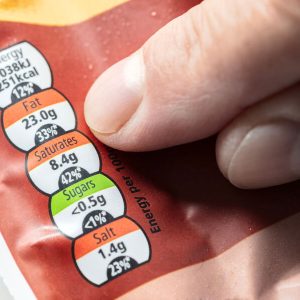
As consumers increasingly expect clearer and cleaner labels and a high Nutri-Score – or similar ratings such as High in Fat, Sugar and Salt (HFSS) used in the UK – it is essential for us to better understand ingredient properties. This will enable us to meet current expectations, while also anticipating regulatory change aimed at reinforcing public health measures in the EU.
Adjusting formulas now reduces the risk of future restrictions and their potential economic impacts for manufacturers. As a natural plant-based ingredient, acacia gum aligns with the growing focus on Environmental, Social and Governance criteria.
Our challenge is therefore to adapt today and build standards aligned with the expectations of tomorrow’s consumers and regulators.