Regulatory compliance and digital integration dominate at interpack 2026
Credit: Messe Düsseldorf / A. Wiese
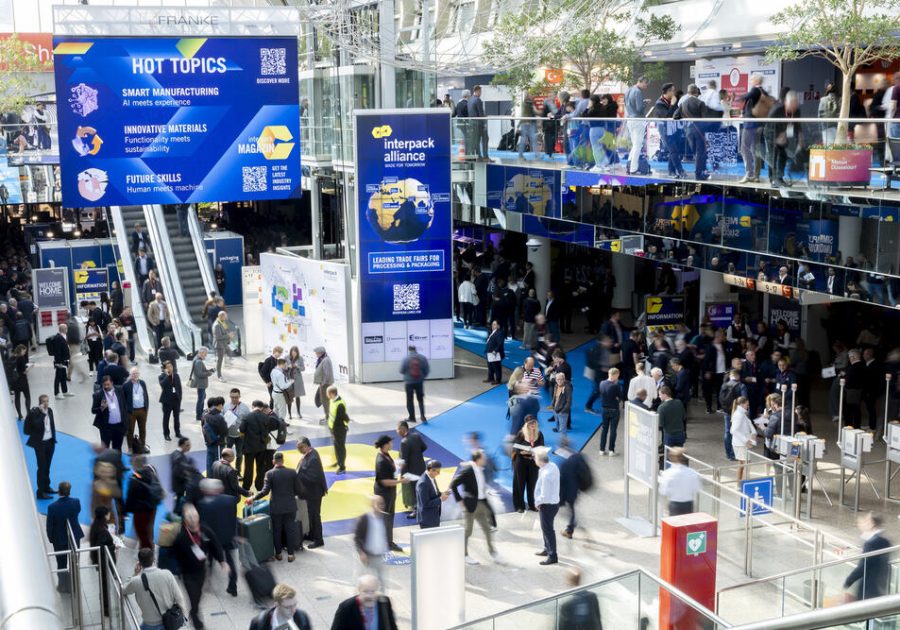
The global packaging sector and its related processing industries converged on the Messe Düsseldorf exhibition grounds for interpack 2026, delivering a signal of resilience, technological transformation, and cross-border collaboration in the face of ongoing economic headwinds.
As the premier triennial gathering for the industry, the event brought together 2,804 exhibitors from 65 countries and trade visitors from 161 nations, providing a comprehensive look at the operational blueprints, machine innovations, and material strategies that will define manufacturing for the next three years.
For visitors navigating the expansive exhibition halls, the core takeaway of interpack 2026 was the rapid maturation of circular economy solutions and digital ecosystem integration. Rather than showcasing distant conceptual designs, exhibitors responded to strict global regulatory pressures — particularly the European Packaging and Packaging Waste Regulation (PPWR) — by presenting highly functional, market-ready technologies.
Attendees were introduced to advanced machinery capable of seamlessly switching between traditional plastic polymers and next-generation, fibre-based materials without sacrificing line speed or efficiency, solving a critical bottleneck for food and beverage producers.
The event marked a shift in how digital tools are applied to the factory floor. Visitors experienced first-hand how artificial intelligence, predictive maintenance software, and open-source data architectures are being used to curb industrial waste and optimise energy usage during production cycles. By placing these smart technologies at the centre of the exhibition, interpack 2026 provided processing professionals with concrete methods to lower their total cost of ownership while simultaneously hitting aggressive corporate sustainability targets.
Reflecting on the event’s scale and commercial impact, Thomas Dohse, Director of interpack, stated at the close of the exhibition: “That was a top interpack. Busy halls, intensive exchange and concrete projects showed the strength of this global community. interpack is the most important meeting place for the industry worldwide, and this edition impressively confirmed that.”
Beyond individual machinery demonstrations, the fair served as an invaluable global knowledge hub during a period of geopolitical and supply chain uncertainty. The diverse line-up of lectures, forums, and specialised stages offered visitors direct access to market intelligence, regulatory updates, and collaborative networking opportunities that are difficult to replicate remotely. By bridging the gap between raw material suppliers, machine builders, and consumer packaged goods brands, the event equipped attendees with the strategic partnerships needed to future-proof their supply chains.
Ultimately, interpack 2026 provided visitors with a unified industry vision. By demonstrating that environmental responsibility and high-volume industrial efficiency are no longer mutually exclusive, the exhibition sent a powerful message of confidence to the global trade, ensuring that processing and packaging professionals departed Düsseldorf with the practical tools and insights required to actively shape the future of the sector.
Topics
artificial intelligence circular economy data fibre-based interpack 2026 PPWR predictive maintenance software
PeopleOrganisations