Sidel engineers tomorrow’s factory
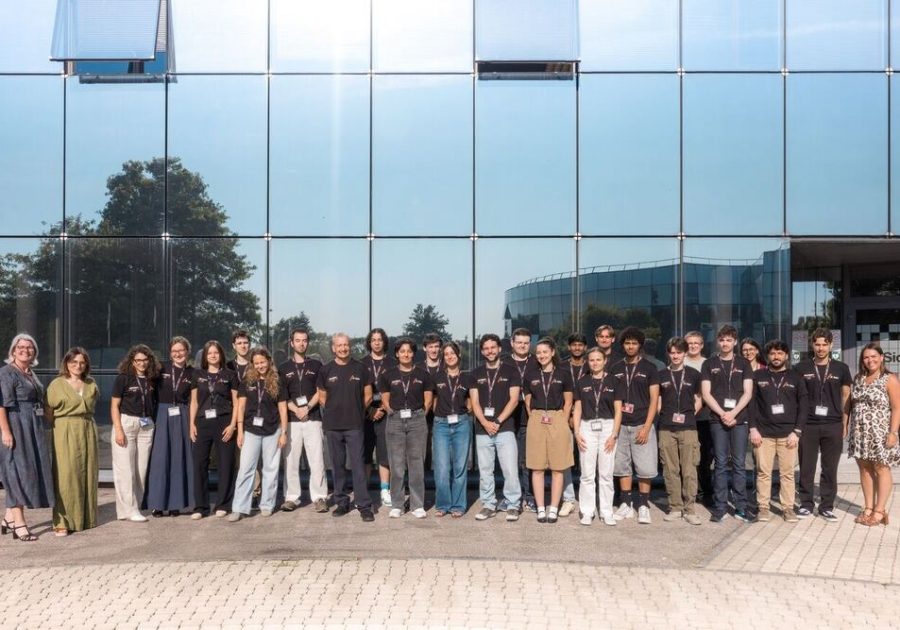
The next generation of engineering talent has been given an opportunity to tackle some of the food and drink industry’s most pressing manufacturing challenges through Sidel’s inaugural Nextgen Innovation Lab.
The three-week programme brought together 19 university engineering students from ten countries at Sidel’s Octeville-sur-Mer facility in northern France, where they worked alongside the company’s specialists to develop practical solutions to real industrial problems rather than theoretical classroom exercises.
For food and drink manufacturers, the initiative offers a glimpse into the technologies and skills likely to shape future production lines.
Throughout the programme, participants explored areas that are becoming increasingly important across manufacturing, including sustainable packaging and operations, industrial artificial intelligence, robotics, computer vision, intelligent machine control and human-machine collaboration.
Rather than simply learning about these technologies, the students were challenged to develop proof-of-concept solutions, prototypes and business cases before presenting their ideas to senior Sidel leaders and technical experts.
The approach reflects a wider shift in manufacturing, where engineering talent is expected to combine traditional mechanical expertise with digital technologies, automation and data-driven decision making.
For processors investing in new production lines, these disciplines are becoming increasingly interconnected. Computer vision systems are helping manufacturers improve inspection accuracy, AI is supporting predictive maintenance and process optimisation, while collaborative robotics are enabling greater flexibility in packaging operations.
The Innovation Lab also highlighted the growing importance of sustainability as a design principle rather than an afterthought. By asking participants to address packaging and operational sustainability from the outset, Sidel is reinforcing an industry trend towards integrating environmental performance into equipment design, manufacturing efficiency and product development.
Another important outcome was the close collaboration between academia and industry.
Participants worked directly with Sidel engineers, visited production facilities and engaged with customers, giving them an understanding of how engineering decisions affect real manufacturing environments. Equally, Sidel benefited from fresh perspectives that challenged established thinking and generated new ideas.
Ko Hoepman, executive vice president of equipment, innovation and portfolio at Sidel, said: “Innovation happens when different perspectives come together. The Nextgen Innovation Lab created a unique environment where young engineers could collaborate with Sidel experts, challenge existing thinking and develop solutions to real industrial challenges.”
He added that participants demonstrated “impressive creativity, technical expertise and collaboration”, bringing fresh perspectives that made the programme valuable for both the students and the business.
The participants themselves also gained a broader appreciation of the complexity behind modern food and beverage manufacturing.
One engineer said: “I didn’t realise there was so much innovation and such a wide range of expertise behind the manufacturing of the products I use every day, and that’s been a very pleasant surprise.”
Another commented: “It’s refreshing to work on real industrial challenges while having direct access to experts who are so open to sharing their knowledge.”
By exposing future engineers to live industrial challenges at an early stage, Sidel is helping build a pipeline of talent equipped to design the next generation of smarter, more sustainable packaging and processing solutions.