
NSF certification puts lubricant control under the microscope
Posted 23 September, 2026
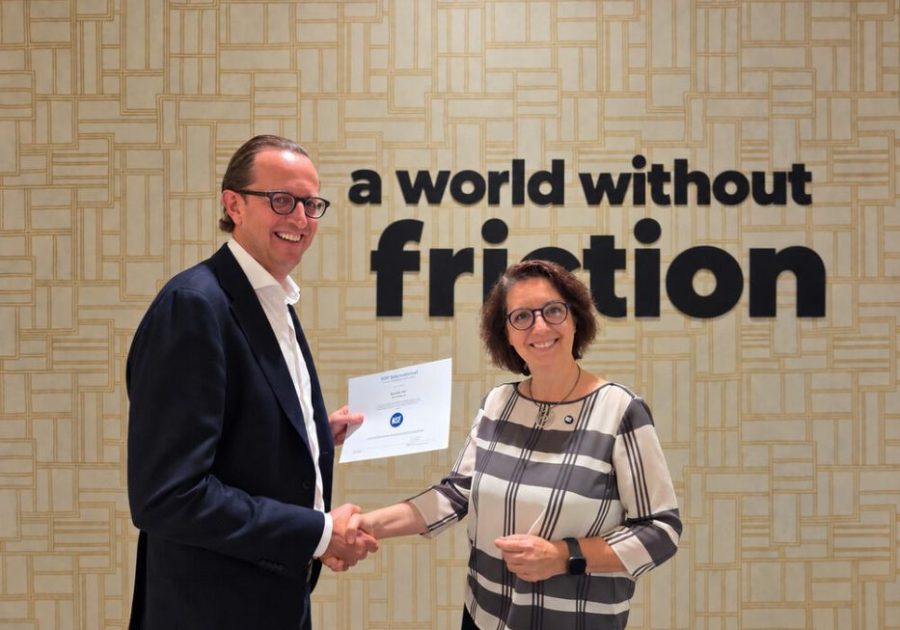
The first NSF 538 MOAH-Free certification has been awarded to Interflon, giving food manufacturers a new independently verified reference point when assessing the lubricants used around food production.
More than 30 of Interflon’s certified food-grade lubricants have achieved certification under NSF Certification Guideline 538, MOAH-Free Products for Nonfood Compounds and Food Equipment Materials.
For food operations, the significance is less about the certification being applied to finished food and more about strengthening control over a potential source of contamination within the production environment.
Tackling a potential source
Mineral oil aromatic hydrocarbons (MOAH) can enter food through a number of routes, including raw materials, processing aids, food-contact materials, environmental contamination and machinery lubricants.
The European Commission identifies lubricants used on machinery among the potential sources of mineral oil hydrocarbons in food. EFSA has also identified concerns around MOAH containing three or more aromatic rings because of their potential genotoxic and carcinogenic effects.
That makes lubricant selection relevant to manufacturers’ wider contamination-control programmes, particularly where equipment operates in proximity to food.
NSF 538 is designed to provide independent verification of the composition of eligible products. Under the certification, products undergo a formulation review and laboratory analysis. To qualify, they must contain less than 100 ppm MOAH according to the guideline and must not contain intentionally added mineral oil, paraffin, naphthenes, polycyclic aromatic hydrocarbons or wax.
Manufacturers must also maintain documented procedures intended to minimise contamination.
Turning supplier claims into evidence
For food manufacturers, one of the practical benefits is the additional evidence available during supplier approval and risk assessment.
Rather than relying solely on a lubricant manufacturer’s own declaration, an NSF 538-certified product has undergone NSF’s assessment process and is listed through NSF’s certification system. NSF says certified products are also subject to annual attestation and retesting.
This gives food operations another mechanism for documenting how potential MOAH sources are being controlled across equipment and maintenance activities.
It can be particularly relevant to manufacturers operating multiple production lines or sites, where standardising approved lubricants can form part of a broader approach to contamination prevention.
Preparing for tighter controls
The certification arrives as EU controls on MOAH in food are moving towards legally binding maximum levels.
The European Commission says Member States voted in favour of a regulation establishing maximum levels for MOAH in food on 13 May 2026, with the regulation targeted for adoption in October. The regulation is due to apply from 1 January 2027, although application of most maximum levels will be deferred to 1 January 2028, with some levels applying from 2030.
The distinction is important: NSF 538 does not demonstrate that a finished food complies with an EU MOAH maximum level. Instead, it provides manufacturers with independently verified information about one input used within the processing environment.
For food businesses, that makes the certification potentially useful as part of a layered approach: identifying possible contamination routes, assessing suppliers and materials, documenting controls and reducing avoidable sources before they can contribute to a finished-product issue.
A wider role for certification
NSF says the certification is available globally for eligible nonfood compounds and food equipment materials. Nonfood compounds must already be NSF registered or NSF certified to ISO 21469, while eligible food equipment materials must be certified to NSF/ANSI 51.
The development also illustrates how certification is evolving alongside the food industry’s approach to chemical contaminants. For manufacturers, the value is not simply in selecting a product labelled “MOAH-free”, but in having independently assessed evidence that can be incorporated into procurement, supplier verification and food-safety documentation.
With Interflon becoming the first company to achieve NSF 538 certification, the scheme provides food manufacturers with another tool for examining the less visible sources of contamination that can arise from the machinery and materials supporting production.