Vetropack scales up lightweight glass bottle production
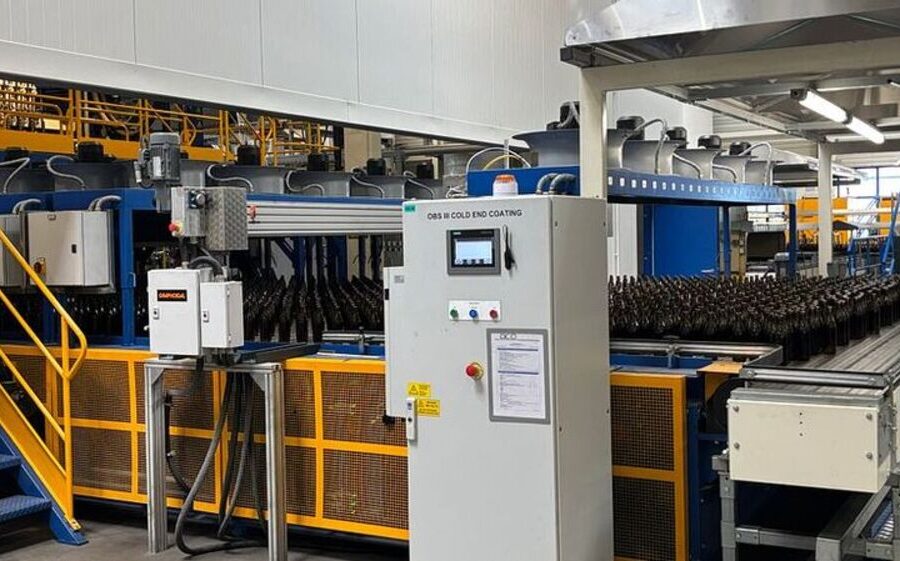
Vetropack has moved its Rezon lightweight glass bottle from pilot production to industrial-scale manufacture, following the successful commissioning of a new large-scale plant at its Pöchlarn site in Austria.
Operating since late summer, the facility produces the thermally strengthened bottles at around twice the speed of the previous pilot plant, using the same workforce. The development marks a significant step in taking the technology from an innovation into a solution that can be supplied in larger volumes to the beverage industry.
During the production ramp-up, which began in spring, Vetropack trained around 30 employees and manufactured more than 300,000 test bottles. Production has since transferred entirely to the new facility.
The increased output has been supported by optimised process steps, automation and digitalisation, according to Guido Stebner, chief technology officer at Vetropack Group.
“We have shown that we can produce Rezon reliably on an industrial scale – in larger volumes and at a level of quality we had not achieved before,” he says.
The improvements also support the company’s wider Strategy 2035, which identifies process optimisation and digital technologies as important elements of its development.
From pilot production to industrial scale
Vetropack introduced Rezon in 2019 as the world’s first thermally strengthened lightweight glass bottle. The technology combines reduced glass weight with increased resistance and durability, addressing two important considerations for reusable packaging: the weight of bottles moving through the supply chain and how long they remain in circulation.
Since its introduction, more than 35 million Rezon bottles have entered the market.
In Austria, a 0.33-litre reusable version has been available as a standard solution to the brewing industry since early 2024, helping producers meet the country’s reusable packaging quota. Beer brands including Gösser and Rieder have already adopted the bottle.
Moving to industrial production gives Vetropack the capacity to extend supply as demand develops. A second large-scale production plant is scheduled to begin operating at Pöchlarn in 2027, with the company intending to extend production to other Group sites in the medium term.
Armelle Dupont, commercial and programme director at Vetropack, says: “We expect significant market growth over the next two years. Market momentum is clearly picking up.”
Lower weight, longer service life
The commercial case for Rezon centres on its performance over the complete bottle life cycle, rather than the cost or weight of the packaging alone.
The bottles are up to 30% lighter than conventional reusable glass bottles while achieving up to 60% more use cycles. Thermal strengthening increases resistance to scuffing, helping bottles retain their appearance over repeated use.
For beverage producers, the combination of lower weight and longer service life can significantly reduce the total cost of ownership (TCO) of a bottle. A longer service life means bottles can remain in circulation for more use cycles, while their reduced weight offers potential efficiencies in handling and transport.
Bottle and crate geometry has also been optimised to increase pallet capacity by up to 33%, allowing more packaging to be moved within the same transport space. This provides a further opportunity to improve distribution efficiency.
Vetropack also reports an environmental benefit, stating that Rezon can reduce CO₂ emissions by up to 70% over its life cycle compared with single-use bottles.
The bottles can additionally be fitted with a Data Matrix code, enabling individual identification and traceability.
Packaging designed around the supply chain
The move into industrial production reflects a wider shift in how packaging suppliers are developing solutions for beverage manufacturers. Performance is increasingly being considered across the supply chain, from manufacturing and distribution to repeated use and end-of-life management.
For Vetropack, Rezon is an example of extending the value of glass packaging beyond the container itself.
“Our customers expect more from us than just high-quality glass packaging. Rezon shows how we create measurable added value: less weight, more use cycles, more efficient logistics and a significantly better carbon footprint,” says Evan Williams, chief commercial officer at Vetropack Group.
“With industrial production, we can now increase the scope and scale of supply of Rezon. This investment demonstrates our commitment to the product and the technology and represents the next step in our leadership in reusable packaging.”
With more than 35 million bottles already on the market and further production capacity planned, Vetropack is positioning Rezon for wider adoption. The next test will be how effectively the increased manufacturing capacity supports demand from beverage producers looking to improve the economics and performance of reusable glass packaging.