Weber’s Neubrandenburg blueprint demonstrates self-sufficiency to producers
For food producers, energy has long been treated as a variable cost — volatile, largely uncontrollable, and increasingly a source of strategic risk.
Weber Food Technology’s announcement that it is developing its Neubrandenburg site into a model location for modern industrial energy supply offers a different proposition: energy as engineered infrastructure, designed around the specific demands of production rather than merely purchased from the grid.
For producers watching input costs and carbon commitments converge, the project is a showcase for industrial energy resilience.
The Neubrandenburg model
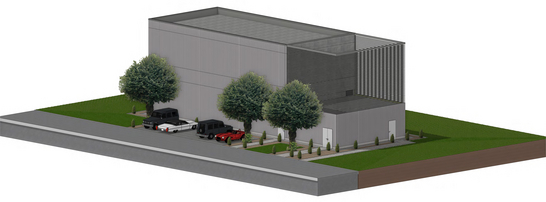
Weber is building an integrated energy system at Neubrandenburg that combines on-site renewable generation, hybrid storage, and intelligent management across production, buildings, heating and cooling, and mobility.
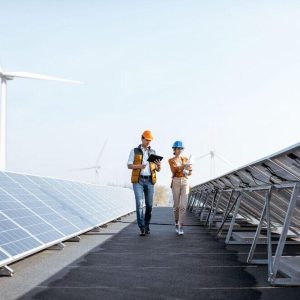
The plant roofs are already fully covered with photovoltaic panels, and Weber plans to add 3.6 MWp of PV capacity plus two small wind turbines totaling 0.5 MW, generating roughly 5.5 GWh of renewable electricity per year.
The centrepiece is a hybrid storage system with about 10.4 MWh of capacity and 4.3 MW of maximum output, pairing a redox flow battery — whose capacity can be expanded by adding tanks of electrolyte — with a lithium iron phosphate battery for fast response.
An intelligent energy management system controls when energy is stored, consumed, or fed back into the local grid, smoothing the intermittency of sun and wind and reducing load peaks. The target is around 80% self-sufficiency, with total investment of approximately €11 million, supported by a €3.1 million grant from Mecklenburg-Vorpommern.
Practical takeaways
1. Energy cost predictability becomes an engineering outcome. Weber CEO Tobias Weber frames the project explicitly around reducing dependence on “fossil fuels, energy imports and short-term price developments” while strengthening “reliability of supply and long-term predictability”.
The project takes into account that when a significant share of electricity is generated and stored on site, the plant’s exposure to wholesale price spikes and grid volatility shrinks.
2. Self-sufficiency is not full independence — and that is the point. The 80% target is deliberately calibrated. Weber still relies on the public grid, but uses storage to reduce load peaks and optimise grid use. Producers can still use on-site generation and storage to cover the bulk of routine demand, keep the grid as backup and balancing partners, and negotiate from a position of lower exposure.
3. The hybrid approach — large, scalable redox flow capacity plus fast lithium iron phosphate response — is specifically suited to operations where demand fluctuates with production schedules, heating and cooling loads, and increasingly electric mobility. The redox flow battery’s expandability by adding electrolyte tanks means storage capacity can grow with the site’s energy needs rather than being fixed at installation. For producers, this signals that industrial-scale storage is no longer a one-size-fits-all battery purchase; it can be phased and sized to match actual production growth.
4. The model is designed to transfer, not remain a showcase. Weber states that experience from Neubrandenburg will be integrated into energy supply development at other locations, with a comparable project already planned at Breidenbach targeting 90% self-sufficiency. That matters for producers because it suggests the Neubrandenburg concept is being treated as a repeatable template — a “practical field test and beacon project” rather than a bespoke one-off.
5. Policy support is part of the producer calculus. The €3.1 million state grant for the storage investment underscores that public funding and regulatory alignment can materially improve the economics of industrial energy projects. The business case depends on available incentives, grid connection rules, and local political support. Neubrandenburg demonstrates that where those align, the investment case can close.
The producer’s bottom line
Weber’s Neubrandenburg project is designed to offer a validated design logic. Generate where you can, store intelligently, manage the system around actual production needs, and use the grid as a partner rather than a sole supplier.
The 80% self-sufficiency target and the hybrid storage architecture provide concrete reference points for what a modern industrial energy supply can look like — and the planned transfer to Breidenbach suggests the model is expected to evolve, not stand still.
For producers facing volatile energy markets and tightening carbon expectations, the most important message from Neubrandenburg is that energy resilience is becoming an engineering problem with a transferable solution, not an unavoidable cost of doing business.