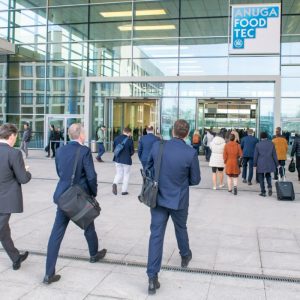
Anuga FoodTec 2027: transforming energy efficiency – smart tech, heat pumps and AI
Low energy costs remain a critical competitive advantage across the food industry. However, achieving net-zero goals requires replacing traditional fossil-fuelled energy with renewable electricity and efficient thermal recovery — without causing load peaks or operational disruption.
Industrial heat pumps are taking centre stage in this transition by lifting waste heat to temperatures between 135 and 160 degrees Celsius for pasteurisation, sterilisation, and steam generation.
“Due to its high need for heat, its waste heat potential and its continuous production cycles, the food industry is one of the most promising sectors for the integration of heat pumps,” explains Isabel Osteroth, senior director sustainable engineering solutions at GEA. Alongside heat pump innovations, providers like Bosch Industrial Heat will showcase electrified steam generation, hydrogen-capable boilers, and hybrid energy systems tailored to individual factory load profiles.
Pragmatic modernisation and retrofitting
Rather than incurring massive capital costs to completely replace operational production lines, food manufacturers are increasingly turning to retrofit concepts. Solutions such as Harter’s heat-pump-based condensation drying run process air through energetically closed loops — dehumidifying, reheating, and recirculating air with zero exhaust emissions. This creates sustainable processing opportunities for sensitive products and secondary bypass streams like apple pomace.
“The decarbonisation of industrial process heat is developing into a technology-open transformation task,” notes Carola K. Herbst, deputy managing director of the DLG Competence Center Agriculture and Food. “Which technologies can ultimately be used sensibly in economical and technical terms depends upon the individual production processes, load profiles and existing infrastructures.”
Smart IoT monitoring and predictive AI
Achieving efficient energy management under ISO 50001 standards requires robust data collection. Modern switching and protective devices now transmit operational telemetry directly into cloud-based energy management networks, linking legacy plant equipment straight to the Internet of Things (IoT).
Building on this connected infrastructure, AI-assisted tools are bringing predictive capabilities to plant managers. “The digital transformation of production is fundamentally changing dealings with energy and resources. Real time data, intelligent control systems and AI-supported analyses allow companies to record energy consumption with significantly greater precision and to dynamically optimise processes,” says Roland Thiemann, director of Anuga FoodTec.
At the trade fair’s new SUSTAINABLE community hub, discussions will focus on how AI forecast models — such as those developed by the Karlsruhe Institute of Technology (KIT) — analyse weather forecasts, energy prices, and production schedules to autonomously adjust power draw.
As Herbst emphasises: “Although volatile energy markets allow access to new savings potential, many industrial production processes have to date only been flexibilised to a limited extent.” Through demand-side management and microgrid controllers, manufacturers can now couple production directly with renewable energy availability, cutting grid strain while securing long-term economic efficiency.
Topics
Anuga FoodTec 2027 boilers energy consumption energy management heat pump hybrid energy steam generation thermal recovery
PeopleCarola K. Herbst Isabel Osteroth
OrganisationsBosch Industrial Heat DLG Competence Center Agriculture and Food GEA Harter’s Karlsruhe Institute of Technology