
Youth interest ripe, skills still unpicked
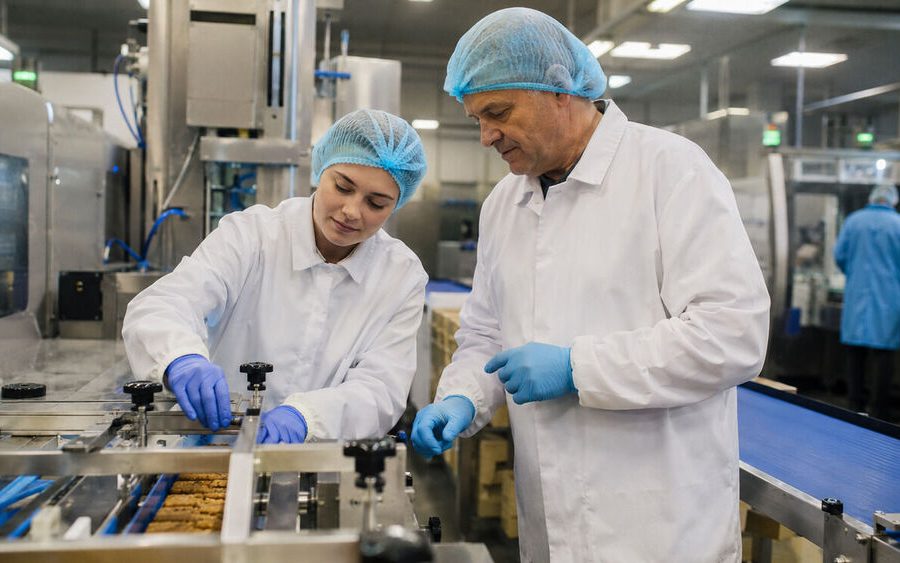
More than a third of young people could be open to a career in food and farming, yet employers continue to struggle to find applicants with the right skills, according to research commissioned by Arla Foods in collaboration with Harper Adams University.
The Securing the Future of Our Food report found that 38% of young people surveyed would consider working in the sector. However, around 84% of Arla farmers who had attempted to recruit said they received very few appropriately qualified applicants or none at all.
The findings reveal an apparent recruitment paradox. Younger people are not uniformly rejecting careers connected with food, but their interest is not consistently turning into informed applications or the capabilities employers require.
Although the research focuses principally on agriculture and horticulture, its implications extend across the food supply chain.
Young people associated farming with purposeful work and a connection to nature, but also with hard labour, long hours and low pay. Some knew little about the careers available or could not see a clear way into the sector.
To manufacturers, this is important because farms, processing sites, dairies, warehouses and logistics operations draw from overlapping pools of people with technical and operational potential.
Food and drink manufacturing also faces recruitment pressure of its own. Food and Drink Federation figures put the sector’s vacancy rate at 3.9% in the first quarter of 2026, with vacancies spanning production, warehousing, skilled machine operation, quality assurance, project management and engineering.
Modern food production needs different skills
The skills challenge is becoming more significant because the work itself is changing.
Modern food production combines established process knowledge with automation, digital traceability, robotics, data-led maintenance and connected quality controls. These technologies can improve productivity and help businesses respond to labour shortages, but they also alter the capabilities required from employees.
Manufacturers increasingly need people who can operate advanced equipment, interpret information, recognise abnormal conditions and work across production, quality and technical responsibilities.
This creates a communication challenge as well as a training requirement. If younger people mainly encounter images of repetitive manual work, they may never see opportunities involving engineering, food science, data, sustainability and technical compliance.
Recruitment campaigns need to provide a more accurate picture of the sector by showing the technology people could use, the problems they could solve and where an initial role might lead.
Better promotion will not resolve the skills gap on its own. Employers must also decide which capabilities applicants genuinely need when entering a role and which can be developed after appointment.

Josh McNicholas, senior member at Evalu-8 HR software.
Josh McNicholas, senior member at Evalu-8 HR software, said: “Employers can unintentionally narrow their recruitment pool by expecting every capability from the outset. People with the right transferable skills can develop role-specific competence through structured onboarding, training and supervised experience.”
Food manufacturers cannot compromise on safety-critical or quality-critical standards. They can, however, distinguish between what somebody needs to know on their first day and what they must ultimately be able to demonstrate.
A new employee may not know a site’s specific production line, digital system, or control procedure. They may nevertheless bring mechanical aptitude, experience of regulated work or strong attention to detail.
Employers then need a reliable process for developing and assessing the remaining capability. Completing a course does not necessarily confirm that somebody can perform a task correctly under real production conditions.
Turning interest into capability
Arla and Harper Adams University are calling for better promotion of career opportunities, earlier exposure through education and clearer ways into the sector.
Food and drink manufacturers can contribute by working with schools and colleges, providing meaningful workplace experience and creating entry points for people with potential, not only those who already possess every required skill.
What happens after recruitment is equally important. Role-specific onboarding, supervised practice and visible progression can help turn initial interest into long-term capability.
This should also form part of technology investment. New machinery and software will only deliver their intended benefits if employees have the knowledge and confidence to use them correctly.
The Arla research suggests the interest is there. The opportunity for manufacturers is to make modern food careers more visible and provide a credible path from initial curiosity to the skills the sector needs.