Packaging becomes alt-protein’s next bottleneck
Alternative proteins won on taste and novelty. The next phase, according to Poly-clip System, will be won or lost on packaging — and the clipping technology specialist is positioning itself accordingly as the sector shifts from pilot lines to industrial-scale production.
From pilot plant to production floor
Poly-clip System frames the alternative protein category as entering a new maturity stage, one where product innovation alone no longer determines commercial success.
“The next stage in the development of alternative proteins will not be determined by taste alone, but by industrial scalability, product safety and resource efficiency. This is precisely where packaging becomes a strategic factor,” said Dr Alexander Giehl, CEO of Poly-clip System.
That maturity curve, the company argues, is what separates alt-protein manufacturing today from established meat and dairy lines. Where legacy categories are mostly modernising existing infrastructure, alt-protein producers are building new production capacity from scratch, often while formulations, textures and formats are still in flux.
Giehl frames the challenge as translating a product idea into reliable, safe, economical industrial production — and says Poly-clip treats packaging as part of an integrated industrial system rather than a bolt-on component.
Flexibility for formats still in flux
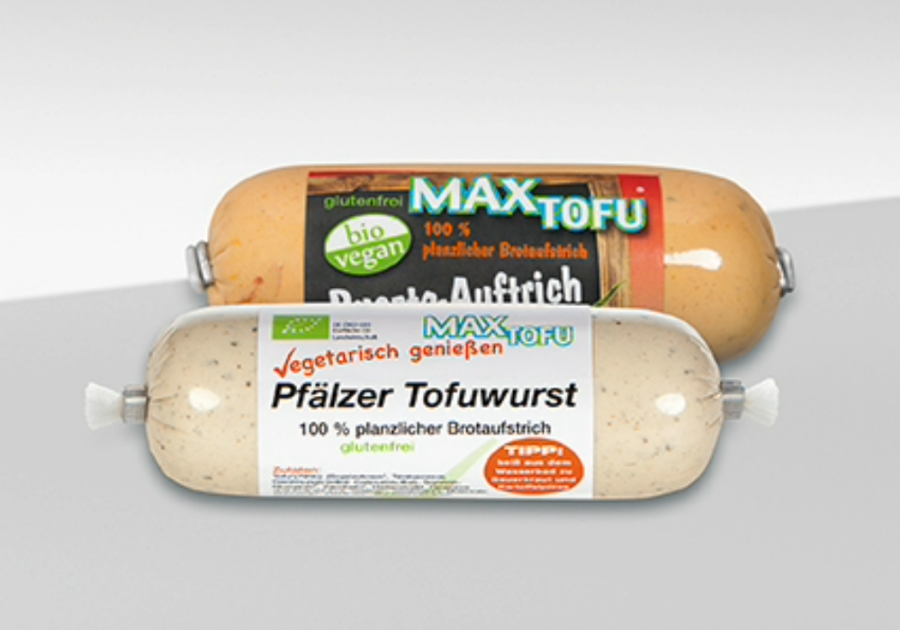
Because plant-based recipes, textures and formats remain unsettled, Poly-clip is pitching flexibility as a core requirement. Its clip technology is designed to handle a range of structures, from sliceable products through to paste-like proteins, and extends to applications including tofu, pastes and convenience formats.
The portfolio spans manual machines for smaller batches up to highly automated lines for industrial volumes, letting manufacturers start small and scale automation as production grows — a structure aimed squarely at producers still working out their format before committing to fixed infrastructure.
The sustainability case
Under the banner “The packaging company with less packaging,” Poly-clip is leaning on third-party sustainability data to make its case. Independent studies by Vienna-based Circular Analytics found that clip-based packaging can meaningfully cut CO2 emissions compared with conventional formats, depending on the application. For sliced sausage, the study measured a clip-pak footprint of 9.74 grams of CO2 against 17.42 grams for a comparable thermoformed tray with top film. For spread sausage, the gap widened further: 13.01 grams for clip-pak versus 79.7 grams for a preformed tray with snap-on lid and film.
Beyond material savings, the company points to reduced transport weight and logistics requirements as additional benefits, alongside process stability and product safety when paired with suitable casing materials and equipment hygiene. “Our task is to design resource-efficient packaging solutions in such a way that they also operate efficiently and reliably on an industrial scale,” Giehl said.
A B2B market taking shape
Poly-clip also flags a shift in who alt-protein manufacturers are selling to. As more producers supply foodservice operators, industrial processors and co-manufacturers rather than end consumers directly, demands around flexible portioning, efficient handling and streamlined logistics are becoming more prominent alongside production capacity itself.
Poly-clip’s pitch reflects a broader point facing the alt-protein sector: the metrics that matter are shifting from formulation wins to unit economics.
As manufacturers move from pilot runs to industrial volumes, packaging suppliers who can offer both format flexibility and defensible sustainability data — backed by independent third-party studies rather than in-house claims — are positioning themselves as infrastructure partners for a sector that still hasn’t settled on its final production playbook.
TopicsPeopleOrganisations