Bottle claims come under scrutiny

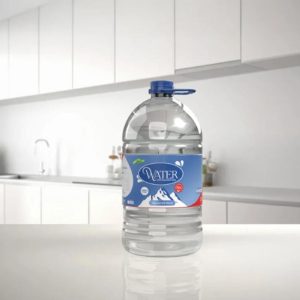
Coca-Cola and Nestlé are changing how they describe the environmental credentials of their plastic water bottles after concerns that existing claims could mislead consumers about recycling.
Danone has since made similar commitments, bringing all three companies within a coordinated European consumer protection initiative.
The changes follow a complaint submitted in November 2023 by the European Consumer Organisation (BEUC), supported by consumer groups in 13 countries, alongside environmental organisations ClientEarth and the Environmental Coalition on Standards (ECOS).
The complaint challenged claims including “100% recyclable” and “100% recycled”, arguing that they could give consumers an inaccurate impression of the environmental benefits of plastic bottles.
Following discussions with the European Commission and the Consumer Protection Cooperation (CPC) network, Coca-Cola concluded its dialogue in June 2025 and Nestlé Waters in February 2026. Danone agreed to similar changes in October 2026, completing the process for the three companies originally identified.
The commitments do not amount to a court ruling against the companies. They do, however, establish clearer expectations for how their packaging and associated marketing should communicate environmental information.
Recycled content is not the whole bottle
One central issue is the difference between a bottle’s recycled plastic content and the composition of the complete package.
A claim such as “I am a bottle made from 100% recycled plastic” can suggest that every component is made from recycled material. In practice, caps and labels may not contain recycled material, while virgin plastic can also be used in the bottle body.
The companies have therefore committed to qualifying relevant claims with wording such as “This bottle is 100% recycled. Excluding cap and label”. The qualification must be placed directly alongside the claim and in the same font size, according to the European Commission’s published commitments.
The distinction is important: a statement about recycled content must accurately reflect what it describes, rather than allowing a claim about one component to imply that the entire pack has the same credentials.
Recyclable does not mean recycled
The complaint also challenged the phrase “100% recyclable”, because the theoretical recyclability of a material does not guarantee that a package will be collected, sorted and processed in practice.
Actual outcomes depend on the collection infrastructure available, the effectiveness of sorting systems and the recycling processes capable of handling the material. Even when a bottle is collected for recycling, there is no guarantee it will be converted into another bottle.
BEUC estimates that around 55% of PET bottles are recycled in the EU, while only around 30% become bottles again. These figures illustrate the gap between a package’s potential recyclability and what happens to it after use.
The companies have also agreed to replace calls to action such as “Recycle me again” with “Recycle me”. The revised wording avoids implying that the bottle has already been recycled and will necessarily return to the same production loop.
For packaging developers, this distinction brings attention to the entire system surrounding a pack: material selection, collection, sorting, recycling capacity and the availability of suitable recycled material for new food-contact packaging.
Why the imagery matters
The issue extends beyond individual words. Environmental symbols, green colour schemes, nature imagery and closed-loop graphics can influence how consumers interpret a package’s sustainability, even when the accompanying text is technically qualified.
The companies have committed to ensuring that the overall impression created by their labels and marketing does not mislead consumers about the environmental benefits of plastic bottles. Their websites and social media campaigns must also reflect the commitments.
This places greater emphasis on reviewing sustainability communications as a whole. A narrowly accurate statement may still create a misleading impression when combined with prominent imagery or other environmental claims.
The European Commission has said national consumer protection authorities will monitor implementation and may take enforcement measures if the commitments are not followed. Authorities will also assess the practices of other major bottling companies operating in the EU single market, with similar commitments possible where necessary.
A wider challenge for manufacturers
The case comes as European rules on environmental marketing become more demanding. The EU’s Empowering Consumers for the Green Transition Directive (Directive (EU) 2024/825) began applying from 27 September 2026, strengthening consumer protection against certain misleading environmental claims and sustainability labels.
For food and drink manufacturers, the implications extend well beyond bottled water. Claims relating to recycled content, recyclability, carbon footprints, biodegradability and other environmental attributes need to be supported by evidence and presented with appropriate qualifications.
That requires coordination across packaging development, procurement, sustainability, regulatory affairs and marketing. Product specifications and supplier data must support the claims made on pack, while artwork approvals and digital campaigns need to be checked for the overall impression they create.
The Coca-Cola and Nestlé case, now joined by Danone, illustrates the commercial and regulatory risks of allowing sustainability messaging to run ahead of what packaging systems can reliably deliver.
Communicating genuine improvements remains important, but claims must explain precisely what has improved, what the evidence supports and what happens in practice after a product has been used.