Unilever’s Knorr aims to have 50% of its product portfolio plant-based by 2025
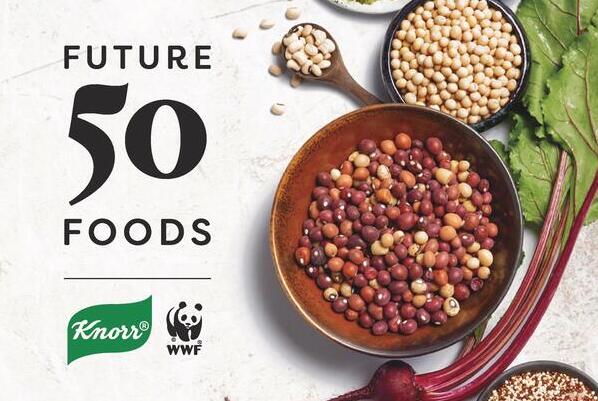
From nutrition workshops in Mexico to food innovation in the Netherlands, Knorr’s investment in a Future 50 Foods report has lead it to work to increase the number of Knorr products with Future 50 Foods by 25% and have 50% of its product portfolio plant-based, both by 2025.
A year ago, Knorr brand and WWF-UK published the Future 50 Foods report and challenged the world to diversify its diet. The reason was simple. Reports showed that our lack of dietary diversity was damaging our health and that of the planet.
Reliance on a small number of plant and animal species was making it increasingly difficult to get the minerals and vitamins we needed – leading to approximately two billion people suffering with micronutrient deficiencies worldwide (WHO).
By providing a list of nutritious plant-based foods that we could all be eating more of, Knorr said the Future 50 Foods report offered a practical way of making sustainable change.
Knorr said its report “surprised everyone by becoming a key player in the climate change debate”.
“We published a solution-based approach at a time when a lot of people were feeling hopeless,” said Dorothy Shaver, global sustainability lead at Knorr. “That positive approach really resonated.”
It also connected with a growing consumer trend for plant-based food, driven in part by health, safety and environmental concerns. According to Euromonitor, the global market for plant-based food and beverages grew at solid single-digit growth (CAGR) over the 5 years to 2019. And the upward trend is expected to accelerate; BIS Research, for example, estimating growth of over 13% (CAGR) for the period 2019-2024.
Knorr went on to list seven ways it can drive an appetite for change:
- Scaling up food service partnerships

Uniting Unilever Food Solutions (UFS) and Sodexo, one of the world’s largest food services and facilities management companies, on this project offered the opportunity to drive positive change through Sodexo menus.
Last September, recipes featuring Future 50 Foods – such as amaranth seeds, ube (a purple yam) and maitake mushrooms – were served by Sodexo chefs in 5,000 professional kitchens in Belgium, the US, France and the UK.
The experience has been so successful that Sodexo has decided to extend it to ten more countries in 2020.
- Being creative with plants

An early success story in this move toward plant-based products has been the ingredient swap made on-pack by Knorr in Germany for key local dishes such as spaghetti bolognese, meatballs and chicken curry.
The carbon footprint of lentils is 83% lower than beef and 64% lower than chicken. By using this Future 50 Food – instead of beef in its bolognese sauce recipe or instead of chicken in the chicken curry recipe – Knorr offered consumers an easy favourite meals with sustainable ingredients.
In environmental terms, this small change has huge potential impact. It is estimated that if the lentil bolognese recipe was prepared instead of the traditional meat-based version once a month for a year, it would avoid 25kg of CO2 production.
“Knorr Future 50 Foods also serves as a roadmap for our own products and recipes,” explains April Redmond, global brand VP. “We’re working to increase the number of Knorr products with Future 50 Foods by 25% and are aiming to have 50% of our product portfolio plant-based, both by 2025.”
Much of this innovation will come out of Hive, Unilever’s €85 million Global Foods Innovation Centre in the Wageningen Campus in the Netherlands, where 500 innovators are working to create products and food solutions fit for tomorrow’s world.
- Teaming up with influential chefs

Knorr reached out to 350 of the world’s most influential chefs and tasked them with putting its Future 50 Foods front and centre of the international dining scene.
Within months, Future 50 Foods were being used in high-end restaurant menus, promoted on social media and starring in cookbooks.
- 4. Empowering parents in Indonesia

In Indonesia, Future 50 Foods have been embedded within the Royco Nutri Menu programme, which helps families learn how to provide balanced, affordable meals for their families.
This is vital in areas such as West Nusa Tenggara Province in Lombok, where 37% of children aged 5-12 suffer from imbalanced nutrition (Riskesdas 2018).
“Now we understand things that we did not know about,” said one mother. “For example, we just learnt that Moringa can be turned into soup.”
Moringa, a versatile Future 50 Food, rich in iron and antioxidants, is also very adaptable to the local weather conditions and climate, which is why Royco is encouraging people to not only eat more of it, but also to plant more too.
- Training teachers in Mexico

In Mexico, Knorr partnered with the National Union of Education Workers to launch a series of nutrition workshops for teachers in three different regions, focusing on Future 50 Foods.
Over 930 teachers were invited to learn about sustainable eating and provided with classroom support materials including worksheets, games and recipes.
It is hoped that through a ripple effect, approximately 47,000 students will now be taught the basics of healthy, sustainable eating, and that they, in turn, will share that knowledge with their friends and families.
- Make the supply chain more Future 50 Food friendly

In South Africa, Knorr is working with WWF to help smallholder farmers in drought-stricken regions grow more viable and sustainable indigenous Future 50 Foods such as fonio and Bambara groundnuts.
These new, more diverse crops will not only be brought into Knorr’s supply chain, but will also boost smallholder incomes, create a more reliable local food source and significantly reduce the environmental footprint of local food production.
- Creating an inspiring, planet-friendly cookbook

The cookbook takes the mystery out of cooking with even the most unusual of the Future 50 Foods. It features a collection of plant-based recipes from around the world that will hopefully inspire home cooks to make positive changes in their daily meals.