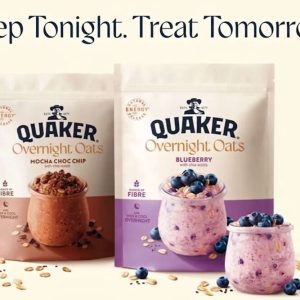
Food manufacturers commit to creating higher fibre options

Image: AdobeStock 1366708144
Since 2021, 1.5 billion parts of fibre have been added to the nation’s plates thanks to the Food & Drink Federation’s Action on Fibre project, which aims to close the gap between the country’s fibre intake and the dietary requirement.
According to the Food & Drink Federation (FDF), participating firms have contributed 118 million fibre servings in the last year alone, which is the same as 88 million bowls of bran flakes.
This is a result of food producers creating new, higher-fibre options and altering the formulas of popular dishes. Participating firms have introduced 400 new products and recipes to store shelves since the Action on Fibre campaign started in 2021.
The news comes off the back of new research, commissioned by the Food & Drink Federation (FDF), showing that millions of Brits could be missing out on the health benefits of fibre. The research shows that just 7% of people know that they should be getting 30g of fibre a day, with the average Brit thinking they only need 12.4g of fibre a day – less than half of the government’s recommendation (source: Survey of 2,000 Brits aged 18+, conducted by Censuswide between 16.05.25 and 19.05.25).
While nearly two thirds of people (65.3%) said they are aware that fibre improves digestive health and nearly half (49.5%) are aware it can reduce the risk of bowel disease, less people (35%) are aware that a high fibre diet can reduce the risk of type 2 diabetes and cardiovascular disease .
In 2015, the UK government boosted its recommended fibre intake guidelines, taking it from 24g to 30g (source: SACN Carbohydrates and Health Report 2015), recognising the role of fibre to people’s health. However, with no public health campaign to raise awareness about how we can eat more fibre, it’s unsurprising that recent government data shows that people aren’t reaching the 30g target. The average Brit eats just 16g of fibre a day, with only 4% achieving the daily recommendation.
Food manufactures are making hitting the daily recommendation even more achievable by providing a range of higher fibre options. For example:
- Kellanova contributed over 13 million portions of fibre in 2024 with the launch of Special K High Fibre Crunchy Golden Clusters. Building on a previous well-loved recipe from its All-Bran range, the new product has 13g of fibre per 100g and reduced sugar, salt and saturated fat compared to the previous recipe.
- Gluten-free bakery brand, Schar, reduced sugar content by 70% and boosted fibre by 12% with the relaunch of its popular Panini roll. It upped the fibre content by changing the recipe to add more higher fibre whole rice and maize flour.
- Action on Fibre’s first retail member, Lidl, has pledged to increase the total fibre it sells by 20% by 2026 and to ensure that whole grains make up a quarter of all the grains it sells by 2030. The supermarket announced a fibre strategy spanning its entire product range.
Kate Halliwell, chief scientific officer, FDF, noted that boosting the amount of fibre in a diet is an easy win for individual’s health. She believes food and drink brands are working hard to make it even simpler to do by developing recipes that help us all to get more fibre.
“We’re proud of the impact our Action on Fibre campaign has had so far, but many people still aren’t aware of just how important a high fibre diet is and there are only limited ways companies are allowed to highlight the fibre content of food,” Halliwell said. “That’s why we’re calling for government, retailers and health charities to work together with food and drink businesses to make it easier for people to choose a high fibre diet.”
According to the new research, two thirds (63%) of Brits say they are likely to pick foods that are ‘a source of’ or ‘high in’ fibre. Yet one in seven (14.9%) said there isn’t enough information about how they can choose foods that are high in fibre (source: survey of 2,000 Brits aged 18+, conducted by Censuswide between 16.05.25 and 19.05.25).
With more needing to be done to help people identify sources of fibre, FDF is calling for government to support the industry’s efforts to increase awareness of the importance of fibre for health and the foods that provide fibre to diets. This includes through positive and practical public health messaging, amplified by industry, championing the healthy choices people can make to support their wellbeing.