Orkney Crab scales production with advanced thermoforming

For seafood processors, the transition from manual or semi-automated packing to high-performance automation is often fraught with a specific challenge: how to maintain a “premium” aesthetic for a product that is naturally irregular in size and shape.
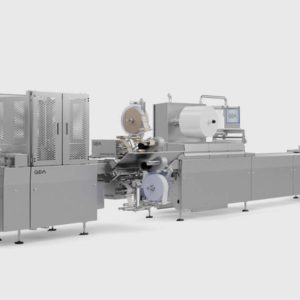
Orkney Crab, a specialist processor of high-quality Scottish shellfish, recently addressed this hurdle by integrating Ulma Packaging UK’s TFS 500 thermoforming machine into its production line.
The move marks a significant upgrade in operational efficiency for the Orkney-based business, which supplies whole crab and lobster to both domestic and international markets.
Whole crab is notoriously difficult to automate. The natural variation in weight and the sharp, irregular shells can easily lead to puncture risks or inconsistent film tension. Orkney Crab required a system that could handle these variations while delivering a uniform, retail-ready pack.
The TFS 500 was selected following rigorous trials at Ulma’s demonstration facility. By testing their own live product on the machinery, Orkney Crab was able to verify the machine’s ability to achieve a tight, clear thermoformed seal around medium-to-large whole crabs without compromising the integrity of the film.
One of the primary drivers for the investment was the need for a versatile line. The TFS 500 offers several key technical advantages for the modern seafood processor:
- Rapid tooling changes: the system allows for quick transitions between crab and lobster production, minimising downtime during species-specific runs.
- Dual-crab capability: when size permits, the machine can thermoform two crabs in a single cycle, effectively doubling the throughput for smaller-grade shellfish.
- Superior clarity: the thermoforming process used by the TFS 500 produces exceptionally clear packs, which is critical for premium market positioning where visual “freshness” is a primary selling point.
The seafood processing environment is inherently harsh, requiring machinery that can withstand high-moisture conditions while maintaining consistent throughput. Since commissioning, the TFS 500 has allowed Orkney Crab to reduce material waste and significantly improve pack consistency compared to previous methods.
“Seeing our own product running on the TFS 500 gave us complete confidence,” said Carla Brown, office & dispatch manager at Orkney Crab. “The machine has been incredibly reliable and delivers a consistently high-quality pack, even with a challenging product like whole crab.”
The success of the project highlights the importance of the “trial and fine-tune” model. Ulma Packaging UK provided a full-service transition, from initial machine specification and on-site operator training to final commissioning. This ensured that the specific requirements — such as film thickness and cycle speeds — were optimised specifically for Orkney Crab’s unique inventory.
For the wider seafood industry, this installation serves as a proof of concept that even the most “difficult” primary products can be automated to a high standard, provided the machinery is robust enough to handle the complexity of the catch.