UK manufacturers urged to ‘collaborate to survive’ amid rising costs
In a climate defined by razor-thin margins and mounting regulatory pressure, the United Kingdom’s food and beverage (F&B) sector is being presented with a new roadmap for survival.
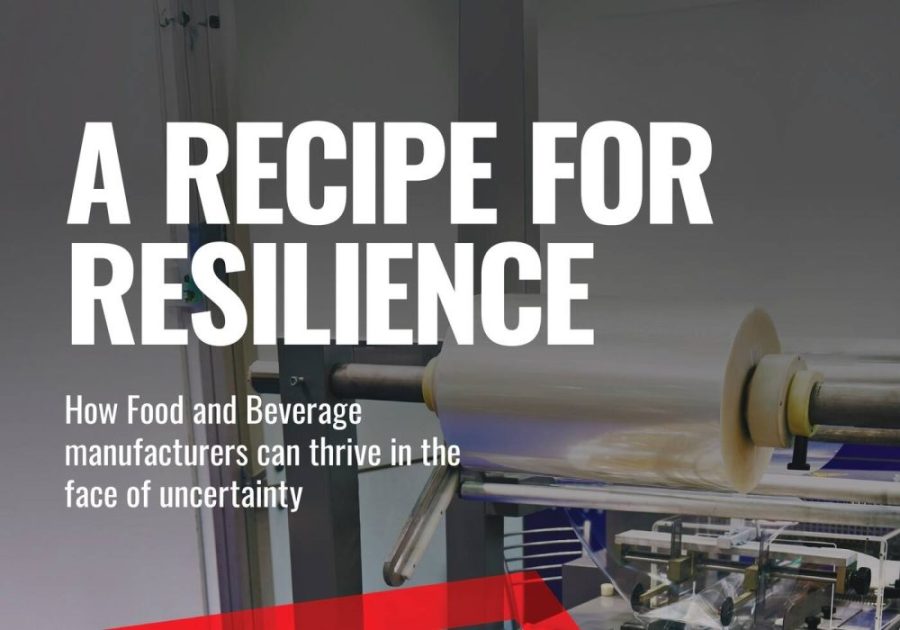
RS, a global provider of industrial product and service solutions, has today released a landmark report titled ‘A Recipe for Resilience,’ urging manufacturers to unlock significant savings through strategic collaboration and operational optimisation.
The report arrives at a critical juncture for the industry. According to the Food & Drink Federation (FDF), F&B remains the UK’s largest manufacturing powerhouse, boasting a £148 billion turnover and employing nearly half a million people across more than 12,000 operations. However, this scale has not insulated the sector from a “perfect storm” of economic challenges.
F&B manufacturers are currently navigating a landscape of surging energy prices, water costs, and labour shortages. Compounding these financial burdens is a wave of new regulatory requirements, including High Fat Sugar Salt (HFSS) legislation—which demands costly product reformulations—and Extended Producer Responsibility (EPR) for packaging.
“It’s a very challenging environment right now,” says Craig Stasik, industry sector manager for F&B at RS. “Manufacturers are operating on tight margins with high-output facilities. Between energy-intensive production and the recent increase in National Insurance contributions, companies are being forced to find ways to recoup costs from deep within their own operations.”
Strategic Levers for Savings
The RS report identifies several “quick wins” and long-term strategic shifts that can bolster a manufacturer’s bottom line:
Energy efficiency: implementing smart monitors to track real-time consumption and transitioning to LED lighting are cited as immediate ways to reduce overheads while meeting ESG (Environmental, Social, and Governance) targets.
Maintenance optimisation: the report highlights a case study where a simple switch to an alternative lubricant for a canning machine—prompted by supply chain issues — saved a manufacturer £48,030.
Downtime mitigation: in an industry where plant downtime can cost upwards of £5,500 per hour, RS emphasises the importance of “critical spare kits.” Having essential parts on-site allows maintenance teams to react instantly, preventing exponential losses in 24/7 facilities.
A central theme of A Recipe for Resilience is the shift away from attempting to manage all technical tasks in-house. With the ongoing skills gap, RS suggests that outsourcing specialised functions — such as inventory management, procurement, and technical studies like thermography — can free up internal resources for higher-value activities.
“Outsourcing allows a customer to free up resource,” Stasik explains. “A specialist provider will often have the best equipment on the market and the niche expertise that isn’t always efficient to maintain in-house.”
Strategic procurement remains the cornerstone of resilience. By consolidating spend and reducing the number of suppliers, businesses can lean out their operations and minimise their exposure to global supply chain disruptions.
As the sector moves through 2026, the ability to remain agile through partnership will likely separate the industry leaders from those struggling to stay afloat. By focusing on MRO (maintenance, repair, and overhaul) efficiency and compliance, manufacturers can pivot their focus back to innovation and growth.
Access the Full Report
Manufacturers and industry stakeholders can access the detailed findings, case studies, and strategic recommendations by downloading the full document here: