GS1 QR code powers Belgium’s reusable packaging trial
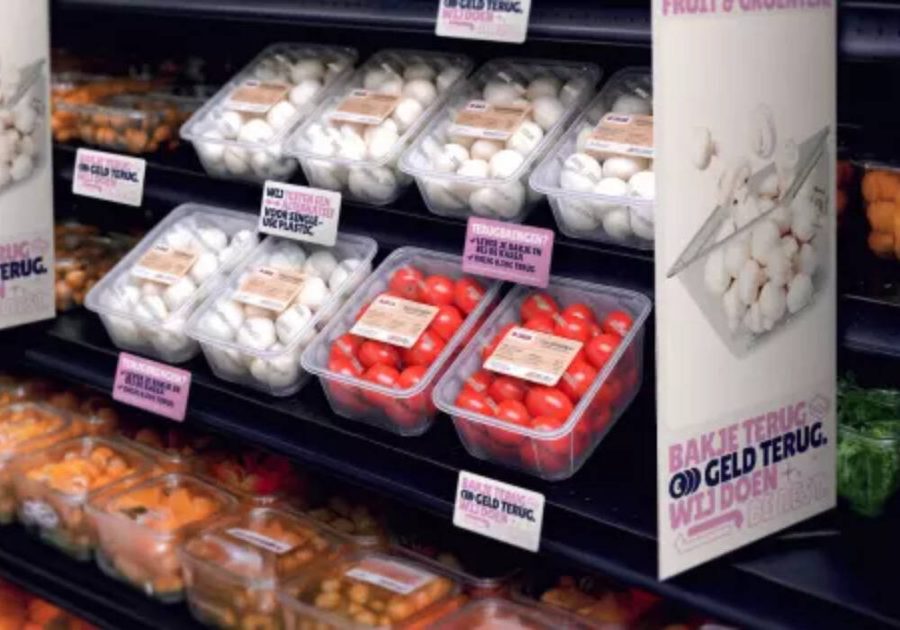
In a landmark collaboration aimed at eliminating single-use plastics in the fresh produce aisle, Belgium’s leading retailers — including Albert Heijn, Aldi, Carrefour, Colruyt, Delhaize, and Lidl — have launched a major pilot project for reusable mushroom packaging.
At the heart of this circular revolution is the QR code powered by GS1, a digital backbone that allows for the individual tracking and management of thousands of reusable trays across a complex multi-retailer supply chain.
The initiative, hosted in Mechelen and supported by Fost Plus, addresses the upcoming EU Packaging and Packaging Waste Regulation (PPWR), which seeks to ban single-use plastic packaging. REPASYS is Belgium’s first pilot to test reusable packaging for fresh food products at scale.
By forming the Reusable Packaging Coalition, these usually-competing retailers have agreed to a standardised system. This open-loop approach means a consumer can buy mushrooms at one participating store and return the empty container to another, significantly lowering the barrier to entry for the general public.
The success of a reuse system depends entirely on traceability. Unlike traditional barcodes, the GS1-standardised QR codes (utilising GS1 Digital Link) printed on each tray provide a unique identity for every individual unit.
- Logistical precision: the codes allow the coalition to monitor return rates, the number of washing cycles per tray, and the speed of circulation through the supply chain.
- Consumer transparency: by scanning the code, shoppers can access information regarding the origin of the mushrooms, the tray’s sustainability credentials, and instructions on how to receive their €0.30 deposit back.
- Industrial cleaning & safety: the digital identity ensures that every tray can be tracked through specialised industrial cleaning facilities (such as those managed by specialist MIVAS), guaranteeing food safety standards before they are re-filled by local growers.
Key benefits for brands are future-proofing compliance, a level of standardisation where using a single tray type across all six retail chains reduces the cost of specialised machinery and cleaning logistics. The GS1 QR code transforms a passive plastic tray into a data-gathering asset, giving retailers unprecedented visibility into lost packaging and consumer return habits.
“What makes REPASYS interesting for us is the combination of the project’s ambition and the simplicity of the system,” noted Elke Gijsbrechts, senior sustainable packaging expert at Fost Plus. “A uniform tray, a clear deposit, return possible at any participating store: these are exactly the conditions that help remove the barriers to reuse. The data we collect will help us advise our members on what works and what doesn’t — and on the conditions needed to go further.”
The six-month pilot in Mechelen is being closely watched as a test case for European food retail. By proving that a QR-code-led digital infrastructure can manage a physical pool of packaging, the partners are demonstrating that the transition to a circular economy is as much about digital standards as it is about sustainable materials.