Ofi report unlocks sourcing certainty
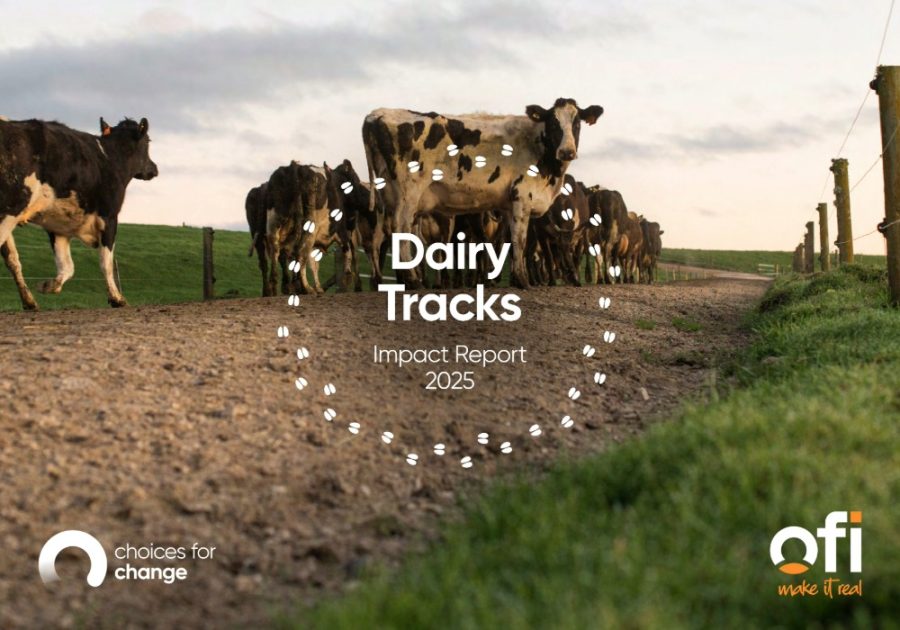
Ingredient giant ofi has moved to disrupt the mounting regulatory and consumer pressure to decarbonise, and the challenge of tracking Scope 3 supply chain emissions data deficit with the publication of its 2025 Dairy Tracks impact report.
By delivering farm-level data across 61% of its global dairy volumes, the company is providing B2B buyers with the primary carbon footprints required to make highly accurate sourcing decisions and future-proof global supply chains.
The significance of the report extends beyond mere compliance tracking. For food processors utilising milk powders, cheeses, and customised formulations across applications like confectionery, bakery, and beverages, the validated primary data offers a distinct commercial advantage. It allows procurement and sustainability teams to shift away from broad climate ambitions toward demonstrated, audit-ready progress that stands up to strict international scrutiny.
Scaling field interventions
According to the 2025 data, farms enrolled in ofi’s specialised sustainability initiatives delivered a measurable reduction of approximately 80,000 metric tons of carbon dioxide equivalent (CO2e). This achievement pushes the multinational ingredient supplier just past the halfway mark toward its 2030 Dairy Tracks target of 150,000 MT CO2e. These targeted climate reductions were validated by the Science Based Targets initiative (SBTi), confirming the rigorous nature of the underlying data.
Rather than relying on abstract corporate pledges, ofi achieved these figures by deploying scalable, on-farm interventions. Key operational levers included the introduction of methane-reducing feed supplements, precise feed ration optimization, and advanced manure management systems across its global supplying networks.
Sandeep Jain, chief commercial officer, CEO, and managing director of dairy at ofi, highlighted how these climate interventions are directly linked to supply chain stability: “Dairy is a foundational ingredient across food and beverage – from drinks to ice cream and desserts – and plays an important role in nutrition for millions of people. But climate risks are already reshaping dairy supply chains, so customers need evidence they can use. That means data that stands up to scrutiny and translates into action. By combining primary data with scalable interventions and the knowledge of our expert teams, we’re helping brands protect both nutritional value and supply resilience, while moving from ambition to demonstrated, data-backed progress across participating programmes.”
Transitioning from averages to precision
The structural value of the report to the wider trade lies in its contribution to product-level carbon tracking. Historically, food manufacturers looking to reduce the footprint of an end-product had to make procurement assumptions based on macro-level national statistics. By securing primary data for 61% of its volume, ofi has established a data foundation designed to scale toward full coverage across all traceable dairy volumes by 2030.
This granularity enables brands to identify exactly where emissions are being abated. It also allows them to confidently communicate these verifiable reductions to increasingly sceptical retail buyers and regulatory bodies demanding full environmental transparency.
Andreas Zweifel, global head of dairy sustainability and climate action at ofi, noted that localised data is essential for driving meaningful agricultural changes: “Farm level data allows us to pinpoint emissions hotspots and work directly with farmers and partners on targeted solutions. That means our customers gain clearer visibility of where reductions are happening and how they can be scaled across supply chains.”
Resilient supply
The Dairy Tracks framework also highlights a broader corporate transition toward ecosystem regeneration and social sustainability, which are core pillars of ofi’s overarching Choices for Change strategy. Operationally, the business has brought 24,000 hectares of farmland under verified regenerative agricultural practices, marking 48% completion of its 2030 goal. Simultaneously, ofi has transitioned its owned processing facilities in New Zealand and Malaysia to 54% renewable energy, closing in on a 60% target for the end of the decade.
Furthermore, the company balanced its environmental targets with social metrics, manufacturing 2.9 billion servings of fortified dairy products to support nutritional access. In emerging markets, ofi extended livelihood support to 1,757 smallholder farmer households in Nigeria, building economic resilience at the very base of the agricultural supply pyramid.
For the international food and beverage trade, ofi’s 2025 reporting signals that the future of ingredient procurement will be dictated by primary data transparency. By proving that emissions can be systematically extracted from the farm gate to the processing plant, the group provides a practical blueprint for how global food brands can insulate their core portfolios from climate volatility while satisfying stringent global reporting demands.
- The Dairy Tracks 2025 impact report is available at: Dairy Tracks Impact Report
Topics
bakery beverages confectionery dairy data transparency decarbonisation Science Based Targets initiative Scope 3 supply chains
PeopleOrganisations