IntelliAM’s agentic AI targets productivity
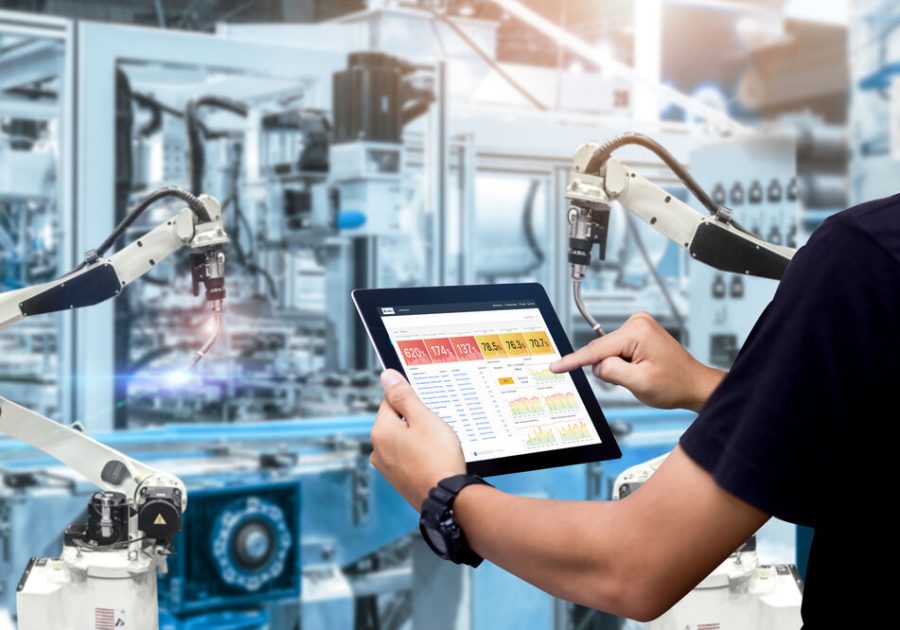
Manufacturers have spent years investing in sensors, Industrial Internet of Things (IIoT) systems and predictive maintenance tools to improve plant performance.
But as labour shortages persist and experienced engineers become harder to recruit, the challenge is no longer collecting industrial data – it is turning that information into better operational decisions.
That is the message behind IntelliAM AI’s launch of its new end-to-end Industrial Intelligence Platform at the London Stock Exchange, marking what could be another significant step in the evolution of industrial AI.
Beyond dashboards and alerts
Traditional industrial AI systems have largely focused on monitoring equipment, displaying performance dashboards or issuing predictive maintenance alerts when failures appear likely.
IntelliAM argues that manufacturers now need technology capable of going much further.
Its platform combines three integrated layers designed to move from data collection to operational action:
- IntelliAM 53 captures and cleans machine and asset data directly from factory equipment.
- Decipher converts that data into contextual operational intelligence and performance analysis.
- Enigma uses agentic AI to recommend – and potentially initiate – operational actions based on real-time factory conditions.
The approach reflects a growing trend towards so-called “closed-loop” manufacturing intelligence, where AI not only identifies problems but also helps operators determine the best response.
Addressing manufacturing’s skills challenge
The launch comes as manufacturers continue to wrestle with skills shortages, ageing engineering workforces and increasingly complex production environments.

Tom Clayton, CEO.
According to IntelliAM CEO Tom Clayton, the industry’s biggest obstacle is no longer access to information.
“Manufacturers do not have a data problem; they have a decision problem,” he said.
He added that Britain’s next wave of productivity improvements will come from extracting more performance from existing production assets rather than building entirely new factories.
That proposition is particularly relevant for food and drink manufacturers, where capital investment cycles are lengthy and even small improvements in overall equipment effectiveness (OEE) can generate substantial financial returns.
Built on factory data rather than generic AI
A notable distinction is IntelliAM’s decision to build its models using industrial operational data rather than relying on general-purpose large language models trained on public internet content.
The company says its platform processes more than 16 billion industrial data points each year, combining more than a decade of manufacturing expertise with live operational deployments.
That industrial focus matters because production environments require deterministic, explainable outputs rather than conversational responses. Factory decisions often involve balancing throughput, maintenance schedules, energy consumption and product quality simultaneously.
What it means for food manufacturers
IntelliAM says it already works with half of the world’s twelve largest food and drink manufacturers.
According to IntelliAM, one deployment increased the mean time between failures by 215% over a 12-month period, highlighting the potential impact of combining industrial data with AI-assisted decision-making.
The wider economic implications could also be significant.
Within the UK’s £37.3 billion food and drink manufacturing sector, the company estimates that a 2% improvement in systemic operational efficiency would generate approximately £746 million in annual value, while a 5% gain could deliver almost £1.9 billion.
The significance of this announcement extends beyond another AI product launch.
Many manufacturers have already invested heavily in digital transformation, yet still struggle to convert operational data into consistent improvements on the factory floor. The emergence of agentic AI suggests the next phase of industrial digitalisation will focus less on collecting more information and more on augmenting engineering expertise.
For food manufacturers facing persistent labour shortages, increasingly automated production lines and pressure to improve productivity without major capital expenditure, platforms capable of translating machine data into actionable operational decisions may become an increasingly important competitive advantage.
If predictive maintenance represented the first generation of industrial AI, agentic operational intelligence could mark the beginning of the next.