Ocean‑plastic labels help brands cut back on virgin fossil materials
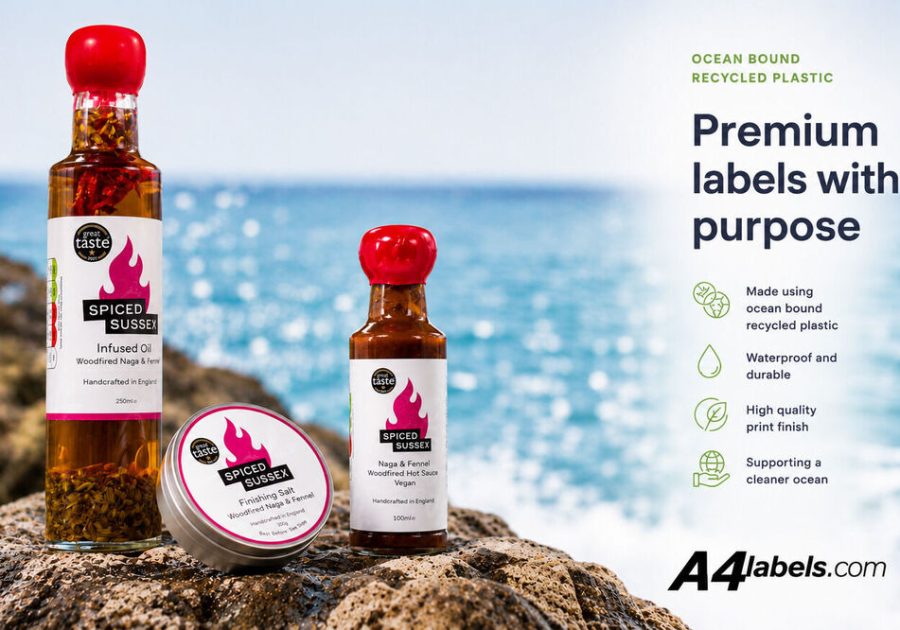
Food and drink manufacturers looking to reduce their dependence on virgin fossil‑based plastics have a new packaging solution to consider, following the launch of A4 Labels’ Ocean Action Labels — a polyester label collection made using chemically recycled ocean‑bound plastic.
The new range offers a direct replacement for standard polypropylene film labels, giving brands a way to increase recycled content without altering their packaging lines or compromising performance.
According to A4 Labels, the material behaves exactly like conventional PP film, meaning manufacturers can adopt it without requalifying equipment, changing adhesives or adjusting application speeds. For many businesses, this removes the risk of disruption to established processes.
Ocean‑bound plastic is collected from coastal regions where waste management systems are limited or absent, making it the material most likely to enter the ocean. By using this waste as feedstock for chemical recycling, the Ocean Action Labels help divert plastic from the environment while supporting a more circular packaging system. The range is ISCC PLUS certified under the mass‑balance approach, ensuring traceability and verified recycled content.
The launch comes at a time when only a small proportion of global plastic waste is recycled, and when food and drink manufacturers are under increasing pressure to meet retailer and regulatory sustainability targets. Labels are one of the simplest packaging components to switch, and A4 Labels argues that adopting recycled polyester substrates can deliver measurable progress on sustainability goals without requiring a full packaging redesign.
The company has partnered with environmental organisation Seven Clean Seas, contributing to the removal of more than four tonnes of ocean‑bound plastic and the cleaning of nearly 30 kilometres of Indonesian coastline. It says this demonstrates how packaging choices can directly support environmental recovery while reducing reliance on virgin fossil feedstocks.
Chemical recycling allows waste plastic to be broken down into its original monomers and rebuilt into new, food‑grade material. For manufacturers, this provides a high‑quality recycled option suitable for demanding applications, including food and beverage labelling, while offering a scalable route to circular packaging.