CCL Configurator simplifies sustainable label selection
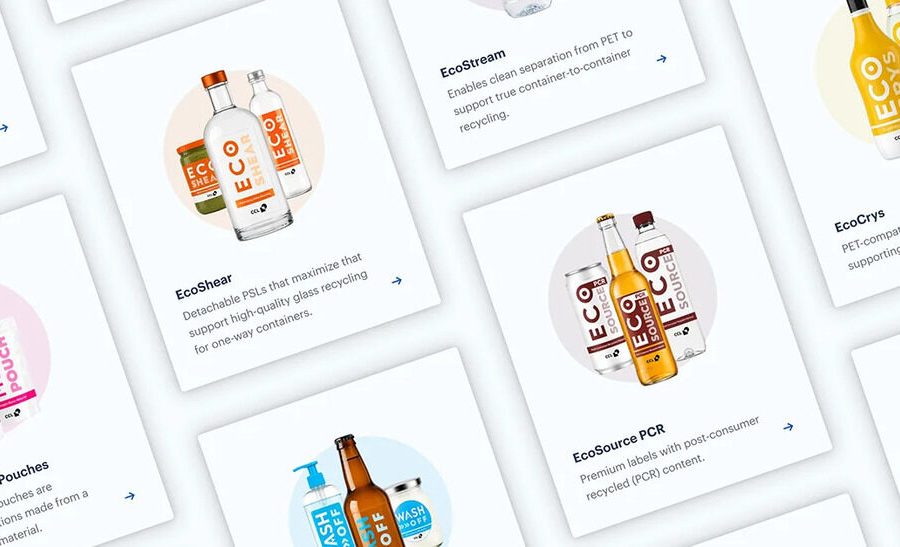
CCL Label has launched a new website featuring an interactive Sustainability Configurator, a digital tool designed to help brands navigate complex recycling demands and select decoration technologies tailored to their specific packaging formats.
The launch comes as the European Union’s Packaging and Packaging Waste Regulation (PPWR) begins to apply, placing stringent emphasis on packaging recyclability, material efficiency, and circularity. Under this regulatory landscape, packaging decisions — including label selection — must be addressed at the earliest stages of product development rather than treated as a post-design addition.
As packaging moves toward a circular economy, labels play an integral role in the overall sorting and recycling process. Factors such as label material, adhesive performance, density, and separation behaviour directly influence whether a package can be successfully recycled at its end-of-life stage.
Circular packaging design
CCL Label’s digital tool simplifies circular packaging design by bridging performance, shelf appeal, and end-of-life processing:
- Substrate & material matching: brands input their base container material (rigid packaging substrates) to explore compatible label technologies tailored to that specific recycling stream.
- Targeted technology selection: provides direct access to CCL’s Sustainable Product Family — including EcoFloat, EcoStream, WashOff, EcoSource, EcoStretch, and EcoShear — to solve application challenges ranging from label separation to renewable material integration.
- PPWR & regulatory alignment: enables product development teams to ensure early compliance with European and global circular packaging mandates by considering end-of-life performance early in the design cycle.
- Preserving brand aesthetics: allows creative teams to maintain premium shelf appeal, brand identity, and functional performance without compromising recyclability.
| Tool capability | Operational function | Impact for brands |
| Substrate filtering | Matches base container materials to compatible label types | Prevents cross-contamination in target recycling streams |
| Separation tech guidance | Recommends floatable, wash-off, or renewable solutions | Maximises material recovery yields during post-consumer recycling |
| Early concept integration | Connects designers with sustainable options pre-launch | Avoids costly late-stage packaging redesigns under PPWR rules |
Reinhard Streit, group vice president food & beverage global at CCL Label said the role of the label has fundamentally changed.
“It is no longer enough to ask whether a label looks good or performs well on the shelf,” Streit explained. “We have to consider how it behaves as part of the complete packaging system and what happens to it after use. With our new Packaging Configurator, we want to make this thinking easier for brands and packaging designers. It provides a practical starting point for exploring label technologies and making more informed choices for packaging designed with circularity in mind.”
PPWR and other global packaging regulations is changing the way brands have to think about packaging. The focus is moving from individual components to the packaging system as a whole.
“A label may represent only a small part of the overall package, but the choice of label can have an important role in how that package performs in the recycling process,”. said Marika Knorr, head of sustainability & communication at CCL Label. “The configurator helps brands explore these choices early, when there is still an opportunity to design the packaging system accordingly.”
The shift to systemic packaging design
Historically, labels were evaluated primarily on shelf presence and application speed, with recycling behaviour treated as a downstream issue. Under PPWR, this siloed approach is no longer viable. CCL Label’s Sustainability Configurator addresses a key operational friction point by giving packaging engineers and brand managers data-backed guidance at the concept phase. By treating the label as a functional component of the whole packaging system, brands can protect product appeal while guaranteeing circularity and regulatory readiness.
Brand owners and packaging engineers should integrate digital configuration tools early into their new product introduction (NPI) workflows. Evaluating label separation, adhesive properties, and substrate compatibility prior to mass production is now essential for mitigating PPWR compliance risks and achieving true circular packaging design.