Europe’s plastics sector pushes back on PPWR
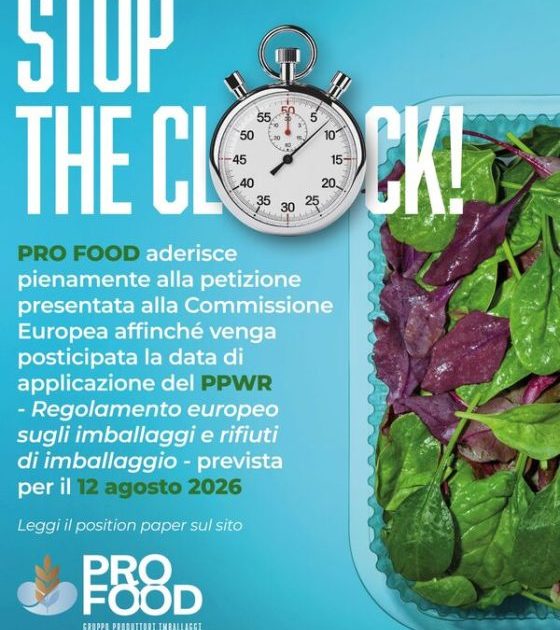
ProFood and Unionplast have intensified calls for the EU to “stop the clock” on the Packaging and Packaging Waste Regulation (PPWR), arguing that the legislation’s most disruptive bans risk destabilising food supply chains, undermining recycling progress and fragmenting the single market.
Their outreach paper — circulated to EU institutions in early July — frames the issue not as resistance to circularity, but as a warning that the regulation’s current trajectory is evidence‑light, operationally risky and structurally uneven.
Regulation without assessment
At the centre of their critique is the PPWR’s Article 25 and Annex V — the sections introducing bans on specific plastic formats, including packaging for certain fresh fruit and vegetables. ProFood and Unionplast argue that these bans are advancing without a dedicated impact assessment, leaving policymakers blind to consequences for food waste, recyclability, costs and cross‑border logistics.
The outreach paper states that “there is NO specific impact assessment for Article 25/Annex V bans” — a line that underscores industry frustration with what they see as policymaking by assumption rather than evidence.
This matters because the Commission’s own PPWR impact assessment estimates a net environmental benefit of less than 1% of annual EU CO₂ emissions, and does not quantify food waste impacts — despite the EU generating 59 million tonnes of food waste annually. Without modelling how packaging bans affect shelf life and spoilage, industry groups argue the regulation risks increasing emissions rather than reducing them.
A small category, a disproportionate disruption
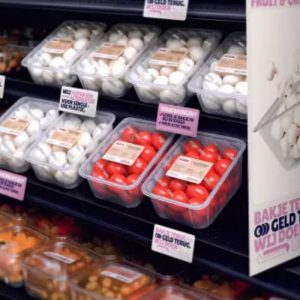
Pre‑packed fresh fruit and vegetable packaging represents just 1.5% of all plastic food packaging in Europe. Yet this small category is the focus of sweeping bans that would force rapid substitution into alternative materials.
ProFood and Unionplast argue this is disproportionate — especially because many of these formats already contain around 70% post‑consumer recycled content, surpassing PPWR’s own 2040 recycled‑content thresholds. In their view, the regulation would ban packaging that already meets circularity goals, while allowing less recyclable alternatives to remain on the market.
Material type vs circularity performance
One of the most contentious issues is the PPWR’s material‑based logic. A paper tray with a thin plastic coating can remain on shelves. A tray made largely from recycled plastic cannot.
For ProFood and Unionplast, this is a structural flaw: the regulation rewards material type rather than actual circularity performance, recyclability, or food protection. They argue that this approach contradicts the PPWR’s stated objectives and risks pushing the market toward materials with weaker recycling streams.
SUPD as a cautionary tale
The outreach paper draws a direct parallel with the Single‑Use Plastics Directive (SUPD). After SUPD bans, imports of paper cups, pulp trays and wooden cutlery surged by 150%, adding more than €400 million per year in imported single‑use items.
The lesson, they argue, is banning plastics does not automatically reduce environmental impact. It can simply shift production to non‑EU suppliers, weaken domestic recycling markets and increase overall consumption of single‑use materials.
Risk of single‑market fragmentation
Annex V allows Member States to create exemption lists for fruit and vegetable packaging. Without harmonised EU‑wide criteria, ProFood and Unionplast warn of 27 different national regimes, complicating logistics for packers, retailers and distributors operating across borders.
This fragmentation would undermine the PPWR’s goal of creating a unified regulatory framework and could slow investment in scalable circular solutions.
Cost shock and investment freeze
The outreach paper highlights significant cost implications. In Italy alone, the sector faces an estimated €1.5 billion impact if bans proceed as drafted. For stone fruit, alternative packaging could add €0.20/kg, a 60–70% increase in packaging costs — in a category already experiencing declining consumption.
Higher costs, they argue, will reduce investment in recycling infrastructure and innovation, weakening Europe’s circular economy rather than strengthening it.
Enforcement gaps
ProFood and Unionplast stress that PPWR enforcement must apply equally to EU and imported packaging. Without robust traceability and recycled‑content verification for imports, compliant EU operators risk being undercut — and environmental goals undermined.
Given SUPD’s import surge, they argue this is not a hypothetical risk but a predictable outcome.
A pause, not a rollback
ProFood and Unionplast are not calling for PPWR to be abandoned. They want a temporary cessation of the most disruptive bans until:
- a comparative, performance‑based impact assessment is completed
- Article 25(6) guidelines — due February 2027 — are finalised
- harmonised EU‑wide exemption criteria are established
- enforcement mechanisms for imports are strengthened
If these conditions cannot be met in time, they propose a suspension until 2035 to avoid destabilising supply chains and recycling markets.
The wider industry signal
Their intervention reflects a broader tension in EU packaging policy: ambition vs. operational reality. The PPWR aims to accelerate circularity, but industry groups warn that poorly evidenced bans could:
- increase food waste
- increase imports of non‑EU packaging
- penalise high‑performing recycled formats
- fragment the single market
- divert investment away from recycling infrastructure