
Black Bee Honey crosses £1m milestone
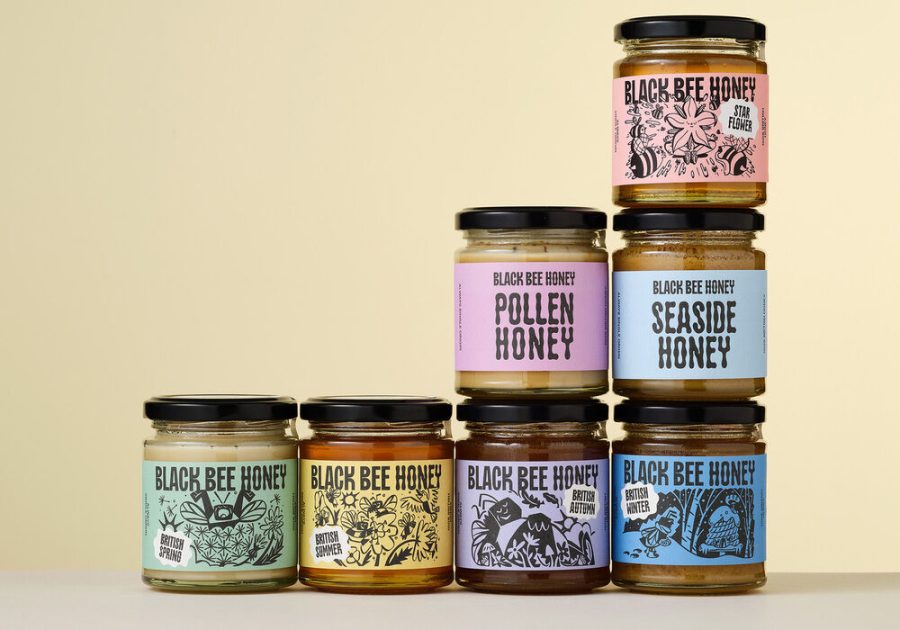
British honey has spent decades as a commodity category — blended, anonymised, and priced accordingly.
Black Bee Honey has built its business on the opposite proposition, and the numbers now suggest that bet is paying off.
The Somerset-based beekeeper collective has surpassed £1 million in annual turnover, with revenue up 49% year on year, marking its most significant commercial milestone since launching in 2017.
From rooftop hobby to national supplier
The company’s origin story is unusually specific for a food business: co-founders Chris Barnes and Paul Webb met in a London office two decades ago and bonded over a shared interest in beekeeping, eventually tending more than a million bees across the capital’s rooftops and gardens. That hands-on experience exposed them to a stark contrast between hive-fresh honey and the standardised blends dominating supermarket shelves — a gap that became the founding premise for Black Bee Honey.
That premise has scaled considerably since. The business now operates from a Somerset headquarters, runs its own apiaries locally, and works with a network of more than 15 British bee farmers nationwide. Every jar carries the name of the beekeeper and the hive’s location, a traceability model that has helped the brand secure listings with Holland & Barrett, the National Trust, Ocado and Booths, alongside its position as sole supplier for Harrods’ British honey range.
Provenance as a growth driver
For co-founder Paul Webb, the milestone validates a strategy built around resisting commoditisation rather than chasing it. “Reaching £1 million in turnover is a huge milestone for us, particularly because we’ve built the business without compromising on what made us start it in the first place. We set out to prove that British honey could be exceptional, distinctive and worth knowing where it came from,” he said.
Webb frames the growth as evidence of a broader shift in consumer priorities. “The growth we’re seeing tells us that consumers are increasingly interested in the provenance of their food and in supporting businesses that do things differently. We’ve always believed British honey has been undervalued, and there’s a huge opportunity to change that.”
Sustainability built Into the model
The company’s growth has run alongside a set of sustainability commitments rather than in spite of them. Black Bee Honey holds Certified B Corporation status and Living Wage Employer accreditation, and since 2020 has donated 2% of turnover to wildflower meadow creation and management through a partnership with Plantlife, supporting habitat restoration for bees and other pollinators.
Co-founder Chris Barnes ties that environmental commitment directly to the brand’s commercial identity. “We’ve never wanted to make honey that is tame, plain or disconnected from nature. Our whole reason for existing is to keep British honey wild – to work with great beekeepers, respect the natural cycles of the environment and let the character of each place come through in the honey,” he said.
On what the milestone means going forward, Barnes was equally direct about where he sees the value. “To reach £1 million in turnover is a brilliant achievement for the whole community around Black Bee. But for us, growth only really matters if we can use it to support more British beekeepers, protect more habitat and get more people excited about the incredible honey being produced here in the UK.”
Reaching £1 million in turnover positions Black Bee Honey as a proof point for provenance-led food brands more broadly: that transparency and traceability, rather than scale and standardisation, can be a viable route to sustained growth in a category long dominated by commodity pricing.