EAF and Roslin pack in protein
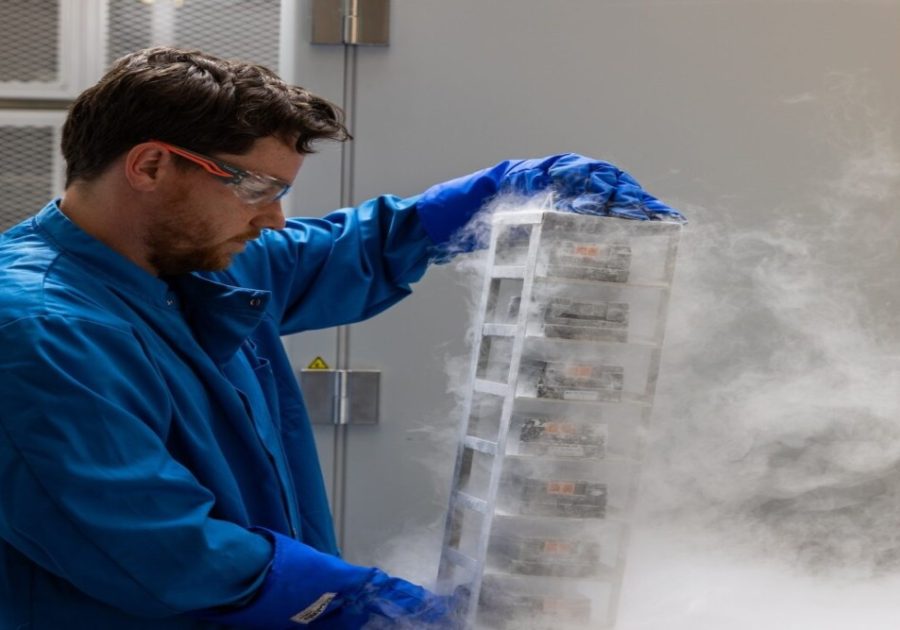
Israeli cultivated meat company Ever After Foods (EAF) and animal cell technology company Roslin Technologies have announced results from a joint production programme pairing Roslin’s cell platform with EAF’s Edible Packed Bed (EPB) technology.
The companies say they produced structured tissue directly within a scalable, food-grade process.
The numbers
Using the same cells in both systems, the companies compared the EAF platform against a stirred-tank suspension benchmark. Tissue was produced directly on PlantriX, EAF’s proprietary edible scaffold. The reported gains were:
- 19 times higher dry biomass productivity
- 19 times higher cultivated protein productivity
- 11 times higher wet biomass productivity
In absolute terms, the EAF platform reached a cell density above 150 million cells/ml, with volumetric productivities of 326gr/l wet biomass, 57gr/l dry biomass and 40gr/l cultivated protein.
More than a numbers game
The detail behind the headline figures is where the companies focus their argument. The productivity improvement came from two sources: cell density was five times higher than in the benchmark, and each cell also produced four times more protein and dry biomass.
That second factor is the crux of EAF’s case. According to the release, increasing cell density has been a primary focus for the cultivated meat industry for more than a decade, but cell expansion is only one part of the manufacturing challenge. Commercial production, it argues, depends on how efficiently cells can produce edible protein, biomass and structured tissue.
Eyal Rosenthal, CEO of Ever After Foods, said: “The industry has become very good at growing cells, but cells are not the final product. What matters commercially is how efficiently those cells can produce edible protein and tissue.”
He added that the improvement “went well beyond simply increasing cell density”, pointing to a broader way of thinking about productivity: how much edible protein and tissue the cells ultimately produce, rather than cell count alone.
Keeping the scaffold honest
Scaffold-based approaches invite an obvious question about how much of the final product is the scaffold itself. EAF addresses this directly. All productivity and composition metrics were achieved with an edible plant-based scaffold representing less than 2% of the final product by weight.
All wet biomass, dry biomass and protein values were also calculated after excluding the scaffold and media contribution, meaning the reported results reflect only cultivated cell-derived material.
Cells meet process
The work also speaks to how cell and manufacturing technologies fit together. Ernst van Orsouw, CEO of Roslin Technologies, said the results “demonstrate the versatility of our porcine pluripotent stem cells across bioreactor systems and the opportunity to achieve substantial gains in productivity in EAF’s tissue-production environment.”
He described the collaboration as “an encouraging example of how complementary technologies can be integrated to address key scale-up challenges.”
The companies say the combination provides a path from cell expansion through structured tissue production and manufacturing scale-up. They are now building on the results through additional development and scale-up work to advance the combined cell and tissue-production platform.
Protein and output
For cultivated meat producers and the food companies evaluating them, the programme offers a reminder to look beyond cell count when assessing process performance. EAF’s argument is that productivity should be judged by edible protein and tissue output, and that a platform’s value lies in what each cell delivers as well as how many cells it can hold.