Potato processors find more value in less waste
Food waste across the Dutch potato processing industry continued to decline in 2025, with the average waste rate for frozen potato products falling to 4%, according to the latest industry monitoring results published by Food Waste Free United (Samen Tegen Voedselverspilling).
The figures, compiled through the food waste monitor operated by Wageningen University & Research (WUR) in collaboration with six major potato processors, indicate that 96% of incoming potatoes, vegetable oils and other ingredients are processed into food products. Most remaining material streams are also put to productive use, including as food ingredients, animal feed and bio-based materials.
The results point to the contribution that improvements in processing efficiency and more effective recovery of by-products can make to reducing waste across food manufacturing.
Optical sorting improves raw material utilisation
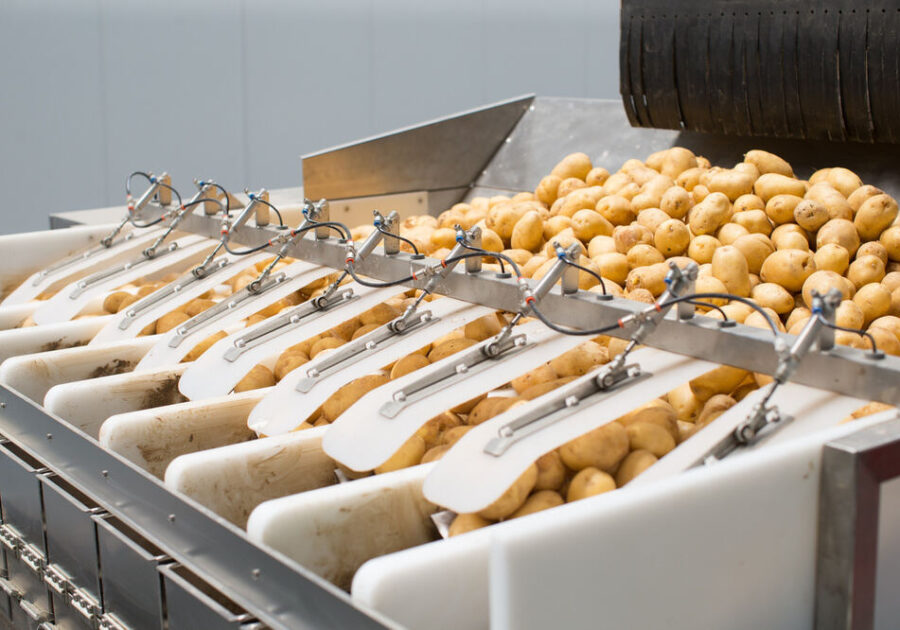
Improvements in production efficiency were a key factor behind the reduction in residual material recorded during 2025. More effective optical sorting is helping processors make better use of incoming potatoes, reducing the volume of material rejected or lost during processing.
The technology allows processors to identify and separate potatoes according to their characteristics, supporting more accurate sorting and helping more of the raw material reach the finished product.
Companies are also working on earlier and more effective separation of starch from process water. Recovering starch before it enters wastewater can prevent the loss of a potentially valuable material and improve its suitability for subsequent applications, including animal feed.
Product development creates new opportunities
Waste reduction is also influencing product development. Processors are exploring products that retain the potato skin, as well as formats that make use of smaller or shorter potato pieces that might otherwise become residual material.
These approaches offer manufacturers opportunities to use more of the raw ingredient while broadening the range of products that can be produced from the same raw material supply.
The industry is also looking to move residual streams further up the value chain, prioritising their use in food, animal feed or materials rather than sending them for anaerobic digestion.
Starch recovery offers further potential
One area attracting particular attention is the recovery of so-called grey starch, which is generated during potato blanching.
Its use as animal feed could make a significant contribution to further reducing food waste. Lamb Weston has already invested in additional facilities at its new factory in Kruiningen, the Netherlands, to enable grey starch to be supplied for animal feed.
However, wider uptake will depend partly on regulatory changes that could expand the opportunities for using this material in feed applications.
Progress towards 2030 targets
The sector’s progress is measurable. Compared with its 2021–2023 average, food waste in the frozen potato processing industry had fallen by 7% in 2025.
This puts the industry on course towards the EU’s 2030 target of a 10% reduction in food waste for food processing, measured against the 2021–2023 baseline. Further improvements will be needed to close the remaining gap.
The monitoring programme, now in its sixth consecutive year, demonstrates the value of measuring waste at sector level. By sharing results, processors can identify where losses occur, compare progress and target investment in technologies and processes that improve raw material utilisation.
For potato manufacturers, the next gains are likely to come from combining more precise sorting and separation with better recovery routes for starch and other residual materials. The objective is not simply to reduce the volume of waste leaving the factory, but to ensure that more of every tonne of incoming raw material becomes a usable product.