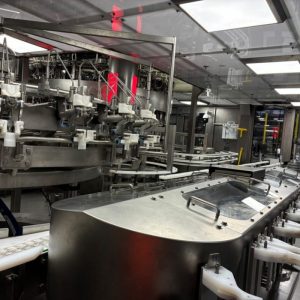
Precision bottling
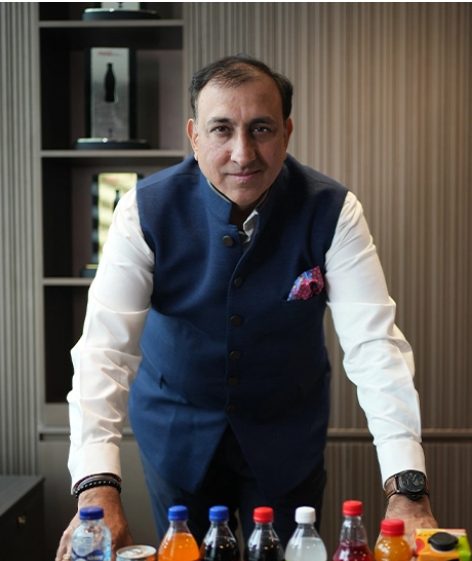
Vivek Ladhani , director, SLMG Beverages
In a country where the beverage market is expanding at an extraordinary pace, fuelled by a rising middle class, growing health awareness, and an insatiable demand for packaged drinks, the bottling industry is no longer just about filling bottles. It is about filling them right, every single time.
Across India’s manufacturing shop floors, a consequential revolution is underway: precision bottling, powered by automation, artificial intelligence, and the Internet of Things (IoT), is rapidly redefining what operational excellence looks like.
For decades, India’s bottling operations were characterised by semi-automated lines, high manual intervention, and reactive quality checks. Today, that picture is changing decisively. Advanced automated bottling lines now integrate robotics and AI to manage filling, capping, labelling, and inspection with minimal human error. This technological momentum arrives at a pivotal moment for Indian manufacturing.
Government initiatives like Make in India and Production-Linked Incentive (PLI) schemes are channelling investment into domestic capacity. India’s precision tools market alone is projected to grow from approximately ₹116 billion in FY2024 to ₹183 billion by FY2030.
The bottling machinery market globally is on a parallel growth trajectory, expected to reach USD 6.30 billion by 2030, rising at a CAGR of 5% from 2025 to 2030. Leading Indian beverage manufacturers, from large multinationals to fast-growing domestic players, are embedding smart sensors throughout their production lines to enable real-time monitoring and rapid troubleshooting, reducing downtime while improving consistency.
The precision imperative
The precision gains are not marginal. Modern filling systems equipped with AI maintain fill-level accuracy within a half-percent variance, even when handling liquids of varying viscosity or operating under fluctuating temperature conditions. For a high-volume plant producing hundreds of thousands of units daily, this degree of control results in reduced product waste, stronger regulatory compliance, and more predictable margins.
Modern bottling operations are no longer just about filling containers; they are about delivering consistency at scale. Precision begins at the material level. Advanced blow-moulding technologies ensure uniform wall thickness and structural integrity of bottles, reducing defects and enhancing durability.
This engineering precision extends across the line, from rinsing and filling to capping and labelling, where tolerances are now measured in microns using computer-aided design (CAD) and manufacturing (CAM). Such tight control ensures that every bottle meets stringent quality benchmarks, critical in sectors like pharmaceuticals and food-grade packaging.
From inspection to intelligence
Quality control in bottling has moved beyond manual inspection to intelligent, real-time monitoring systems. Vision-based inspection technologies use high-resolution cameras to detect defects such as misaligned caps, surface imperfections, and label inaccuracies at high speeds.
Simultaneously, IoT-enabled sensors track critical parameters, such as fill accuracy, pressure, and contamination levels, throughout the production cycle. These systems provide real-time alerts, enabling immediate corrective action and ensuring compliance with regulatory standards. When a deviation is detected, whether in fill weight, seal integrity, or label placement, the system flags and often corrects the issue without halting the line. This shift from reactive to predictive quality control is a defining feature of Industry 4.0 adoption in India’s manufacturing sector.
Predictive maintenance, enabled by IoT analytics, is another frontier being actively adopted.
Rather than waiting for equipment failure, a scenario that can cost lakhs in downtime, sensors detect subtle aberrations in machine performance and trigger maintenance before a breakdown occurs.
Companies deploying such systems have seen unplanned downtime fall sharply, with some global benchmarks pointing to reductions of up to 45%.
Perhaps nowhere is the technology leap more visible than in quality control. Traditional inspection relied on periodic manual sampling, a method inherently prone to inconsistency.
Today, AI-powered computer vision systems scan hundreds of containers per minute on moving production lines, identifying defects such as underfills, foreign particles, misaligned labels, or compromised seals with a speed and accuracy no human team can match. The ability to catch and reject a non-conforming unit in milliseconds, rather than during an end-of-line audit, is the difference between a quality culture and a quality crisis.
At the leading edge of Indian manufacturing, digital twin technology is beginning to take root. A digital twin, or a virtual replica of the entire bottling line, allows engineers to simulate process changes, test new parameters, and identify bottlenecks without halting actual production.
The road ahead
Indian manufacturers that invest in precision bottling technology today are not merely upgrading their equipment; they are upgrading their competitive positioning. As global supply chains increasingly demand verifiable quality standards, traceability, and operational transparency, a smart bottling line is no longer a luxury. It is the price of entry.
As the industry continues to evolve, the integration of smart technologies, predictive insights, and digital engagement models will further elevate manufacturing standards. For Indian bottlers, precision is no longer optional; it is the foundation of competitiveness in an increasingly dynamic and quality-conscious global market. In India’s ambition to become a global manufacturing leader, that foundation may well be the decisive differentiator.
About the author: Vivek Ladhani is director at SLMG Beverages