Glass bottles have higher levels of microplastic particles than plastic bottles, cans, or cartons

Image: AdobeStock_1481771194
Glass bottles have higher levels of microplastic particles than those in plastic bottles, cans, or cartons.
This was the unexpected conclusion of a study carried out by the ANSES Laboratory for Food Safety‘s Boulogne-sur-Mer unit. The paint used on bottle caps may be the source of these plastic particles, according to the scientists’ idea. Compared to other beverages, wine and water are less impacted.
The lab concludes these results have identified a source of microplastics in beverages that can be readily addressed by producers.
The aim of the ANSES study was to determine the level of microplastic contamination in drinks such as water, soda, iced tea, wine and beer; it also sought to establish the impact of their containers on this level. For most of the drinks studied, the level of microplastics was found to be higher in glass bottles than in other containers. For example, on average, in glass bottles of cola, lemonade, iced tea and beer, there were around 100 microplastic particles per litre. This number was five to 50 times lower in plastic bottles and cans.
“We were expecting the opposite result when we compared the level of microplastics in different drinks sold in France,” explained Iseline Chaïb, a PhD student in the Aquatic Food Safety Unit (SANAQUA, Boulogne-sur-Mer site), which conducted the study at the ANSES Laboratory for Food Safety.
In the absence of toxicological reference data, it is not possible to say whether the levels of microplastics found pose a health risk. The thesis was co-funded by the Hauts-de-France Region and ANSES. The project also received support under the IDEAL State-Region plan contract and from the French National Research Agency (IFSEA University Research School).
In the specific case of water, the level of microplastics was relatively low regardless of the container, with an average of 4.5 particles per litre in glass bottles and 1.6 particles per litre in plastic bottles and cartons. Wine also contained few microplastics, including in glass bottles with corks. The origin of these variations in the level of microplastics in drinks remains to be explored, except for drinks contained in glass bottles with caps.
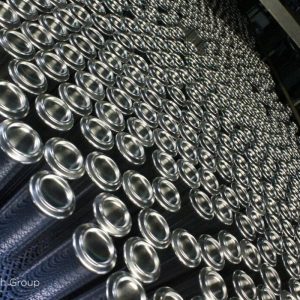
The scientists investigated the origin of the microplastics found in drinks packaged in glass bottles with caps. Given their characteristics, they concluded that these particles probably came from the metal caps, and more specifically from the paint that covered them.
To confirm the route of contamination of drinks in glass bottles and explore the possibility of reducing microplastic levels, the laboratory tested the effects of different cleaning operations.
“We studied three scenarios” explains the PhD student. “We cleaned the bottles and filled them with filtered water so that no microplastics could be detected, then we placed caps on the bottles without treating the caps, after blowing on the caps with an air bomb, or after blowing air and rinsing the caps with filtered water and alcohol”.
The result? While an average of 287 particles per litre were found in the water of the bottles sealed with uncleaned caps, this number decreased significantly, to 106 particles per litre, when air was blown on the caps before they were placed on the bottles. It fell further to 87 particles per litre when blowing was followed by rinsing.
To prevent plastic particles from being released into drinks contained in bottles sealed with caps, manufacturers could also explore other lines of action, such as changing the conditions in which the caps are stored before use, to avoid friction, or modifying the composition of the paint used on the caps.