
GEA tackles “citrus greening” volatility with pressurised pulp clarifier
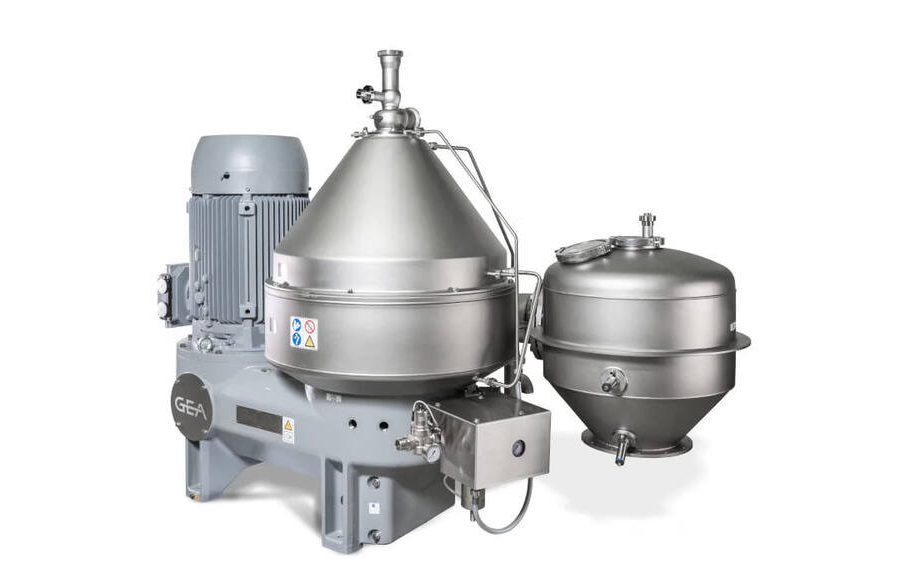
GEA GSE 150 CPR: The separator clarifies pulp-rich citrus juices in the medium capacity range and continuously discharges pulp under pressure – typically with two to four solids discharges per hour. Image: GEA
As the global citrus industry grapples with the devastating impact of “citrus greening” (HLB) and record-low juice stocks, GEA has launched the GSE 150 CPR, a centrifuge designed to bring stability to increasingly unpredictable processing lines.
The new clarifier is engineered specifically for medium-capacity processors who must manage the fluctuating solids and lower juice content typical of HLB-affected fruit. By employing a pressurised, constant pulp removal (CPR) system, the machine allows for continuous operation even when raw material quality is highly inconsistent.
The launch comes at a critical juncture for the trade. In Brazil, the world’s leading producer, nearly 48% of the Citrus Belt is currently affected by greening, resulting in smaller fruits and uneven solids. When combined with 2025’s extreme drought — which saw rainfall drop 55% below average — global stocks of Brazilian orange juice concentrate (FCOJ) have hit a historic low of 146,300 tons.
“When raw fruit quality and solids content fluctuate more strongly, process stability becomes an economic lever,” says Rüdiger Flocke, area sales manager at GEA. “The GSE 150 CPR continuously discharges pulp under pressure, making clarification processes more robust and reducing product losses.”
The GSE 150 CPR departs from conventional separator design by using a specialised separating disc and a second centripetal pump. This allows pulp to be conveyed out of the machine under a constant pressure of up to 4 bar.
The operational benefits for the factory floor are significant:
- Fewer interventions: while conventional clarifiers may require up to 30 solids discharges per hour under high loads, the GSE 150 CPR typically requires only two to four.
- Increased throughput: by continuously discharging a portion of the flow, the CPR model can process roughly 50% more product than a standard separator of the same size.
- Yield recovery: fewer discharges mean less product carryover and juice loss, a vital factor when raw material costs are at an all-time high.
Consumer trends are also driving the need for better pulp management. According to Innova Market Insights, premium juice buyers now demand specific “texture profiles.” GEA’s new system offers an optional automatic control that measures discharge viscosity in real-time. This allows producers to adjust the pulp flow precisely, ensuring consistent quality across different batches and reducing the time lost during product changeovers.
The unit is rated for capacities up to 17,000 litres per hour for orange juice and 12,000 litres per hour for lemon juice, and is equally suitable for pulp washing and cloudy peel extract.
The GSE 150 CPR sits between GEA’s larger GSI 300 models and smaller units, providing a right-sized entry point for growing markets in Egypt, Turkey, and Southeast Asia. Built for 24/7 industrial use, it features a stainless-steel, CIP-capable design and a low-maintenance flat belt drive.
For high-availability operations, GEA also offers its InsightPartner monitoring system, which tracks vibrations to enable condition-based maintenance — ensuring the “heart” of the juice line keeps beating through even the most challenging harvest seasons.