Harper Adams unveils inaugural vintage
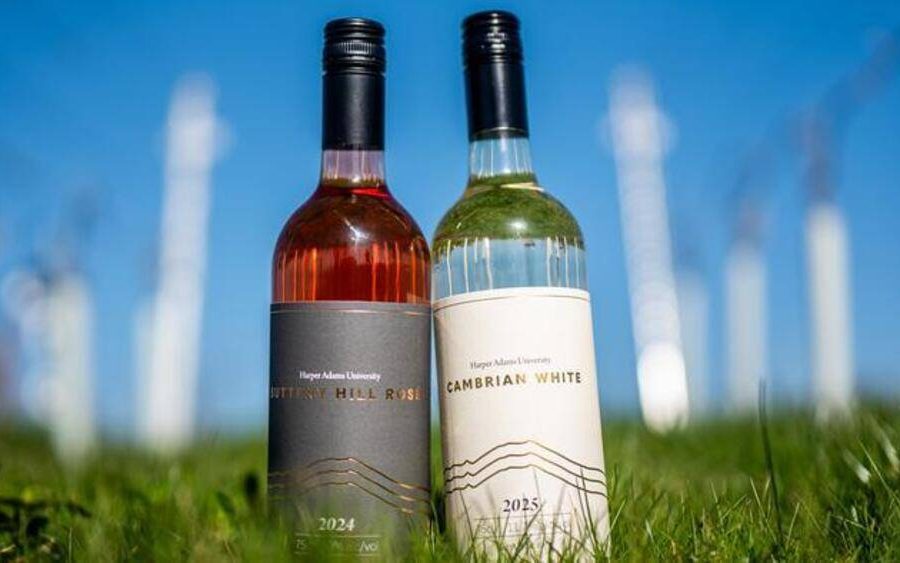
Harper Adams University has officially stepped into the commercial viticulture market, launching its first two wine ranges produced directly from its Shropshire estate.
The debut vintage, headlined by the 2024 Buttery Hill Rosé, represents more a move to position the university as a central hub for the UK’s rapidly expanding wine industry.
A multipurpose vineyard laboratory
The reasoning behind the project is rooted in the university’s mission to bridge the gap between academic research and commercial agricultural reality. Rather than a standard commercial enterprise, the vineyard was established to serve as a high-tech educational platform.
“The Harper Adams vineyard has been designed to do three main things – to be a classroom, be a laboratory, and be a production site,” explained Professor Frank Vriesekoop, Adjunct Professor in food biotechnology.
Navigating a changing climate
A primary driver for the launch is the evolving British climate, which is opening new frontiers for grape growing in regions like the West Midlands that were previously considered unsuitable.
“The Harper Adams vineyard is not a ‘one size fits all’ vineyard – the vine varieties range from very traditional to the more recently-developed vines that are highly disease resistant and will get to maturation in the climatic conditions of the Midlands,” noted Professor Vriesekoop.
He further highlighted the role of climate change in the project’s strategy: “There are two drivers for the increase of viticulture, and winemaking, in the UK… the notion that global warming has shifted the climate enough to even allow more traditional grape varieties to do well in the UK.”
Supporting farm diversification
The launch also aims to support farmers and landowners who are looking for new revenue streams. Successful vineyards provide dual income through production and tourism, a trend the university hopes to foster through its new viticulture courses.
“This allows the university to, firstly, develop and deliver hands-on courses… These enable people wanting to enter into the grape-growing and wine industry to be exposed to a wide range of grape varieties that are planted and pruned and maintained in a variety of ways,” said Professor Vriesekoop.
The university’s choice of “PIWI” (fungus-resistant) grape varieties is intended to teach the next generation of winemakers how to produce high-quality yields in cooler, damper climates with fewer chemical interventions.
“We purposely planted newer grape varieties that stand a much better chance to combat most common diseases encountered in grape vines, especially in a slightly cooler and damper country like the UK… This sets the scene to teach how to manage more modern grape varieties,” Professor Vriesekoop added.
Alumni and local producers have already hailed the launch as a milestone for regional skills development. Clive Vickers, of Halfpenny Green Vineyard and a Harper Adams alumnus, remarked: “What is more important is that the English and Welsh wine industry now has the chance to develop its skills in viticulture through courses at Harper.”
Finally, the university views the commercial sale of the wine as a means to sustain the very research that created it: “These wines are examples of what future producers can exploit using different grape varieties, and the wines itself will offset the cost of maintaining the vineyard,” concluded Professor Vriesekoop.
Topics
climate change food biotechnology viticulture wine
PeopleClive Vickers Frank Vriesekoop
Organisations