SIPA approval opens route to lighter PET packaging

SIPA has secured approval from a major global bottler for its GME 30.40 neck finish in nitrogen hot-fill applications, a development that could help beverage producers cut PET use while simplifying preform inventories and production operations.
The approval marks a significant step in the development of lightweight PET packaging for hot-filled beverages, where packaging components must withstand both elevated temperatures and the pressures associated with nitrogen dosing.
The project emerged from a practical manufacturing challenge. A leading bottling partner had already moved its carbonated soft drinks (CSD) and still mineral water production lines from the traditional PCO 1881 neck finish to the lighter GME 30.40 standard. However, four to five nitrogen hot-fill lines continued to use the older 1881 finish.
Because the bottler manufactures its own preforms, this created an additional layer of complexity: the company was maintaining the older neck finish specifically for the remaining hot-fill applications, despite having standardised much of its wider production around GME 30.40.
When the bottler commissioned a new nitrogen hot-fill line, SIPA saw an opportunity to test whether the GME 30.40 could be extended into the application rather than retaining the established 1881 format.
Validating lightweighting under hot-fill conditions
SIPA developed a 400ml juice container using existing GME 30.40 preforms and closures supplied by the global beverage group. Laboratory testing was undertaken at SIPA’s facility in collaboration with the bottler’s European technical centre, assessing performance under thermal stress and internal pressure.
The design subsequently underwent testing on the commercial production line. SIPA says the industrial trials reproduced the performance achieved during laboratory validation, providing the basis for approval of the neck finish for nitrogen hot-fill production.
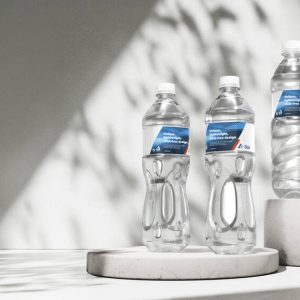
The resulting GME 30.40 design has a validated weight of 2.70g, representing a 29% reduction against the traditional 1881 neck finish. Crucially, SIPA says the lighter finish retains the mechanical properties required for hot-fill conditions while also handling pressure requirements of up to 4.2 volumes of CO2. It is also compatible with tethered closures.
That combination is important for manufacturers because lightweighting cannot simply be measured in grams removed from a bottle. Neck finishes are a critical structural component of PET packaging, and reducing material has to be achieved without compromising filling performance, package integrity, closure compatibility or line reliability.
SIPA’s wider hot-fill packaging technology is designed around this balance. Its PET solutions for juice, tea, isotonic and other beverages include containers capable of handling hot-fill temperatures of up to 92°C, as well as pasteurisation, while reducing bottle weight.
Beyond material reduction
The significance of the GME 30.40 approval therefore extends beyond the immediate resin saving.
For beverage manufacturers running multiple filling formats, standardisation can have a direct operational impact. SIPA argues that using the same neck finish across CSD, still water and nitrogen hot-fill applications can reduce the need to maintain separate preform inventories and simplify production logistics.
This is particularly relevant for integrated bottlers producing a diverse portfolio from the same manufacturing site. Rather than carrying an older neck specification for a relatively small number of specialist lines, producers could potentially consolidate components around a lighter, commonly used format.
That has implications for procurement, warehousing and preform production as well as packaging sustainability.
The approach also demonstrates why lightweighting is increasingly becoming an engineering exercise rather than simply a material-reduction programme. The objective is to remove material from the package while preserving the performance required by the filling process and the product itself.
SIPA pushes the weight down further
SIPA is already taking the concept further with its SIPA LIGHT GME 30.40 neck finish.
At 2.04g, the lightweight version represents a claimed 46% reduction in weight compared with the traditional 1881 finish and a further 24% reduction against the standard GME 30.40. The company says it remains fully tetherable and compatible with standard 30.40 closures, meaning existing capping infrastructure does not require modification.
For manufacturers, this could make the neck finish an increasingly important target for PET lightweighting programmes. While individual gram savings may appear modest, the cumulative effect across high-volume beverage production can be substantial.
The wider direction of travel is already evident in PET packaging development. SIPA has previously highlighted lightweight neck technologies as a way of reducing resin consumption while maintaining mechanical reliability and compatibility with high-speed production environments.
What it means for beverage manufacturers
The development illustrates a broader shift towards packaging systems that are designed around the realities of the production line rather than treating the bottle as an isolated component.
For manufacturers, the potential benefits are threefold: lower PET consumption, fewer packaging variants to manage and greater flexibility in applying a common neck standard across different beverage processes.
The fact that the GME 30.40 has now been validated in an industrial nitrogen hot-fill application is particularly relevant. Laboratory performance is one thing; demonstrating that the technology can operate reliably on a commercial line provides a considerably stronger case for adoption.
As beverage producers face continuing pressure to reduce packaging material, costs and environmental impact without compromising product safety or operational performance, developments such as this point towards a more integrated approach to PET packaging design.
SIPA’s approval could therefore prove significant beyond a single neck finish. It provides a case study in how standardisation and lightweighting can work together – using packaging engineering to simplify the factory while reducing the amount of material required to put a beverage on the market.