Oterra and HowGood colour in carbon
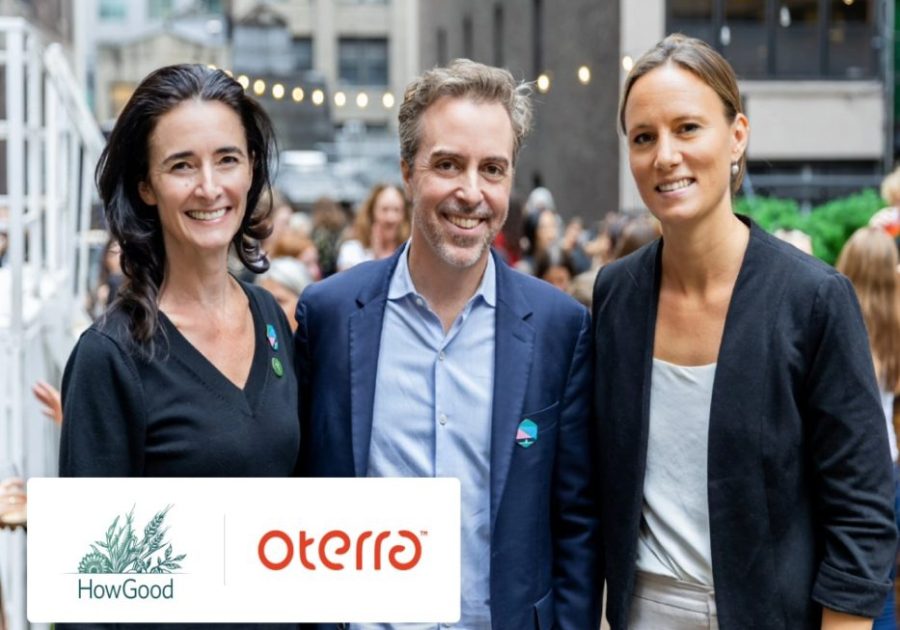
Left to right: Rachel Calomeni, Alexander Gillett, and Vera Karmeback.
Oterra has partnered with sustainability intelligence platform HowGood to give customers product-level carbon data on selected ingredients, supporting their Scope 3 reporting and decarbonisation work.
From site data to product data
The partnership will provide Product Carbon Footprints (PCFs) for selected products in the Oterra portfolio, giving customers more detailed data on the products they buy.
Oterra already produces supply chain and site data. What changes is the link: the partnership connects that data to the product actually supplied to customers. In the first phase of the collaboration, Oterra will develop PCFs for selected products using HowGood’s method and sustainability intelligence platform.
Ingredient insight
For food and beverage manufacturers, the practical benefit is ingredient-level insight. The insights will help customers understand and manage the footprint of the ingredients they buy from Oterra, feeding into their own Scope 3 reporting and decarbonisation work.
Vera Karmeback, head of global sustainability at Oterra, framed the move as a response to customer demand.
“Our customers are looking for greater transparency across their supply chains in order to reduce carbon emissions and other impacts,” she said. “This partnership with HowGood provides the transparency, data and methodology needed to drive decarbonization in Oterra and our customers.”
The data also works in the other direction. Oterra will gain access to HowGood’s product carbon footprinting capabilities, helping it better understand, measure and communicate the environmental impact of its products, and advancing decarbonisation initiatives throughout its own supply chain.
Part of a wider strategy
The announcement builds on Oterra’s 2030 Sustainability Strategy, launched earlier this year, which is built around three pillars: Nature, Climate and People. Its targets span climate action, responsible sourcing, ecosystem protection and people development, and a key element is working closely with partners, suppliers and customers to accelerate progress beyond Oterra’s own operations.
“Partnerships are essential if we are to create lasting change,” Karmeback added. “Our sustainability strategy recognises that collaboration across the value chain is critical.”
HowGood’s Rachel Calomeni, SVP of Growth & Innovation, said the shift towards granular data is now essential.
“Granular sustainability metrics are no longer a nice-to-have for food companies – they’re imperative to making meaningful progress in sustainability commitments, improving transparency with suppliers and consumers, and understanding the true environmental impact of their products,” she said.
Supplier-level commitments are giving way to product-level numbers that buyers can use directly in their own emissions reporting. For manufacturers working through Scope 3 targets, a colour supplier able to supply footprint data on the ingredients it sells is one less gap to fill with estimates.
Topics
decarbonisation PCFs product carbon footprints Scope 3
PeopleRachel Calomeni Vera Karmeback
Organisations