Soil searching for savings
Brewers and distillers could cut unnecessary energy, water and chemical use by identifying and analysing persistent process deposits before deciding how to clean them, according to hygiene specialists at Kersia UK.
The hidden cost of build-up
Soil residues left on process equipment – including heat exchangers, still heating plates, elements, condensers and evaporators – can restrict flow and reduce heat transfer, increasing the energy needed to achieve the desired result. In fermenters and washbacks, deposits can also raise the risk of microbial contamination.
The problem is that deposits can build gradually and go unnoticed until they become embedded and harder to remove. At that point, producers may respond by increasing cleaning frequency, chemical concentration or cycle length. That adds further cost and production downtime without addressing the cause.
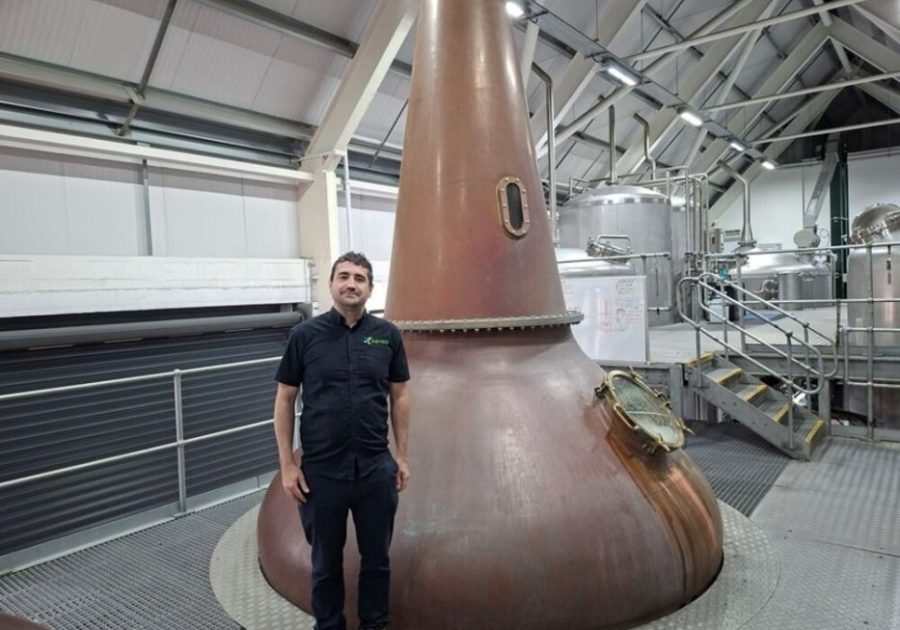
André Arellano, technical sales consultant at Kersia UK, says the effect on energy use is direct. “Build-up on heat-transfer surfaces can act as insulation, reducing the rate at which heat moves through equipment,” he explains.
“This means more energy may be needed for heating or cooling to achieve the same result, while restrictions caused by deposits can also increase the energy required to pump product through the process,” he says.
Energy waste adds up
With energy a significant operating cost for distillers, even small inefficiencies repeated across production and cleaning cycles can accumulate over time. Mr Arellano points to the scale of the Scotch whisky sector as context.
“And when the Scotch whisky industry alone consumes around 3.7 TWh of energy each year, equivalent to 10% of Scotland’s total energy use, the last thing we want to be doing is using energy unnecessarily,” he adds.
Identify first, then clean
Kersia’s advice is that simply using more chemicals, water or cleaning time is not necessarily the answer. Producers with persistent build-up are instead encouraged to identify the deposit through laboratory analysis, so cleaning chemistry and methods can be targeted.
“If you understand what’s causing the build-up, it’s possible to target the cleaning approach to the particular soil and equipment,” Mr Arellano says.
“Where persistent deposits are present, we can take samples for laboratory analysis to establish the most effective detergent based on the varied chemistries of Kersia’s products.”
Kersia’s technical teams can also refine cleaning methods, chemistry and frequency, provide training where needed and review performance over time.
Cleaning as a production lever
For producers, the implication is that cleaning is an efficiency issue as well as a hygiene one. Targeted regimes aim to reduce the chemical, water, energy and downtime burden that escalating cleaning routines can create.
“Cleaning isn’t just about hygiene; it also has a direct bearing on how efficiently the entire process runs,” says Mr Arellano.
“The aim is to achieve an effective clean without using more chemical, water, energy or production time than necessary.”
What optimisation can deliver
Optimising cleaning processes can deliver significant savings. A 2021 Newcastle University study of microbreweries in the North East found that reducing caustic, water and energy use during clean-in-place (CIP) procedures could deliver annual savings of more than £1,000.