Brau to the future: BrauBeviale 2026 bottles up the best of beverage tech
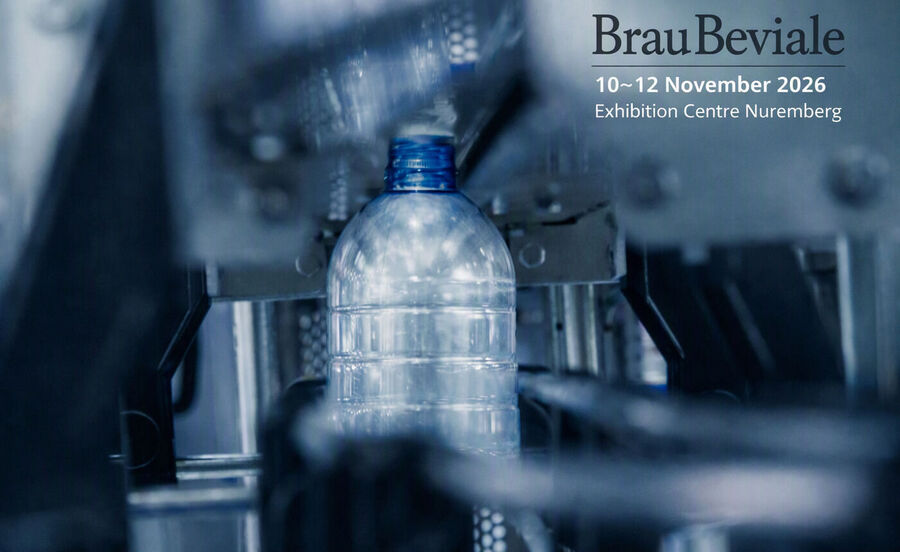
BrauBeviale 2026 returns to Nuremberg with eight halls of practical, production‑ready innovation. From flexible fermentation and non‑alcoholic processing to circular water concepts, lightweight reusable packaging and smarter cleaning, the exhibition delivers hands‑on solutions for breweries, wineries and soft‑drink producers navigating today’s operational pressures.
A trade fair built around real‑world challenges
BrauBeviale 2026 is a three‑day, eight‑hall deep dive into the practical, day‑to‑day challenges facing European beverage producers — and the technologies designed to solve them.
Across 769 exhibitors from 34 countries, the event maps the entire value chain of process and production technology, filling and packaging plus logistics and handling.
The layout mirrors the operational workflow of a modern beverage facility, making it easy for visitors to move from upstream processing to downstream packaging and distribution.
Markus Kosak, executive director of Yontex, captures the show’s ethos: “Many of the solutions at BrauBeviale do not start with abstract visions of the future, but with specific tasks in day‑to‑day operations.” The focus is on flexibility, efficiency and enabling producers to manufacture new variants economically — whether beer, wine or non‑alcoholic beverages.
Hall-by-hall: the value chain on display
While each hall has its own specialism, the overarching theme is practical implementation. Exhibitors will exhibit technologies that can be integrated into existing infrastructure, reduce resource consumption, or unlock new product categories without major capital expenditure.
Visitors can expect to see:
- Advanced fermentation and biological processing systems
- Modular tank and bypass solution
- Non‑alcoholic beverage processing technologies
- Water treatment and circular water concept
- Cleaning, hygiene and CIP innovation
- Lightweight reusable packaging
- Logistics, handling and automation systems.
Across all eight halls, BrauBeviale is telling beverage producers about solutions that work now — not in five years.
New opportunities using existing infrastructure
One of the standout themes for 2026 is leveraging existing brewery infrastructure for new fermented products. Many breweries already have suitable stainless‑steel vessels, temperature‑controlled environments and staff experienced in biological processes.
A new modular bypass system showcased at the exhibition demonstrates how producers can expand into adjacent categories — such as fermented foods — without major rebuilds.
The external unit adds sterile aeration, dosing, pH and temperature control, inline measurement, process data collection and automation
Crucially, it connects flexibly to existing tanks, eliminating the need to upgrade each vessel individually. For producers exploring diversification, this is a low‑risk, high‑impact pathway.
Non‑alcoholic beverages
The non‑alcoholic segment continues to surge, and BrauBeviale 2026 dedicates significant space to technologies enabling producers to expand into 0.0% and low‑ABV categories.
Smarter alcohol reduction
A featured system combines nanofiltration with fractional vacuum distillation to achieve alcohol levels below 0.5% ABV across beer, wine, cider and other fermented beverages.
The process works in two stages:
- Nanofiltration separates water and ethanol from sugars, acids, polyphenols and aromas.
- Vacuum distillation recovers ethanol while preserving volatile aromas and water, which can be returned to the product.
The result is non‑alcoholic beverages with improved flavour retention and reduced thermal stress.
Hygiene‑driven dispensing
Non‑alcoholic beers introduce new hygiene challenges. One dispensing innovation replaces the beverage line with every keg change, eliminating conventional line cleaning and reducing bacterial risk. For high‑turnover venues, this is a major operational advantage.
Efficiency at every step
Resource efficiency is a defining theme of the 2026 edition.
Circular water concepts
Food and beverage plants generate multiple water streams with varying contamination levels. A new circular water system showcased at the event separates streams by contamination, treats each stream specifically, uses biological treatment, ultrafiltration and reverse osmosis and recovers water for cooling towers, boiler make‑up, rinsing, cleaning or other utility tasks
The result is reduced freshwater demand and more sustainable operations.
Smarter tank cleaning
Rotating jet cleaners are more efficient than static systems — but only if they rotate reliably. A new patented optical sensor performs over 1,000 measurements per minute to verify rotation without contact.
This makes rotating jet cleaners viable in applications where safety requirements previously forced producers to use static systems.
Packaging: lighter, stronger, more circular
Packaging innovation is another major focus across the halls.
Lightweight reusable glass
Thermally strengthened reusable bottles are now approaching large‑scale production. Benefits include up to 30% lighter weight, greater abrasion resistance, longer service life and reduced transport emissions.
For breweries and soft‑drink producers, this is a direct route to lower costs and improved sustainability.
Ultra‑light wine bottles
A new Rhine wine bottle design reduces weight to 350 grams — currently the lightest in Europe — while maintaining standard dimensions. With 80% recycled glass, it offers both environmental and logistical advantages.
Three days of practical, production‑ready solutions
BrauBeviale 2026 positions itself as a working trade fair — a place where beverage producers can meet suppliers, compare technologies, discuss implementation, explore how existing equipment can be expanded and identify solutions for immediate operational challenges.
Whether the goal is reducing water use, improving cleaning reliability, diversifying product lines or cutting packaging weight, exhibitors across all eight halls offer technologies ready for deployment.
From 10–12 November 2026, the Nuremberg Exhibition Centre becomes the central meeting point for Europe’s beverage industry — a place where innovation meets practicality, and where producers can shape the next phase of their operations.